

Audio By Carbonatix
Introduction
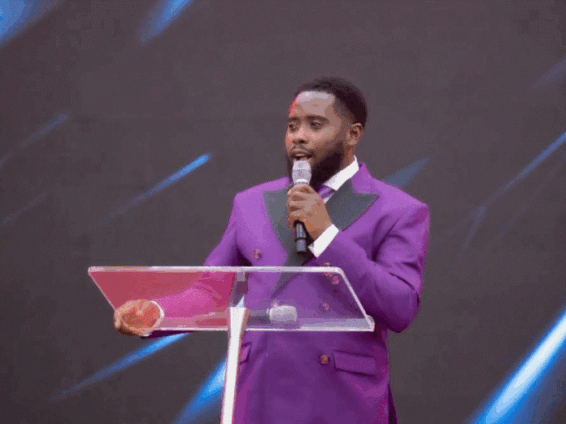
In the build-up to the New Patriotic Party (NPP) presidential primaries, Ghana’s political and religious spaces collided in a dramatic way. A public prophecy attributed to Prophet Bernard Elbernard Nelson-Eshun (General Overseer of Spiritlife Revival Ministries) declared, with striking certainty, that Hon. Kennedy Ohene Agyapong would emerge victorious. The prediction, delivered with confidence and circulated widely across social media, captured attention—especially when it was repeated during a thanksgiving service at Lighthouse Chapel International.
But when the primaries concluded and events unfolded differently, public reaction was swift. Clips were replayed, commentary intensified, and the prophet issued an apology online within hours. Beyond the politics and the personalities, however, lies a deeper conversation the Church must not ignore: How do believers handle confidence, discernment, error, forgiveness, and restoration when spiritual claims fail the test of reality?
This article reflects on that moment—not to mock or malign—but to draw enduring lessons rooted in Scripture and Christian maturity.
Lesson 1: Guard Against Overconfidence
When I first watched the prophecy at the thanksgiving service, the confidence was compelling. It sounded settled, unshakable—so convincing that many assumed it must be from God. Confidence can inspire faith; it can also mislead when it outruns discernment.
Scripture warns us gently but firmly about this danger. “The heart is deceitful above all things…” (Jeremiah 17:9). Even sincere convictions must bow to God’s revealed will. Consider David. He desired to build a house for the Lord and voiced that intention with confidence—yet God redirected him (2 Samuel 7:1–13). A good intention, even from a godly heart, is not the same as a divine instruction.
Takeaway: Be confident in what God has clearly said, not merely in what we feel strongly about.
Lesson 2: Never Say “God Said” When He Did Not
Few statements carry more weight in Christian circles than “Thus says the Lord.” That phrase should be used with holy caution. The tragedy of failed predictions is not simply that they don’t come to pass—but that God’s name is attached to human error.
Scripture sets a high bar here: “When a prophet speaks in the name of the Lord and the word does not come to pass… that is a word the Lord has not spoken” (Deuteronomy 18:22). If the prediction had succeeded, applause would have followed. Because it didn’t, scrutiny came instead. The standard, however, remains the same either way.
Takeaway: Silence is safer than presumption. Discernment is better than drama.
Lesson 3: Acknowledge That We All Make Mistakes
In a culture quick to condemn, it is worth stating plainly: prophets are human. Pastors are human. Believers are human. Mistakes—sometimes public ones—are part of our shared frailty.
Jesus addressed a mob ready to stone a woman caught in sin by asking a piercing question: “Let him who is without sin among you be the first to throw a stone” (John 8:7). The point was not to excuse sin but to expose hypocrisy.
In this case, the core error was not merely a wrong prediction but attributing it to God. Yet error acknowledged is the beginning of wisdom (Proverbs 28:13).
Takeaway: Accountability matters—but so does humility in judging others.
Lesson 4: Forgive Those Who Apologize
One commendable aspect of the episode was the prompt public apology issued via social media. In a digital age where deflection is easy, repentance is rare—and therefore precious.
Forgiveness is not weakness; it is obedience. “If your brother sins against you and repents, forgive him” (Luke 17:3). Even outside church walls, leadership thinkers echo this truth. Author and entrepreneur Robert Kiyosaki famously notes that real learning comes through mistakes—yet many systems punish error instead of extracting wisdom from it.
Takeaway: Correction should aim at restoration, not public execution.
Lesson 5: Life—and Ministry—Must Go On in Christ
The loudest voices online often speak as if a single failure is a permanent disqualification. Scripture disagrees. When Peter denied Christ publicly, Jesus restored him personally and recommissioned him lovingly: “Feed my sheep” (John 21:15–17).
Failure is not the end of a believer’s story. Grace specializes in recovery. “Though the righteous fall seven times, they rise again” (Proverbs 24:16). The Church must learn to hold truth and grace together—without compromising either.
Takeaway: God’s grace is greater than our worst missteps, and restoration is always possible.
Conclusion
The episode surrounding Bernard Elbernard’s failed prediction is not merely a trending topic—it is a mirror. It reflects our theology of prophecy, our appetite for certainty, our response to error, and our capacity for grace.
Let us learn to walk in discernment, to speak with humility, to correct with love, and to restore with hope. Above all, let us anchor our faith not in predictions but in the unchanging Word of God.
“Test all things; hold fast what is good” (1 Thessalonians 5:21).
About the Author: Eric Otchere is a minister of the gospel and author of Christian Maturing and Life in Christ. He is a passionate blogger and shares biblically inspired video content on TikTok through Eden Minds Podcast. Connect: otchereeric@gmail.com.
Latest Stories
-
Power restoration fault suspected in Kumasi Central Market fire
1 hour -
The 7-foot giant of Ngleshie Amanfro: Seven-foot Ghanaian Ephraim Saawa dreams of joining the national basketball team
2 hours -
Government promises support for Kumasi Central Market fire victims
2 hours -
Vibes The Movie: Big Ghun’s Ghanaian film earns five nominations at 2026 REFFA
2 hours -
MamaCare CEO warns unresolved conflicts among health workers could undermine maternal and neonatal care
3 hours -
Health professionals urged to translate medical knowledge into practice to save mothers
3 hours -
Conflicts among care providers linked to maternal, neonatal deaths – Expert
5 hours -
GIS marks 10th TIME conference, champions improved teaching practices
5 hours -
BRICS Or Balance? What Ghana’s bid really means
5 hours -
GPRTU wants full TRAFFITECH-GH implementation to start in 2027
5 hours -
Mahama announces plans to import electric wheelchairs for PWDs
5 hours -
KGL U17 Colts 2026: Western beat Prempeh Elite Academy to set up final final with Greater Accra Region
6 hours -
Late Solanke strike salvages 10-man Spurs draw at Man United
6 hours -
Gender Ministry to monitor welfare of Nana Akua Addo’s children amid domestic violence case
6 hours -
Benedict Okyere Yeboah: Ghana’s football problem goes beyond sacking a coach
6 hours