

Audio By Carbonatix
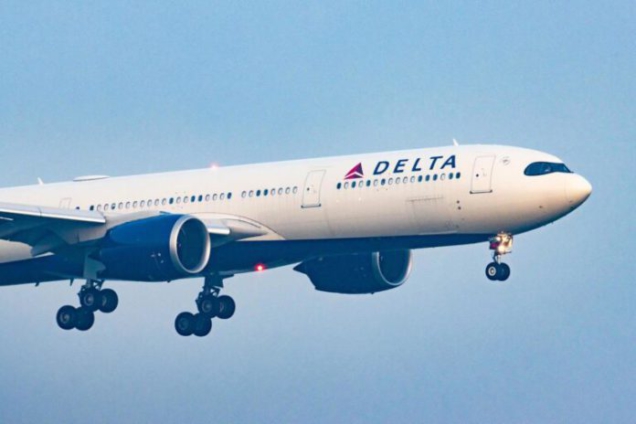
Delta Air Lines and United Airlines were sued on Tuesday by passengers who claimed they paid extra money to sit in "window" seats, only to find themselves placed in seats next to a blank wall.
Proposed class actions were filed against United in the San Francisco federal court and against Delta in Brooklyn, New York federal court, seeking millions of dollars in damages for more than 1 million passengers at each carrier.
The complaints say some Boeing 737, Boeing 757 and Airbus A321 planes contain seats that would normally contain windows, but lack them because of the placement of air conditioning ducts, electrical conduits or other components.
Passengers said Delta and United do not flag these seats during the booking process, unlike rivals such as Alaska Airlines and American Airlines, even when charging tens or occasionally hundreds of dollars for them.
The lawsuits say people buy window seats for several reasons, including to address fear of flying or motion sickness, keep a child occupied, get extra light or watch the world go by.
"Had plaintiffs and the class members known that the seats they were purchasing (were) windowless, they would not have selected them, much less have paid extra," the United complaint said. The Delta complaint contained similar language.
Delta is based in Atlanta, and United is in Chicago. Neither immediately responded to requests for comment.
Ancillary revenue from seat selection, baggage fees, cabin upgrades, airport lounges and other services helps carriers generate more cash when they fly while keeping base fares lower.
The Delta lawsuit is led by Nicholas Meyer of Brooklyn, and the United lawsuit is led by Marc Brenman of San Francisco and Aviva Copaken of Los Angeles. Copaken said United refunded fees for her windowless seats on two flights, but not a third.
Passengers can use websites such as SeatGuru to find pluses and minuses of specific seats, including those lacking windows.
Carter Greenbaum, a lawyer whose firm filed the two lawsuits, said the ability to find information from third-party websites doesn't excuse Delta's and United's conduct.
"A company can't misrepresent the nature of the products it sells and then rely on third-party reviews to say a customer should have known that it was lying," he said in an email.
The cases are Meyer v Delta Air Lines Inc, U.S. District Court, Eastern District of New York, No. 25-04608; and Brenman et al v United Airlines Inc, U.S. District Court, Northern District of San Francisco, No. 25-06995.
Latest Stories
-
Tourism Minister calls for stronger policies, data to grow Ghana’s creative sector
12 minutes -
NIA marks Identity Day with public education float and mass registration exercise in Accra
16 minutes -
NaCCA denies partnering UCC Confucius Institute to train teachers for Chinese language curriculum
19 minutes -
Kpebu backs broader consultation on constitutional review but questions NPP’s proposed Consultative Assembly
23 minutes -
Builsa South MP Clement Apaak allocates GH¢370,000 for road rehabilitation
25 minutes -
Kumawu MP Ernest Yaw Anim supports 500 fresh SHS students with school items
26 minutes -
Civil society platform demands greater citizen involvement in constitutional reforms
31 minutes -
Better distribution of health workers could help cut maternal deaths – UNFPA
36 minutes -
Advocacy group raises concerns over environmental damage from Big Push road projects
40 minutes -
Fidelity Bank opens 82nd Branch in New Sebrepor-Afienya, expanding access to banking services
40 minutes -
King Charles warns of ‘existential danger’ of AI falling into wrong hands
46 minutes -
US interest rates raised for first time in three years
47 minutes -
Man arrested after Irish politician assaulted in Dublin
47 minutes -
Canada welcomes EU proposal to become ‘associate member’
49 minutes -
Lena Dunham announces birth of first baby via surrogacy
53 minutes