

Audio By Carbonatix
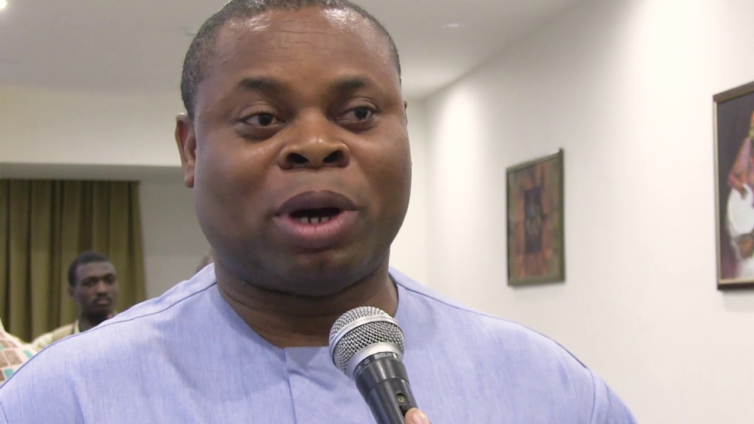
The conviction and sentencing of eight men for their role in violent disturbances during the recent Ablekuma North parliamentary by-election have drawn criticism from Franklin Cudjoe, President of the policy think tank IMANI Africa.
While acknowledging the convictions, Mr Cudjoe questioned whether the punishments are severe enough to serve as a deterrent against future electoral hooliganism in Ghana.
The eight individuals—Mohammed Abubakari, Tijani Mahmudu, Prince Dzakpasu, Anas Mohammed, Mohammed Hamda, Darko Otibu Samuel, Musah Muntari, and Ali Saeed (alias Bomba)—were convicted by an Accra Circuit Court on August 29, 2025.
They pleaded guilty to charges including assault after a video of their actions at the Methodist Church Polling Station went viral.
Each of the convicted men was ordered to pay a fine of 500 penalty units, equivalent to GH¢6,000, or serve a prison sentence of 24 months in default.
The incident involved an unprovoked attack on former Minister of State Hawa Mavis Koomson, NPP Deputy Organiser Chris Lloyd Nii Kwei, and a trader, Majeed Mohammed Saana, who were monitoring the by-election re-run.
Speaking in an interview on Channel One on Saturday, August 30, Mr Cudjoe expressed his discontent with the court's decision.
“I am not too sure and happy about the sentencing in the case of Ablekuma. I think they should have been punished a lot more. So that people are deterred from getting involved in acts of violence and electoral hooliganism,” he stated.
Mr Cudjoe’s comments resonate with a growing public concern about the persistent issue of electoral violence in Ghana.
The country has a history of by-elections marred by clashes and intimidation, with notable examples including the Ayawaso West Wuogon by-election in 2019, where masked men on motorbikes attacked civilians and political figures, and the Atiwa by-election in 2010, which was also plagued by violence.
Critics of the sentences argue that the fines and relatively short prison terms fail to reflect the seriousness of the crime, particularly given the potential for electoral violence to destabilise a nation's democratic process.
The lack of severe punishment, according to these critics, might encourage politically-motivated violence rather than prevent it.
The sentences have reopened the national conversation on how Ghana can effectively address and curb election-related violence.
While the convictions are a step in the right direction for holding perpetrators accountable, the debate now centres on whether the punishment fits the crime and if the judiciary's approach is a sufficient deterrent.
Latest Stories
-
Education Ministry to meet teacher unions on Monday as strike begins over promotion arrears
3 minutes -
Gender Minister calls for stronger financing, accountability to improve lives of Africa’s children
7 minutes -
Shoot to maim illegal miners if ‘shoot to kill’ is opposed – Kwame Jantuah
8 minutes -
24-hour Economy Secretariat to support 2026 Inter Tourism Expo
10 minutes -
Ghana must produce more of what it imports to create jobs – Mahama
14 minutes -
New cocoa producer price looms as COCOBOD seeks funding for 2026/27 season
17 minutes -
From paddle and sail to smart ships: What maritime industry means to the world and why Ghana must turn policy into practice
18 minutes -
McDAN warns SMEs against founder-dependent growth, urges stronger systems
20 minutes -
‘Feel free to invest; golden era for Ghana is beginning’ – Ato Forson
21 minutes -
Ghana outlines plans to expand port infrastructure and strengthen maritime sector
33 minutes -
EPA shuts down Ponlok Company over smoke emissions, poor waste management
35 minutes -
Nii Armah Ashitey enters NDC National Chairmanship race
36 minutes -
Ghana prepares to reopen diplomatic mission in Ireland
41 minutes -
Mahama woos US investors for Ghana’s power, technology and industrial sectors
42 minutes -
New College of Education in Tuobodom to end teacher training struggles in Bono East – Regional Minister
47 minutes