

Audio By Carbonatix
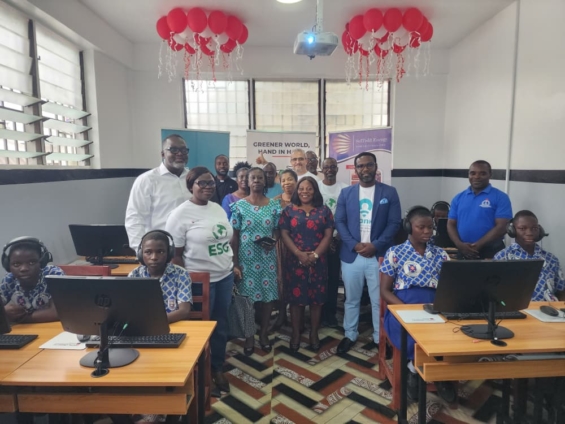
Société Générale Ghana has strengthened its commitment to education and sustainability with the donation of a fully furnished, solar-powered Digital Library to the Osu Salem Road Basic School in the Greater Accra Municipality.
The facility, designed to enhance digital literacy and access to modern learning tools, was delivered in partnership with TechAide and Sol Tedd Energy. The initiative is part of the bank’s broader corporate social responsibility agenda, which prioritizes sustainable, impact-driven projects in education, energy, and community development.
Managing Director of Société Générale Ghana, Hakim Ouzzani, underscored the importance of combining education with sustainability.
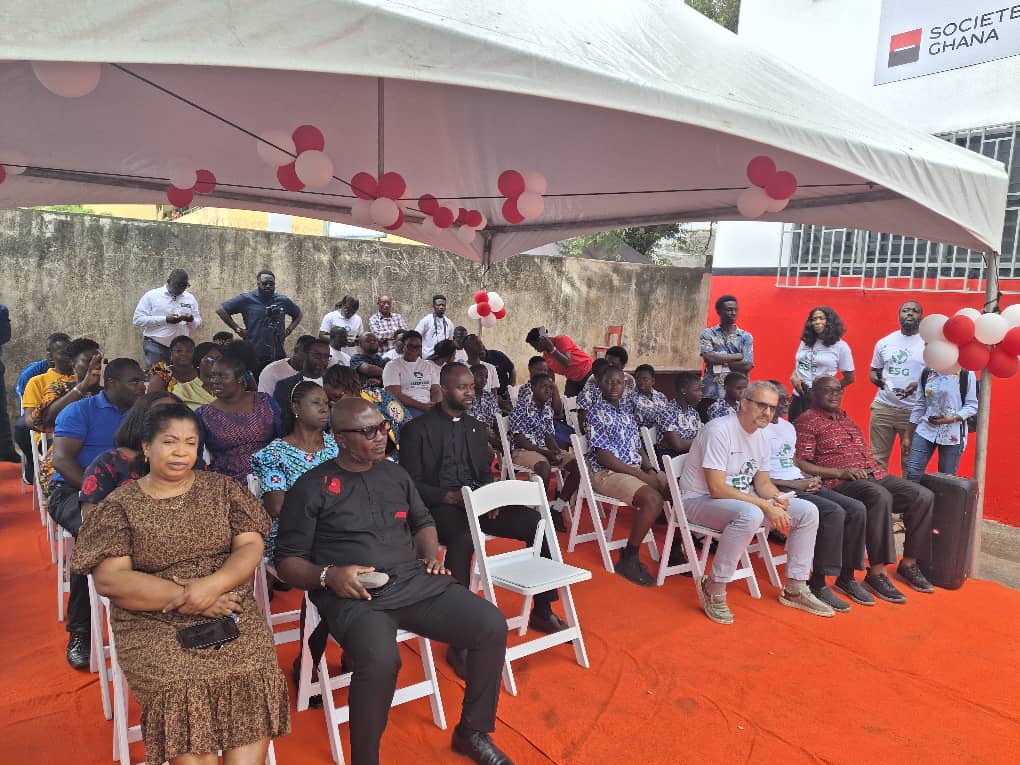
“This initiative is really at the heart of what we do in terms of corporate social responsibility. As a bank, our main activity is to support and finance the economy, but beyond that, we are committed to promoting projects that align with sustainable development goals. Supporting green initiatives, power efficiency, and education ensures we build the future of Ghana and the planet,” Ouzzani said.
Head of Operations at TechAide, Thomas Hagin Akuban, explained the sustainable energy infrastructure behind the library.
“It is very sustainable in terms of moving off the national grid. Ghana’s power supply has not always been stable, and that destroys appliances. Our focus was to ensure the library runs independently, so we installed a three-kilowatt peak solar system, a six-kilowatt hybrid inverter, and a lithium-ion battery. This means the school will not pay electricity bills, and even during outages, the library will still run sustainably. We are grateful to have partnered with SG Ghana on this,” Akuban said.
Chief Executive of Sol Tedd Energy, Teddy Opoku Agyeman, highlighted the role of technology in improving learning outcomes.
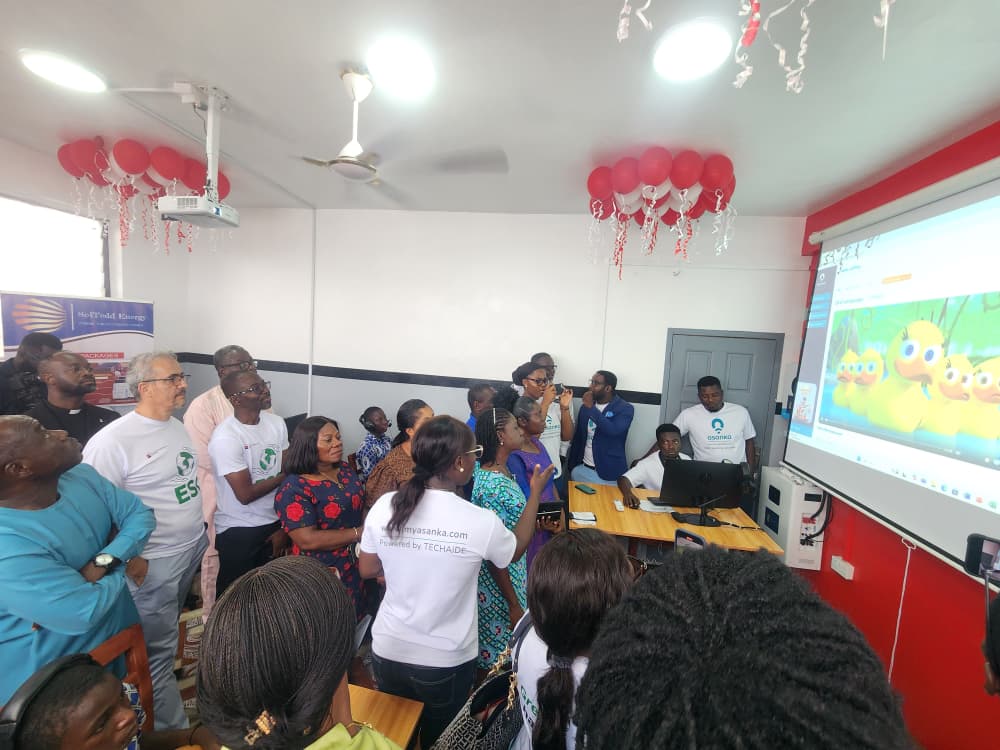
“With the Asanka device, there is boundless learning for students and seamless teaching for teachers. It provides data for teachers to offer remediation for struggling learners. Everything on the device is strictly offline, with no internet or data costs. The system is designed to align with the national curriculum, enabling students to learn independently or with minimal support, and ultimately prepare effectively for the BECE,” Agyeman explained.
The project is expected to serve as a model for integrating renewable energy into educational infrastructure while addressing challenges such as limited access to technology and unreliable electricity supply in schools.
Latest Stories
-
Daily Insight for CEOs: The CEO’s role in building leadership capability
57 seconds -
AG to introduce Legal Practitioners Standard Board Bill in Parliament
10 minutes -
AG proposes Bar Welfare Fund to provide social protection for lawyers
14 minutes -
No conditions attached: Rethinking Ghana’s duty of care for citizens in crisis abroad
15 minutes -
GES opens applications for non-teaching staff promotion; here’s who qualifies
29 minutes -
What Is Wrong With Us: We fly halfway around the world to admire discipline, then fly home to tolerate chaos
32 minutes -
Discipline must not become abuse in raising children – ARK Foundation
39 minutes -
Photos: Culture, technology and cuisine take centre stage at Russia’s youth festival
40 minutes -
‘Who approved Laboma structures?’ – Victoria Bright calls for review of permitting system
46 minutes -
“The Darkest Chapter”: Latif Abubakar’s 21st production brings President Mahama’s UN reckoning to the National Theatre stage
49 minutes -
Teacher, three others investigated over alleged kidnapping of suspected MoMo fraudster in Kumasi
50 minutes -
Afenyo-Markin mourns Bernice Offei, describes her songs as ‘sermons set to music’
50 minutes -
Don’t just learn AI tools, use them to improve productivity – ALX Enterprise
58 minutes -
Free rabies vaccination campaign targets 25,000 dogs and cats nationwide
1 hour -
Ghana needs a system to track child protection funding to where risks are highest – ARK Foundation
1 hour