

Audio By Carbonatix
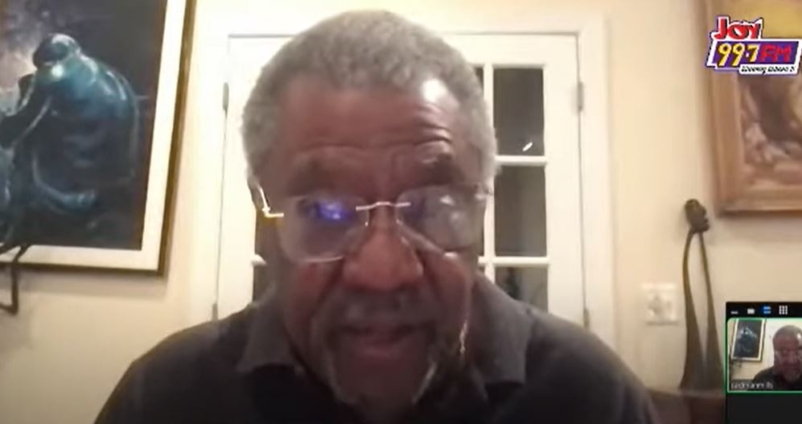
Dr. Cadman Atta Mills, a renowned economist and brother of the late President John Evans Atta Mills, has launched a scathing critique of the government's approach to combating illegal mining (galamsey).
Speaking on Joy FM’s Super Morning Show (SMS) today, September 23, he asserted that the government is not doing enough to tackle the menace, a position he backs with both economic and public health arguments.
"I think we have to call the government to task. I see, and maybe I'm wrong, but I don't think I am. That really, the government is a little conflicted in its fight against galamsey. It's not taking it seriously," he lamented.
According to Dr. Mills, the government's perceived reluctance stems from a significant economic benefit it reaps from the galamsey trade.
He alleges that foreign exchange earnings, which would otherwise be lost to the informal sector, are being diverted into official channels.
This influx of foreign currency helps to stabilise the value of the Ghanaian Cedi, a result that the government boasts about.
"They feel comfortable about buying gold from so-called licensed makers," he stated.
He argues that these "licensed makers are not even miners" but are instead "bankrolling galamsey by buying excavators, by buying pumps... and giving it to small people to do the galamsey."
He highlighted the government's own ambitious target of 160 tonnes of gold from the sector this year, a figure he called a "death knell" for the country. Dr. Mills stressed that using an exploration licence to mine is a clear breach of protocol and must be addressed.
He pointed out that while an exploration licence allows for sophisticated geological surveys to determine the size and economic viability of a deposit, it does not grant the holder the right to begin mining operations. The fact that this is happening and has become almost "accepted" is a grave scandal.
The economist also painted a grim picture of the human cost of the illegal mining activities, citing the tragic impact on future generations. He warned of children being born with "heavy metals and developmental retardation", a direct consequence of polluted water sources.
This is a profound and lasting effect that cannot be undone. His call for a state of emergency in affected areas is intended to send a clear psychological message: "look, we are not playing around."
For Dr. Mills, the fight against galamsey is not a matter of a small-scale, artisanal livelihood versus the environment, but a systemic failure of governance.
He adamantly rejected the notion that the destruction of the environment is a "sacrifice we have to make" for economic stability.
He concluded, "No, it's a sacrifice that we don't have to make," urging for a clear and firm political will to enforce the law and protect Ghana's future.
Latest Stories
-
Business dies when luxury takes over leadership
4 minutes -
No family should lose everything to save a loved one – GMTF administrator
6 minutes -
Bawumia has the dignity to lead and the vision Ghana needs – Gabby
21 minutes -
GOC, GFA chart Olympic qualification roadmap for Black Queens, Black Meteors
22 minutes -
Absa InspireMe 2026 highlights opportunities for women-led business growth
23 minutes -
The only thing that flows regularly is THE BILL
29 minutes -
KGL U17 Colts 2026: Prempeh Elite Academy lead Group A as Western Region secures top spot in Group B
31 minutes -
‘You’ve never been touched by any scandal’ – Gabby celebrates Bawumia on his 63rd birthday
32 minutes -
WPL 2026/27: GFA unveils dates for start of new season as Ampem Darkoa Ladies begin title defence
41 minutes -
Ghana Embassy in Washington pays tribute to late academic Dr Kofi Akamani
41 minutes -
Ibrahim Mahama urges Ghanaians to overcome fear and venture into business
54 minutes -
2026 U-17 WWC: Black Maidens lose to China in pre-tournament friendly
58 minutes -
Who gave Gbande the EOCO remote control?
1 hour -
Ghana begins review of 1999 National Land Policy, targets new framework by 2027
2 hours -
Tiptoe Lane’s tech takeover: The story behind Ghana’s booming informal phone market
3 hours