

Audio By Carbonatix
The untimely death of young women from breast cancer in Ghana is a devastating reality that affects many families and communities.
According to Global Cancer Observatory data on Ghana, there were 5,025 new cases in 2022, representing 18.4% of all cancers diagnosed in the country. Sadly, 2,369 women died, accounting for 13.2% of all cancer deaths.
Other studies suggest that the majority of women with breast cancer in Ghana are under 50, with some cases reported in women as young as 20 years old.
This trend is attributed to various factors, including limited awareness, late diagnosis, and inadequate access to healthcare services.
At an event held at the Manhyia Palace to celebrate Breast Cancer Day, with the theme "A Cure Worth Fighting For," Dr. Beatrice Wiafe Addai, President of Breast Care International, emphasised, "Enough of the gone too soon. Enough of the untimely death."
Dr. Wiafe Addai stressed that no woman should die from breast cancer due to poverty, and that families and communities should show love and support to victims of the disease.
She further emphasised that breast cancer is not just a woman's issue, but a community problem, stating, "Let's not see breast cancer as a woman's issue. It is our problem, it is a community problem."
Dr. Wiafe Addai also highlighted the importance of early detection and treatment, noting that many breast cancer victims could become survivors if they receive adequate support for treatment.
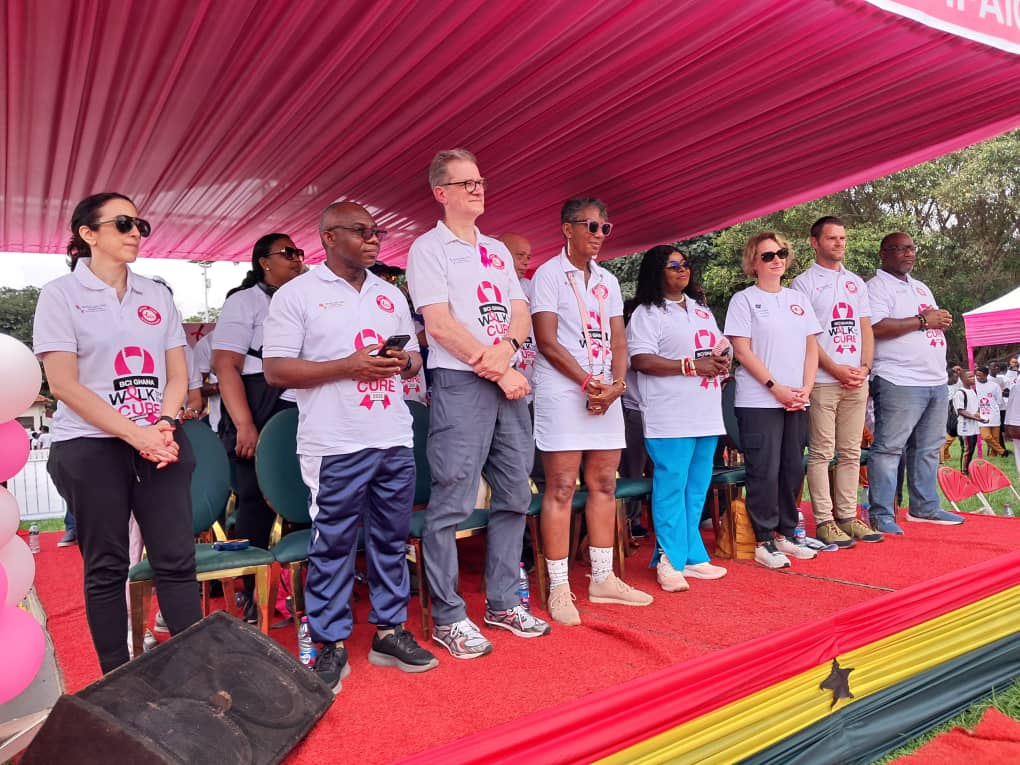
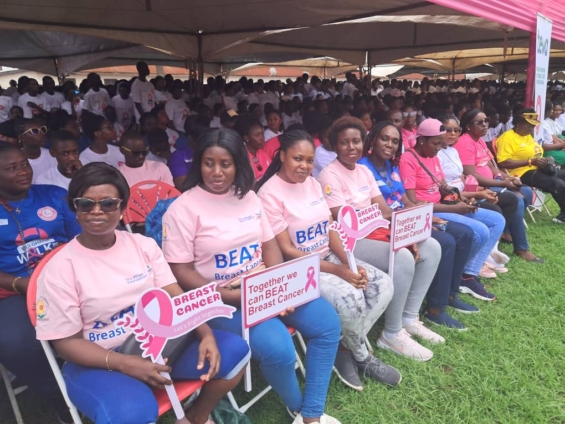
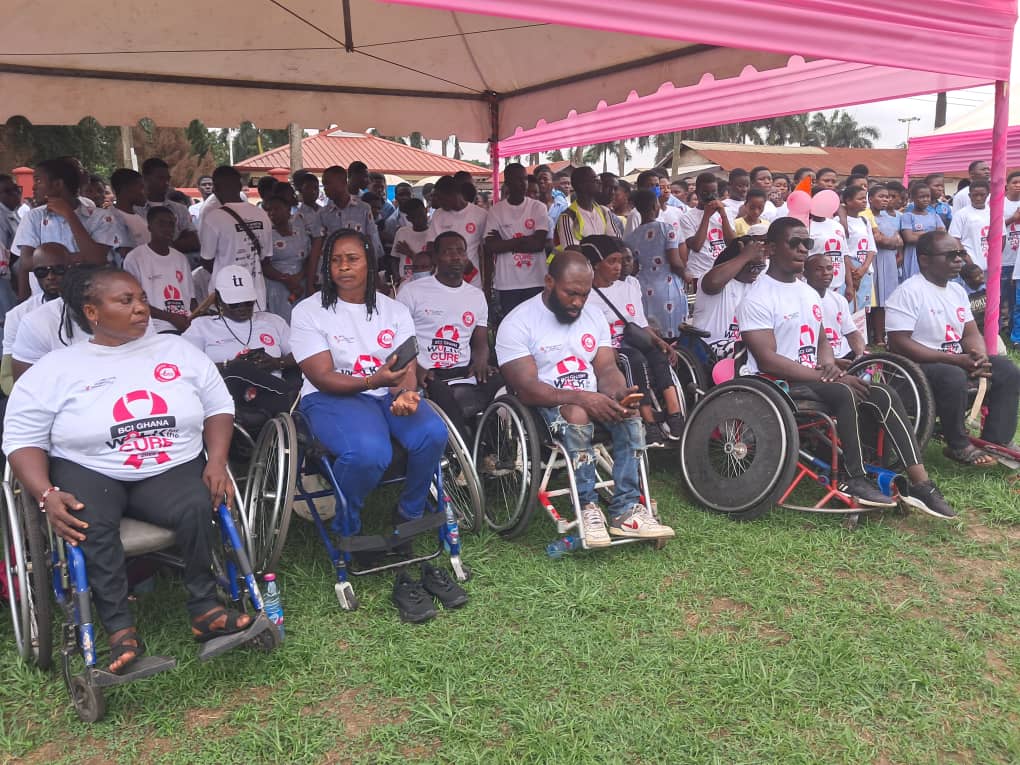
The event, which began with a 5-km walk through the streets of Kumasi, drew 30,000 people, including students from senior high schools, breast cancer survivors, healthcare workers, market women, cancer experts, and the general public.
Dr. Wiafe Addai urged the public not to delay seeking medical attention, warning that the disease becomes difficult to cure when it spreads to other parts of the body.
A professor of radiology at the University of Pennsylvania, Andrew Maidment, emphasized that the solution to breast cancer lies with the public, not just medical professionals.
He stressed that individuals have the power to make a difference in the fight against breast cancer.
"The solution to breast cancer has to come from Ghana, and it has come from the schools," Maidment said. "The public is the one who can make that change, not just me or the people on the stage."
Drawing from his experience, Prof Maidment shared, "When I was a Lance Corporal in the army cadet, and I had the opportunity to touch the lives of millions of women who have survived."
He encouraged participants to think about how they can also make a positive impact and protect the lives of women from breast cancer.
Latest Stories
-
GTA 6 leaks – a nightmare or a blip for the biggest video game of the year?
2 hours -
Two injured in stabbing attack at Canada Sikh temple
3 hours -
Modi spent years building his strong image – why is he making Gen Z reels now?
3 hours -
Canada ‘should fight’ as US trade deadline looms, Manitoba premier says
3 hours -
Man Utd agree £70m fee for Brighton’s Baleba
3 hours -
Inter-Agency Football Gala: YEA organize event as part of National Youth Month celebration
3 hours -
Receiver fights High Court order to hand over No.1 Oxford Street Hotel to Cheddar’s company
4 hours -
Partey begins new chapter in Saudi Arabia with Al Shabab
4 hours -
NSMQ 2026: St. Francis Xavier deny debutants Pentecost SHS one-eighth spot
4 hours -
One killed in sword attack at Swedish school
4 hours -
NSMQ 2026: Tamale SHS sweep aside Kalpohin, Wenchi Methodist to reach one-eighth stage
4 hours -
Tupac murder accused told police in 2008 his nephew fired fatal shots
5 hours -
Heart of the Beast to Practical Magic 2: 10 of the best films to watch this September
5 hours -
NSMQ 2026: Tears of relief as Labone SHS survive Notre Dame Sem. in thriller to secure one-eighth spot
5 hours -
Onga Tomato Mix unveils Diana Hamilton as Brand Ambassador
5 hours