

Audio By Carbonatix
A new joint study by the Food and Drugs Authority (FDA) and the United Nations Children's Fund (UNICEF) has uncovered dangerously high levels of lead in some everyday products widely consumed and used in Ghana.
The research, conducted across major markets in all 16 regions, revealed that the levels of lead found in these products pose a serious health risk, especially to children and pregnant women.
The FDA study found that:
- Traditional eyeliner, also known as Kaji kaji, or kholi, is often used by mothers to supposedly brighten the eyes of their children. About 80% of the samples tested contained dangerously high levels of lead, with some more than tens of thousands above the permissible limits.
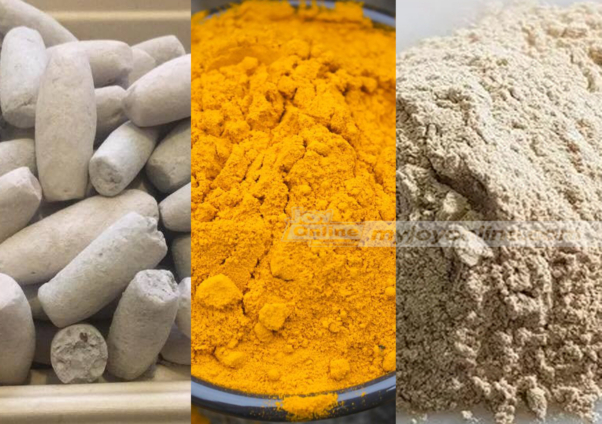
- White baked clay known locally as shire, ayilor and farinkasa. Consumed largely by pregnant women to ease nausea, 24.6% of samples were contaminated with lead, with the Northeast and the Greater Accra regions showing the highest rates.
- Contaminated turmeric: Ground turmeric (powder) sampled from food markets showed that 42.09% of samples tested for high levels of lead, especially in the Greater Accra (84.52%), Central (75%), and Bono (60.5%) regions.
- Contaminated Cereals: corn-based cereal mix locally known as ‘Tom brown’ sampled from markets, showed high contamination of lead in 4.4% of the samples, with most affected samples from the Eastern region.
- Old plumbing and cookware: Lead can leach into drinking water or be inhaled during cooking.
Health effects on children
- Cognitive and behavioural issues: Developmental delays, reduced attention span and learning difficulties
- Physical symptoms: Anaemia, vomiting, abdominal pain, poor growth, seizures, hearing loss, and others.
- Pregnancy complications: Anaemia, low birth weight, preterm birth, miscarriage and stillbirth.
UNICEF revealed that lead poisoning is preventable, noting that the findings are a critical opportunity to initiate coordinated national action to safeguard children’s health.
UNICEF has, therefore, called for immediate actions to:
- Raise Public Awareness: Educate caregivers about the hidden dangers in traditional cosmetics and foods.
- Strengthen Product Safety: Enhance regulation and enforcement to improve product safety standards.
- Promote Screening: Encourage routine screening for lead exposure, especially among vulnerable children and pregnant women.
UNICEF added that it is committed to working with the government and partners to eliminate lead exposure and protect every child’s right to a healthy start in life.
Latest Stories
-
JoyNews’ Precious Semevoh wins climate change reporting award at Bono GJA Awards
2 minutes -
Kejetia phase 2 to begin in October after years of abandonment
7 minutes -
Sentuo offers fuel supply reassurance as NPA sees steady output through December
1 hour -
Ghanaian smock showcased at Lesotho Tourism Summit
2 hours -
Four pupils to one desk: The painful plight of schools in New Juaben North
2 hours -
Ipswich launch investigation into racist abuse of Abdul Fatawu
2 hours -
Arrest of Techiman nurse is purely political persecution – ‘Ghana Jollof’
2 hours -
Isak nets winner as Liverpool edge Bournemouth
3 hours -
I dare gov’t of Ghana to extradite me; they can never do it – ‘Ghana Jollof’ speaks
3 hours -
Semenyo scores twice as Manchester City beat Sunderland 5-3 in eight-goal thriller
3 hours -
Parliament calls for government-private sector collaboration to improve waste management
3 hours -
Volta Region described as cleanest so far in Parliament’s nationwide sanitation monitoring
3 hours -
Parliament urges MMDAs to enforce sanitation bylaws to curb indiscriminate waste disposal
3 hours -
Mohammed Kudus drops out of Ghana squad for AFCON 2027 qualifiers against Côte d’Ivoire and Gambia
4 hours -
Africa World Airlines unveils first Embraer E190 as part of 10-aircraft fleet expansion
5 hours