

Audio By Carbonatix
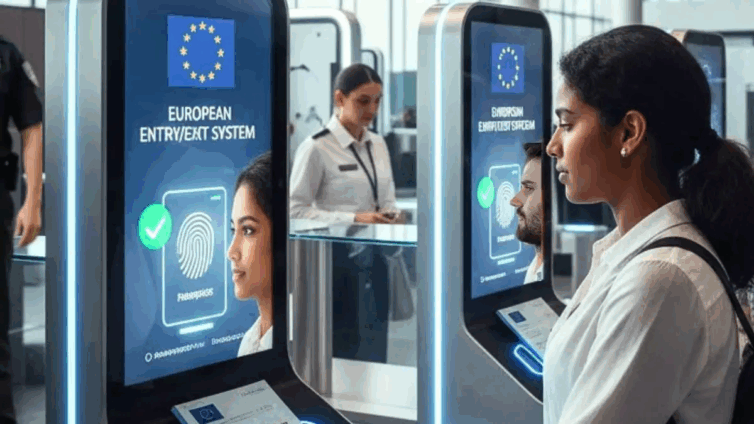
European Union member countries began rolling out a new entry and exit system on Sunday at the bloc’s external borders, electronically registering non-EU nationals' data.
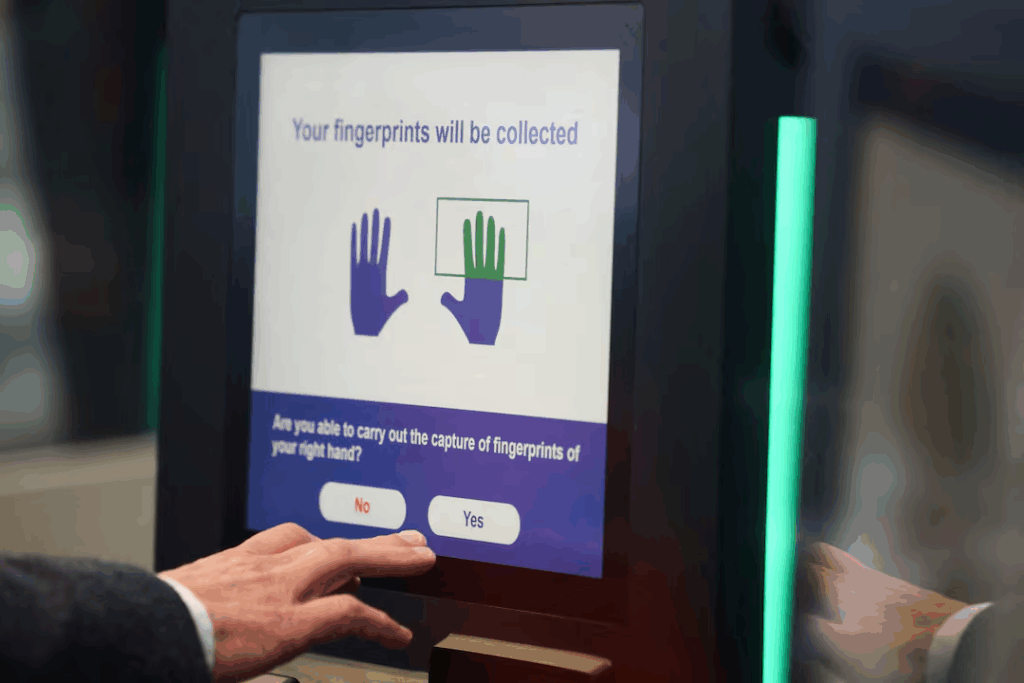
The Entry/Exit System (EES), an automated system that requires travellers to register at the border by scanning their passport and having their fingerprints and photograph taken, will be introduced over six months.
The move is aimed at detecting overstayers, tackling identity fraud and preventing illegal migration amid political pressure in some EU countries to take a tougher stance.
"The Entry/Exit System is the digital backbone of our new common European migration and asylum framework,” European Internal Affairs and Migration Commissioner Magnus Brunner said in a statement.
SIX MONTHS TO ADJUST
Non-EU citizens will have to register their personal details when they first enter the Schengen area - all EU member countries apart from Ireland and Cyprus, but including Iceland, Norway, Switzerland and Liechtenstein. Subsequent journeys will only require facial biometric verification.
The system should be fully operational, with passport stamping replaced with electronic records, on April 10, 2026.
"Every third country national who arrives at an external border will undergo identity verification, security screening, and registration in the EU databases," Brunner said.
At the Bajakovo border crossing between Serbia and neighbouring Croatia, a EU member state, hundreds of people, many of them Serbians, queued in their cars on Sunday for around 20 minutes before entering booths for fingerprinting and face scanning.
"There are five lanes open, so it took us about 20 minutes in line and about two minutes (in the booth) for each of the five of us from the car," said Dalibor Vranic, from Serbia.
For British travellers using the Port of Dover, the Eurotunnel terminal at Folkestone or Eurostar terminal at London's St Pancras International, the process takes place at the border before they leave the UK.
At Dover and the Eurotunnel terminal, only freight and coach traffic was subject to EES checks from Sunday.
Passenger vehicle checks will follow in November at Dover and by the end of the year at Eurotunnel, while the Eurostar at St Pancras was gradually introducing the new process, starting with some business travellers from Sunday.
"The UK and EU have a shared objective of securing our borders and these modernisation measures will help us protect our citizens and prevent illegal migration," British Minister for Border Security and Asylum Alex Norris said.
Latest Stories
-
Ghana needs a law to sustain constitutional reforms – CDD-Ghana
43 minutes -
COVID fumigation audit: Auditor-General has a lot of questions to answer – Akwatia MP
43 minutes -
Stranded Ghanaian medical graduates in Cuba appeal to Mahama for immediate return
51 minutes -
GNFS contains fire outbreak at Teshie Lekma Road near Lekma Hospital
7 hours -
Samia Nkrumah rejects the narrative that Ghanaians were happy after Nkrumah’s overthrow
8 hours -
A Mother’s pain: Tribute by Ivan Baidoo’s mother
8 hours -
‘Forgive us for staying away’ — Samia Nkrumah leads family back to Nkroful, pledges to preserve Nkrumah’s legacy
9 hours -
Ernest Nuamah scores twice as Lyon beat Rennes
9 hours -
‘My dear Ivan’ – A father’s tribute to a son tragically killed
9 hours -
GNPC Explorco advances Voltaian Basin drilling preparations with 13.5km access road
9 hours -
Cabinet approves facility manager for Borteyman Sports Complex – Kofi Adams
10 hours -
Sanitation is improving; critics may be ‘living in another world’ – Salaga South MP replies Bekwai MP
10 hours -
Government must do more to tackle sanitation crisis – Bekwai MP
10 hours -
World Cleanup Day: GFF begins sanitation education in local communities
10 hours -
EU Ambassador, IGP discuss stronger cooperation on policing and security
10 hours