

Audio By Carbonatix
A viral social media post first made on September 4, 2025, on X (formerly Twitter) by a user named Sahel Revolutionary Soldier (@cecild84), claims that Ghana’s judiciary has abolished the use of “colonial-era” wigs and robes, replacing them with Kente cloth and African prints.
The post was conveyed with highly detailed photos of judges dressed in Kente, and other Ghanaian colorful fabrics, implying that the Ghanaian judiciary system is ‘decolonizing’ and that “tradition have taken their rightful place”.
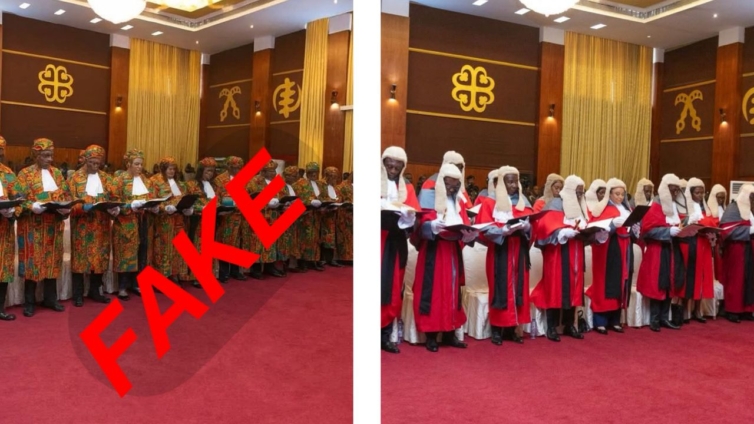
However, an in-depth fact-check analysis by Luv FM reveals that the claim is FALSE, and the images attached are AI-generated fabrications with no trace to any official and credible Ghanaian judicial event.
What the Post Claimed
The post (@cecild84) suggests Ghana's third arm of government; the judiciary, has formally replaced colonial British legal attire, the wig which is made from horsehair, the black gown, and the white neckpiece (bib) with African-inspired robes.
This implies an official cultural shift in court etiquette and protocols that sheds off colonial legacies.
“The Ghanaian Judiciary is taking back control bit by bit: No Wigs. No Colonial Robes. Just Ghana, just African. The era of colonial-era wigs and robes is behind us. Rich African prints, kente cloth, and tradition have taken their rightful place. Justice must be administered in a way that resonates with the community it serves. This transcends fashion; it’s a declaration of our heritage. Our institutions must now reflect the true character of our nation,” the post reads.
Aside from the text claims, accompanying visuals shown supposed Ghanaian judges wearing Kente and Ankara designs, white lace bibs and colorful headgears, engaged in an official activity in a setting purported to be a ceremonial hall at the presidency.
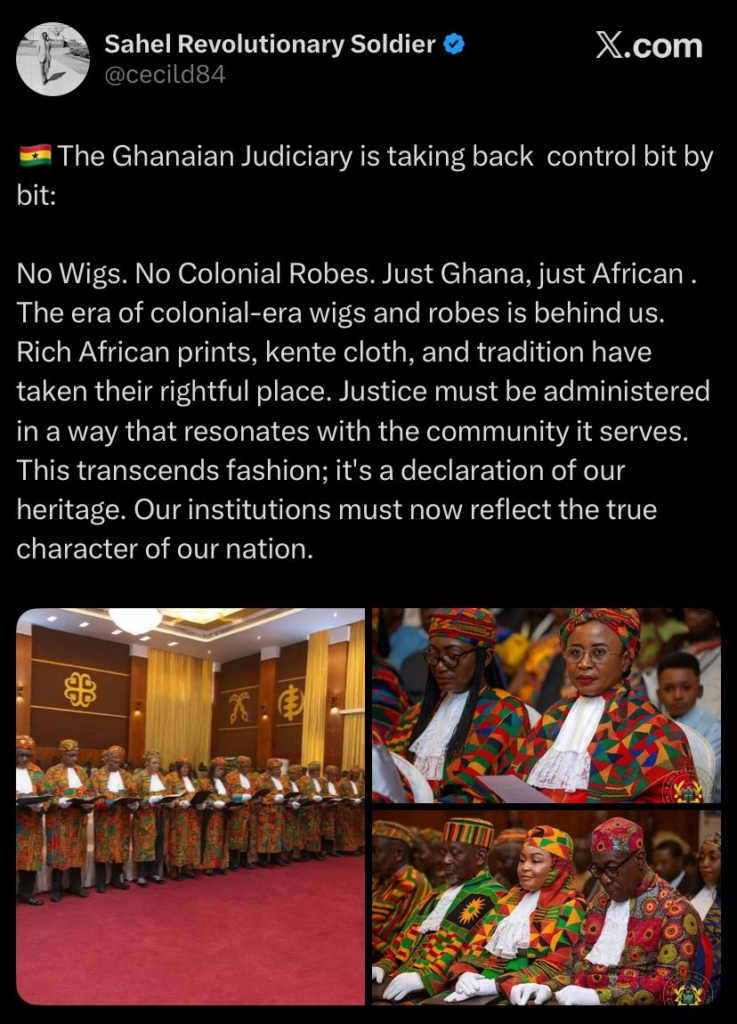
The post in 24 hours garnered over 200k views, with over 3k likes.
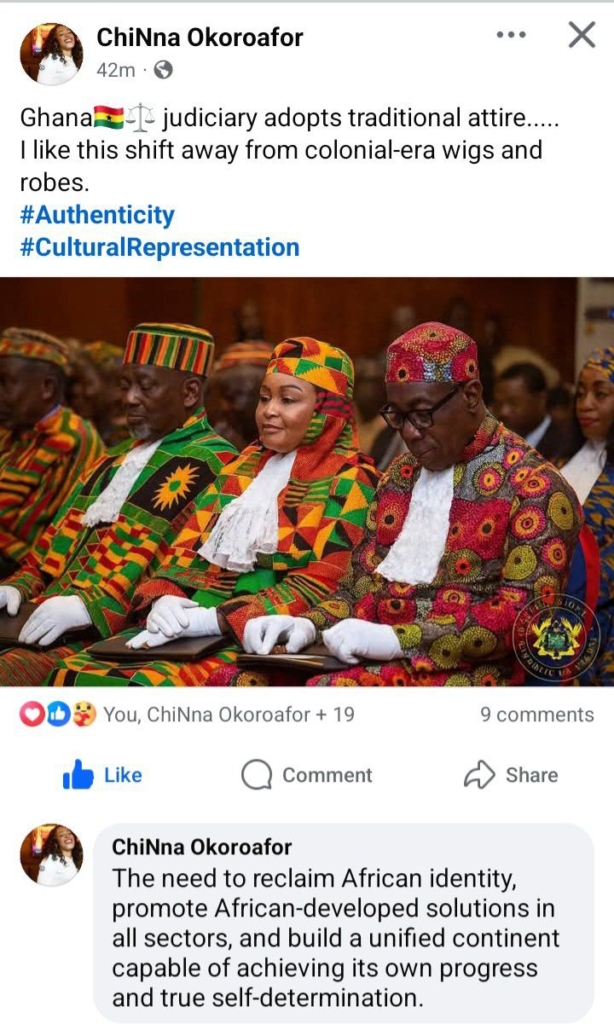
Many other users assisted in spreading the narrative, including a Facebook account named @chinaokoroafor, who says “Ghana judiciary adopts traditional attire.....I like this shift away from colonial-era wigs and robes. #Authenticity #CulturalRepresentation”.
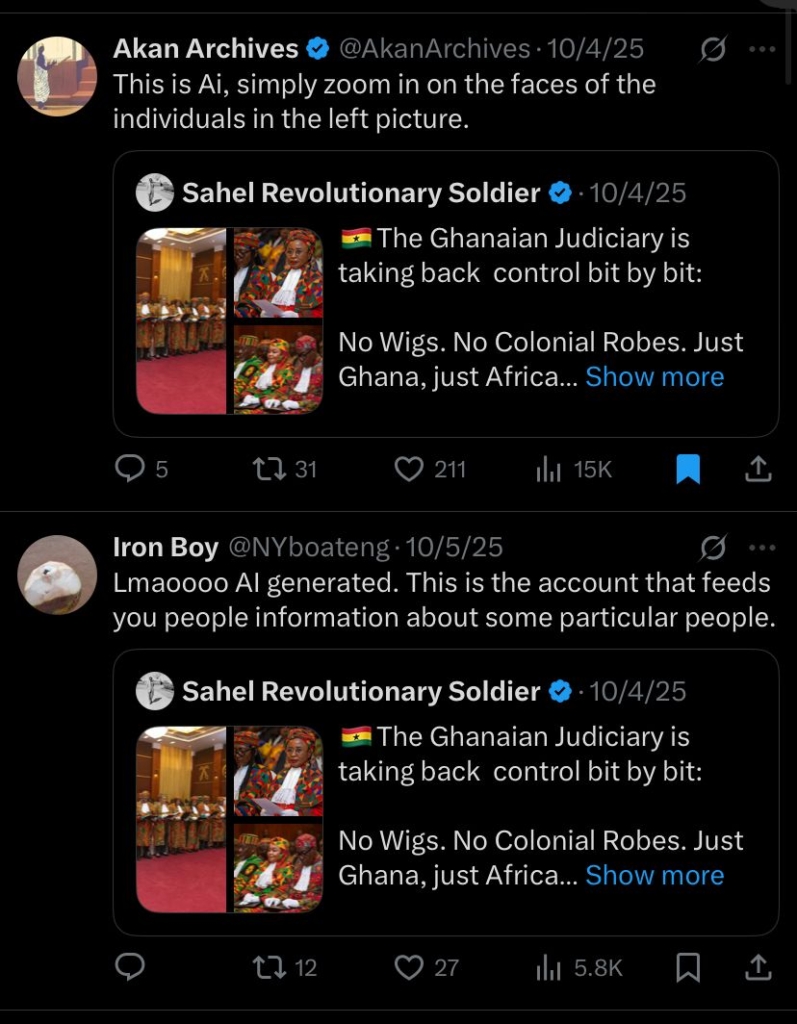
A large number of reactions to the post are completely unhinged and unaware, although a couple of users tried to point out their suspicions of possible misinformation or fake news about the post.

Fact-Checking the Claims
This AI-enabled misinformation, and its accompanying social media accounts, are pushing ties with the swearing-in ceremony of 21 Court of Appeal Justices at the Jubilee House by President John Dramani Mahama on 2nd October, 2025.
The 21 new Justices include 20 Justices of the High Court and one private legal practitioner, who have satisfied all requirements.
Official photos released by the Presidency, and notable media stations, including Woezor TV showed the judges clothed in the British courtroom tradition attires, including their robes and wigs.

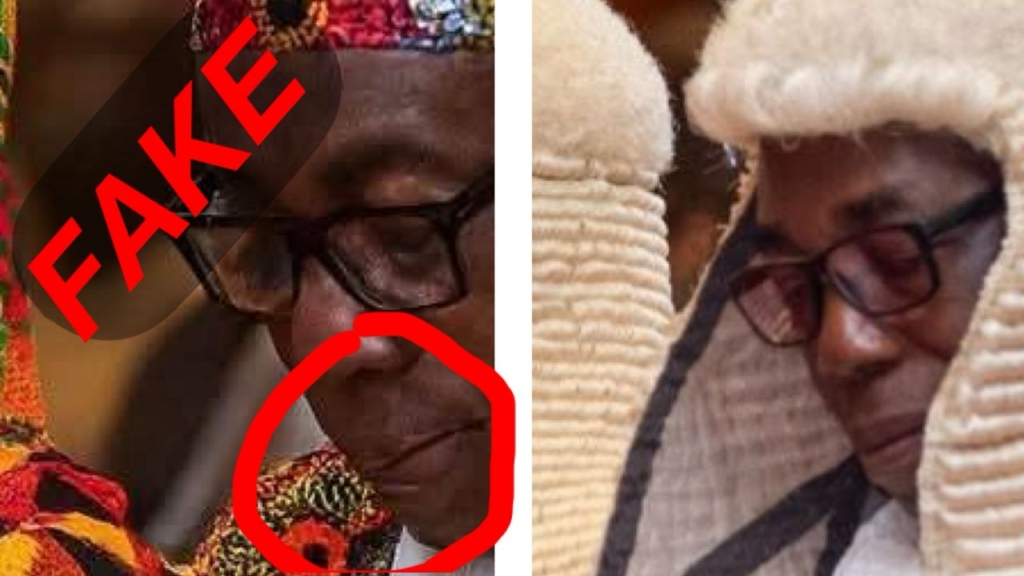
Reverse-image and forensic analysis reveal that 3 of the official photos were used to replicate and generate AI photos of the same but in Kente and Ankara designs, white lace bibs and colorful headgears to depict Ghanaian traditional style.
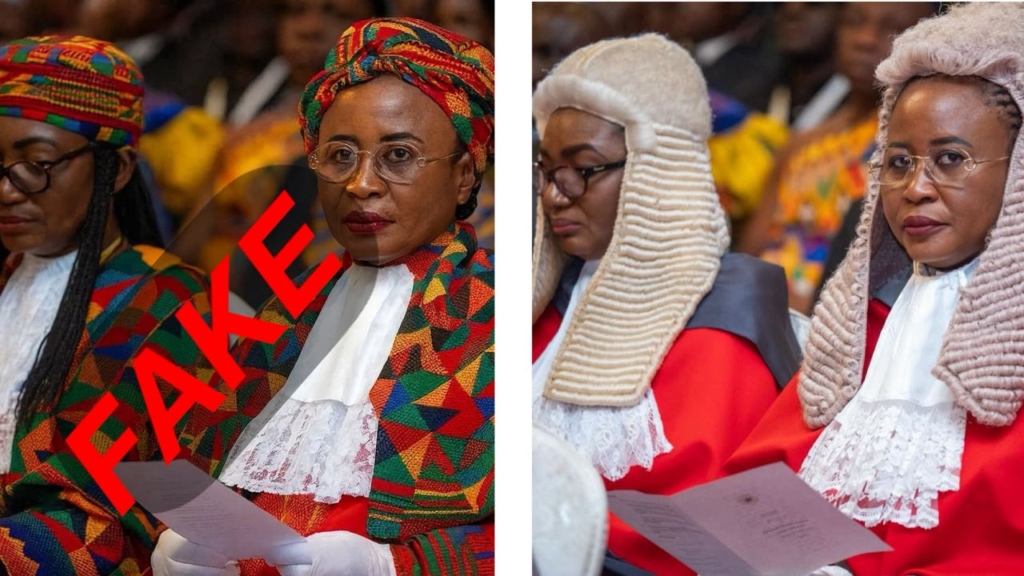
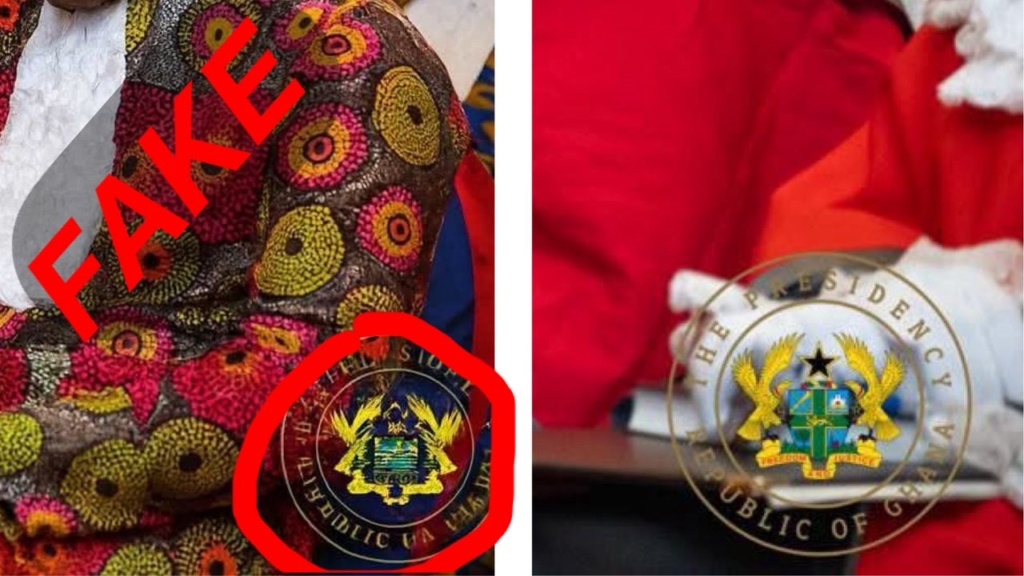
Visibly on the faces, lips area, hand details, and fabric patterns of the anti-wig post are the display of inconsistencies, and messy details typical of AI-rendered images.
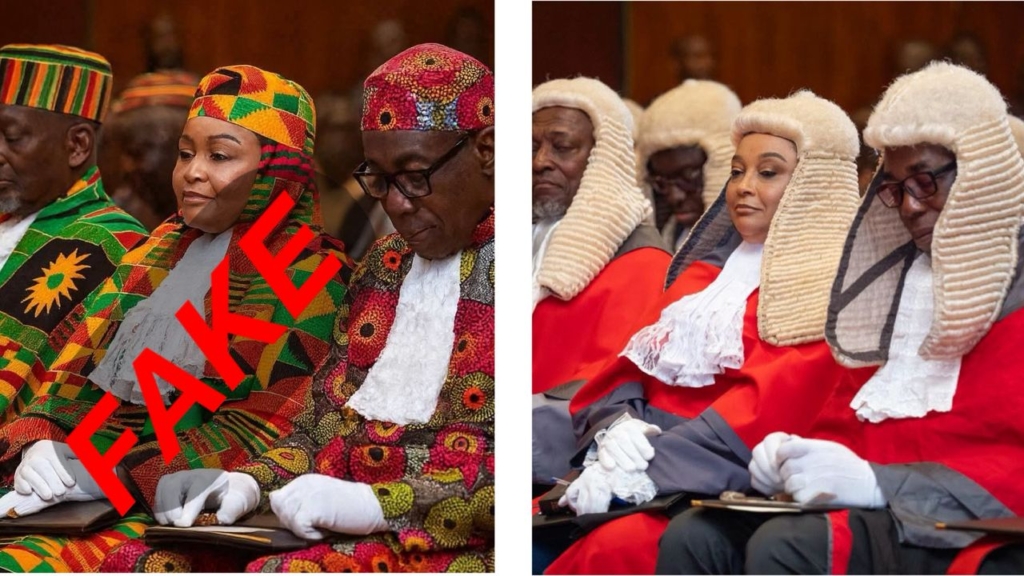
Additionally, the supposed state emblem visible in the lower right corner of the “anti-wig and robe” images does not match any official watermark used by the Presidency.
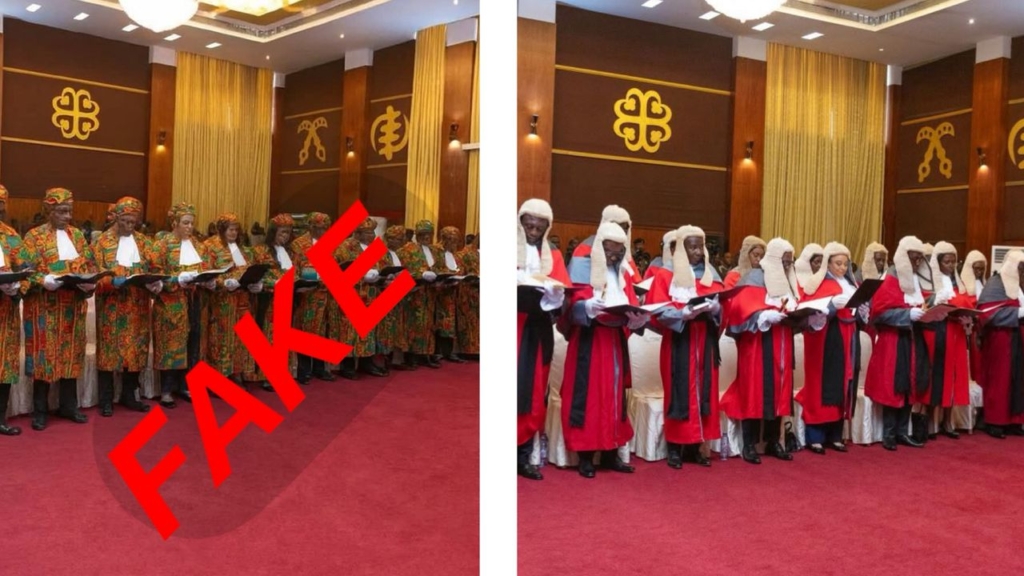
The images also do not appear on any official Ghanaian website or photo repository.
What official sources say
The probable narratives to spread cultural and political propaganda, paired with the made-up visuals, also trace to no official records after investigations.
There is no official record of any policy, reforms or directive from the Judicial Service of Ghana that speaks to the change in official court attire.
Indeed, the available references to wig and gown for Ghanaian justices date to 21 January 2022, when the then Chief Justice Anin Yeboah warned that sanctions will be imposed on judges and professional magistrates who fail to comply with stated dress standards.
“Judges and professional magistrates must be fully robed in wig and gown for court sittings at all times,” a circular signed by the Chief Justice stated and reported by a credible news site including, myjoyonline.com.
Conclusion
Although there is public debate in Ghana and across the West African sub-region on reform, claims that Ghana, or any West African country, has banned or abolished the use of British courtroom traditional attires, referred to as colonial wigs and robes, currently is false and misleading.
Pictures and videos used in pushing these narratives are rather altered and AI-generated.
Latest Stories
-
Nominations open for Ghana AI Summit & Awards 2026
26 minutes -
Vaccines protect millions in Africa, but gaps still leave children behind
43 minutes -
Removed or Rescued? The harsh reality of deportations in a world on the move
1 hour -
Cocoa farmers warn bumper harvest threatened by payment delays
1 hour -
Cybercrime costs set to hit $10.5t globally – Ghana urged to treat cybersecurity as boardroom priority
1 hour -
MTN Ghana Foundation opens applications for 2026 Bright Scholarship
1 hour -
Gender Ministry supports domestic abuse survivor with livelihood package in Akim Oda
1 hour -
Ghana and Zambia deepen tech cooperation with courtesy call on IGP
1 hour -
Brekum Chelsea announce funeral date for late striker Dominic Frimpong
1 hour -
Ghana mamed in U.S. car theft ring shipping stolen vehicles across the Atlantic
1 hour -
Dr Ato Forson champions ‘financial health’ agenda after talks with Queen Máxima
2 hours -
Mahama gov’t has not reduced fuel taxes – Andrew Egyapa Mercer
2 hours -
NPP dismisses dues diversion claims, clarifies official payment shortcode
2 hours -
Mahama reaffirms commitment to fair development after meeting Eastern Regional House of Chiefs
2 hours -
Pension funds must be redirected to drive Africa’s growth – Absa CEO
2 hours