

Audio By Carbonatix
As Ghana intensifies its efforts to combat climate change, the Greater Accra Resilient and Integrated Development Project (GARID) is reshaping the capital city — upgrading drains, cleaning waterways, and improving living conditions in flood-prone communities such as Nima, Alajo, and Akweteman.
But in Odawna, just a few kilometers away, residents say they have been left behind. Here, recurrent floods and intense heatwaves continue to devastate lives and livelihoods — exposing the growing inequality in Ghana’s climate resilience drive.
GARID Project Brings Relief — But Not Everywhere
In parts of Nima and Alajo, GARID’s interventions are visible. New concrete drains, raised footpaths, and improved waste management systems have reduced waterlogging and created safer neighborhoods.
The project, supported by the World Bank and Ghana’s Ministry of Works and Housing, aims to protect vulnerable communities from urban flooding and climate shocks.
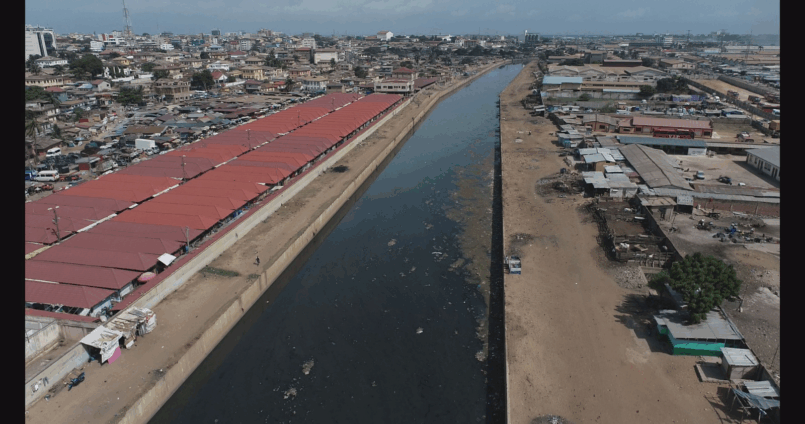
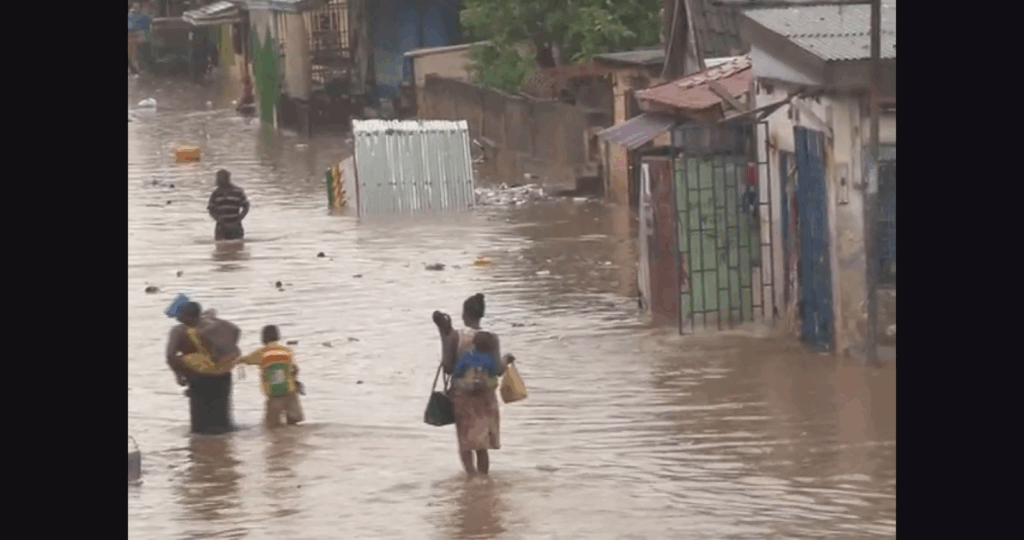
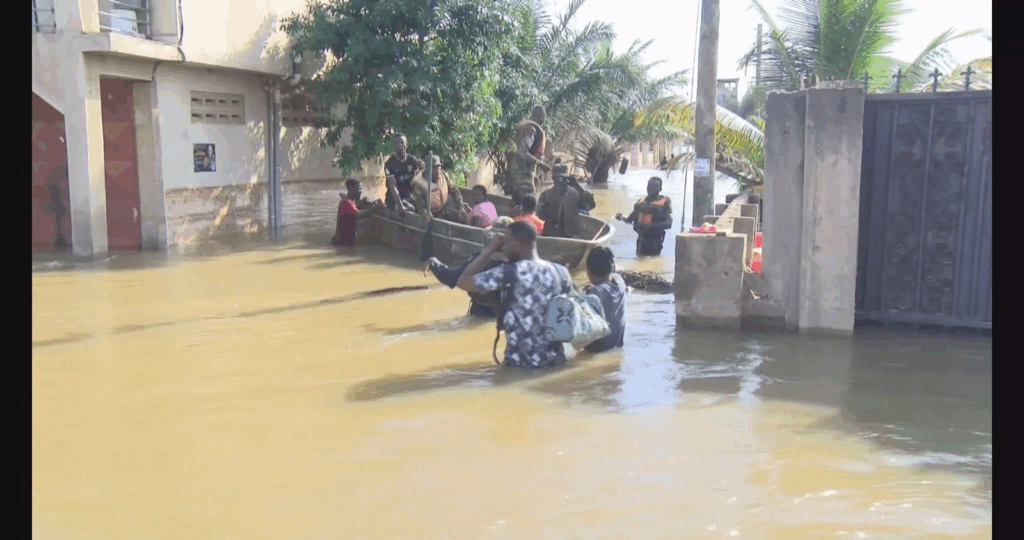
However, in Odawna, the contrast is stark. Drone footage from recent floods shows submerged homes, damaged clinics, and waste-choked drains. Over 3,000 residents were displaced this year alone after torrential rains overwhelmed the community.
“It’s Not Just Water — It’s a Killer”
For many in Odawna, each rainfall brings fear.
“The roads were flooded. I couldn’t move. I had to watch my child suffer until the water went down,”
— Mary Klottey, Odawna resident.
Residents recount how rising waters have taken lives.
“Two people drowned in the gutter just here. This is dangerous. It’s not just water — it’s a killer,” Local resident.
The floods also destroy property and cut off access to healthcare and schools, worsening the cycle of poverty and vulnerability.
After the Floods Comes the Heat
When the rains stop, another climate threat emerges — severe urban heat.
“It’s like an oven inside. I can’t sleep. My skin itches, and I feel dizzy most nights,”
— Seth Kusi, a glass repairer who lives in a metal kiosk.
With little ventilation and no green cover, Odawna’s makeshift homes trap heat long after sunset. Experts warn this “urban heat island effect” is increasing health risks for residents.
A study by Dr. Ebenezer Amankwaa from the University of Ghana’s Geography Department found that nighttime temperatures in Odawna can reach 6°C higher than national averages, worsening dehydration and heat-related illness.
“When floodwaters damage clinics and rising heat shuts down equipment, healthcare delivery collapses. Climate-proofing these areas is now essential,”
— Dr. Amankwaa.
Healthcare on the Brink
Repeated flooding has taken a toll on local health facilities.
Footage from Odawna shows flooded clinics, nurses drying soaked medical equipment, and patients waiting outside in sweltering heat.
Dr. Amankwaa warns that without targeted investment, healthcare in informal settlements will continue to deteriorate.
“We need to climate-proof these clinics — install cooling systems, raise foundations, and protect power supply.”
Community Efforts: Fighting Back with Limited Means
Despite the odds, residents are finding small ways to adapt. Some have raised their beds, cleared drains manually, or formed community clean-up groups.
However, their efforts can’t match the scale of the challenge.
Without major infrastructure support, Odawna remains highly exposed to climate disasters.
“We’ve increased public education and advised people to seek safer areas. Odawna is part of the government’s long-term restoration plan, including dredging the Odaw River,”
— Dennis Nartey, NADMO Regional Director.
Government Response and the Way Forward
Officials from the Environmental Protection Agency (EPA) and Ministry of Works and Housing insist progress is being made.
“Tree planting and less glass in homes help reduce urban heat. Communities must be part of the change,”
— Prof. Nana Ama Klutse, CEO, EPA.
“We’ve begun dredging the Odaw River to ease water flow and reduce flooding. But the work must continue,”
— Richard Kofi Amekor, Head of Drainage Department, MWH.
Experts and policymakers agree that expanding GARID’s model to cover Odawna and other at-risk settlements could save lives — and ensure that no community is left behind in Ghana’s climate resilience agenda.
A Hopeful Outlook Amid Rising Risks
Children planting trees, youth leading clean-ups, and women rebuilding small shops — Odawna’s story is not just about suffering, but also survival and determination.
“The GARID project is proof that change is possible. We just need it to reach everyone,” Resident volunteer.
As Accra’s climate challenges intensify — from floods to heatwaves — experts say inclusive, community-driven solutions will determine whether urban resilience becomes a reality or remains a promise on paper.
This story is in published partnership with CDKN and the University of Ghana C3SS with funding from CLARE R4I Opportunities Fund.
Latest Stories
-
Save us from these thieves in 3-piece
10 minutes -
Black Queens’ unpaid bonuses deepen Sports Ministry welfare crisis – Minority caucus demands accountability
25 minutes -
We are not mining in Draw River Forest Reserve – Betterland Ghana Limited
34 minutes -
Athletes abandoned in Glasgow? – Minority MP demands answers over ‘systemic’ welfare failures
43 minutes -
Gideon Boako cautions NPP members against dragging Bawumia into regional elections
45 minutes -
Cedi depreciated by 3.1% to dollar in July 2026, increasing year-to-date loss to 10.4%
1 hour -
Togo Parliament opens extraordinary session to consider three key bills
1 hour -
Stanbic, Absa, FNB well positioned to weather spillovers from US-Iran war – Fitch
1 hour -
Many feared dead in early-morning crash at Ofankor Barrier
2 hours -
Bank of Ghana steps up crackdown on unlicensed digital lenders
2 hours -
Tema Metropolitan Assembly halts Community 1 construction over alleged lack of permits
2 hours -
Bunkpurugu Police suspend funeral musketry amid security concerns
2 hours -
Police warn against religious statements that incite violence
2 hours -
Parliament recall unnecessary, waste of taxpayers’ money – Habib Iddrisu
2 hours -
Incumbent Western North NPP Regional Chairman withdraws from seeking re-election
2 hours