


Audio By Carbonatix
Nigeria's government rejected on Wednesday its designation by the United States as a "country of particular concern" over alleged religious freedom violations, saying the move was based on misinformation and faulty data.
President Donald Trump last week put Nigeria back on a list of countries that the U.S. says have violated religious freedom, and said on Saturday he had asked the Defence Department to prepare for possible "fast" military action if Nigeria does not crack down on the killing of Christians.
Washington's decision to designate Nigeria as a violator of religious freedoms has strained diplomatic ties between the two countries.
THREATS OF MILITARY ACTION UNWARRANTED, MINISTER SAYS
Defending Nigeria's record, Information Minister Mohammed Idris told a press briefing that Trump's threats of military action were unwarranted and misrepresented Nigeria's complex security challenges.
"...any narrative suggesting that the Nigerian State is failing to take action against religious attacks is based on misinformation or faulty data," Idris said.
Nigerian Chief of Defence Staff General Olufemi Oluyede said on Monday the country faced terrorism, not persecution of Christians, and the Nigerian presidency has said it would welcome U.S. help in fighting Islamist insurgents as long as the country's territorial integrity is respected.
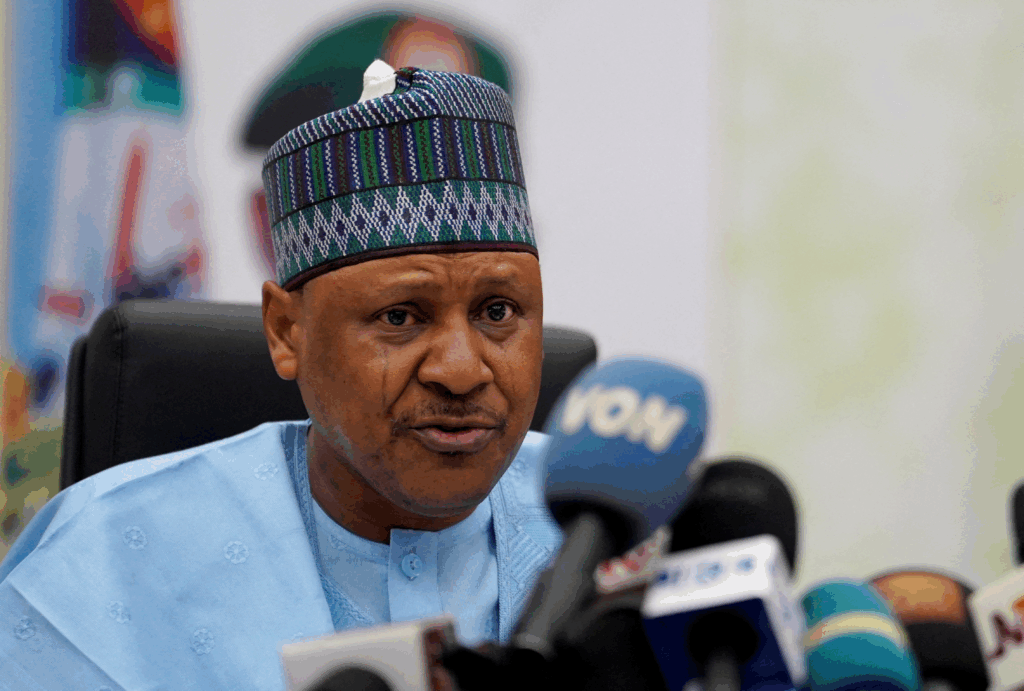
Idris said President Bola Tinubu's government had made significant progress in tackling terrorism since taking office in May 2023.
"The Government of Nigeria remains open and willing to work closely with the Government of the United States, other friendly nations and partners, to achieve our shared goal, the complete elimination of terrorism on Nigerian soil," Idris said.
More than 13,500 militants have been killed, 17,000 suspects arrested, and over 11,200 hostages — including women and children — rescued, he said.
Idris said terrorism affected both Christians and Muslims, and that the government is committed to ending extremist violence through military action, regional cooperation and dialogue with international partners.
Nigeria, home to more than 200 ethnic groups practicing Christianity, Islam and traditional faiths, has a history of coexistence but has also seen sporadic violence, often driven by ethnic tensions and competition over scarce resources.
Latest Stories
-
Drug bust case: Only Customs officers, MPS officials in scanning room – NACOC
29 minutes -
I don’t mind being insulted; I have a crocodile skin – President Mahama
42 minutes -
Samson’s Take: Verify the badge – and verify the story
53 minutes -
President Mahama explains why Ghana must rethink regulation of TikTok, other new media platforms
1 hour -
Rule of law must be protected – GBA condemns EOCO action against Baffour Awuah
3 hours -
950,000 barrels of Sankofa crude head to TOR as GNPC deepens domestic refining
3 hours -
Scales of deception removed – Annoh-Dompreh attacks new cocoa price
3 hours -
Young Positivist Writes : My Experience with GCLP
4 hours -
Strong Day 1 turnout sets tone for Day 2 of Republic Bank-JoyNews Habitat Fair Clinic
5 hours -
Ghana Army warns new soldiers against social media misuse, uniform abuse
5 hours -
AMA calls for science-led action to tackle environmental health risks in Accra
5 hours -
NPP Canada Organizer BigMo urges Diaspora to support Kodua Frimpong
6 hours -
He entered at eight; he is now 16: Ghana’s children growing up in prayer camps
9 hours -
‘Development must not always begin from Accra’ — Anwelle Foundation launched in Jirapa
9 hours -
PKO trio eye victories at Odwira Festival
12 hours