

Audio By Carbonatix
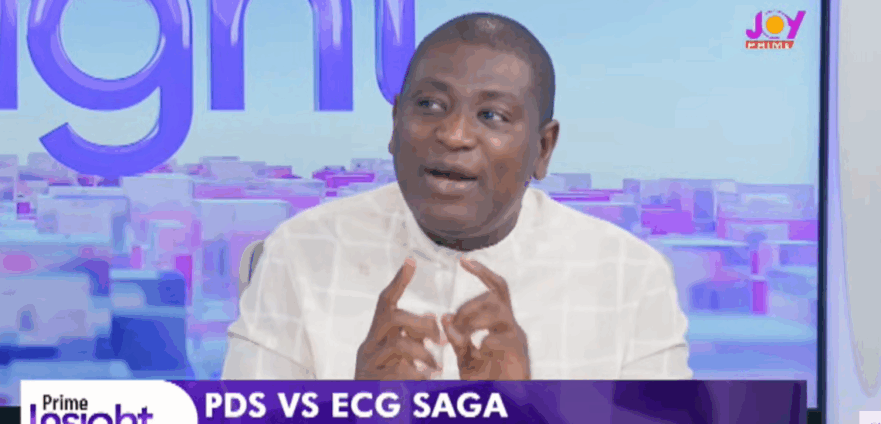
The Executive Director of the Institute for Energy Policies and Research (INSTEPR), Kwadwo Poku, has attributed the failure of the Power Distribution Services (PDS) concession to the government’s decision to introduce a 51% Ghanaian ownership requirement.
Speaking on Prime Insight on Saturday, November 8, Mr Poku argued that while the intention to ensure local participation in key national projects was commendable, the move backfired because the local partners lacked the financial and technical capacity to meet the demands of the deal.
“The reason PDS failed is the 51% Ghanaian ownership that was introduced. That’s the only reason, we keep trying to say that Ghanaians should participate in things that are Ghanaian, but the problem we fail to realise is capacity.”
Mr Poku explained that before the ownership requirement was introduced, the concession process had attracted several internationally reputable companies with strong experience and financial backing.
“When we went into the bidding rounds, the companies shortlisted were internationally reputed ones like EDF, a French company, and Morocco’s Manila Electric Company (Meralco). Meralco serves about 117 million people in the Philippines, while Ghana’s population is only around 35 million. You can’t say a company that serves 117 million customers doesn’t have the experience to manage ECG,” he said.
He disagreed with suggestions that Meralco lacked experience because it had never operated in West Africa.
“You don’t need to have experience in the region to be able to bring your expertise to Ghana. The real issue was not their competence; it was the ownership structure,” he added.
According to Mr Poku, the 51% local ownership requirement meant Ghanaian shareholders were expected to contribute over $200 million out of the $580 million total investment, a financial commitment none of them could meet.
“If you’re a 51% shareholder of a $580 million project, it means you have to bring 51% of that money over $200 million. None of the local companies had the capacity to do that,” he stated.
He said that this lack of capital was exposed when the issue of financial guarantees arose, leading to the eventual collapse of the concession.
“When the whole guarantee issue came up and there was an FIT investigation, it turned out that when they were supposed to pay $12 million for the guarantee, they only paid $1 million in cash. They used cash flow from PDS operations to pay for the rest of the guarantee,” he explained.
Mr Poku cautioned the government to learn from the PDS experience as it considers another private sector participation (PSP) arrangement in the power sector.
Latest Stories
-
Turning invitations into arrests is making citizens reluctant to assist police – Twumasi Ankrah
13 minutes -
The Traffitech-GH SMS spot-fine system: The good, the sad, and the funny – Bright Simons writes
25 minutes -
Hawa Koomson pledges experienced and mature leadership of NPP women’s wing
2 hours -
Young woman found dead at Kasoa Peace Town
2 hours -
Playback: The Law examined lawful arrest in Ghana
2 hours -
Mahama urges African governments to treat healthcare as an investment, not budget cost
3 hours -
Bawumia congratulates John Boadu and new NPP executives, pledges support ahead of 2028
3 hours -
Aksa Energy delegation pays courtesy call on GRA Commissioner-General
3 hours -
‘No talent should be left out’ – Bawumia pledges inclusive NPP campaign for 2028
3 hours -
Prof. Mike Oquaye recounts how he blocked the Special Prosecutor’s attempt to arrest Bawku Central MP
3 hours -
Make health sovereignty a priority for Africa – Mahama
4 hours -
Dorimon Naa, Wa West DCE lead massive clean-up exercise; threaten sanctions against recalcitrant residents
4 hours -
Photos from Adom FM Y2K Jam
4 hours -
Praye Tiatia steals the show at Adom FM Y2K Jam [Watch]
4 hours -
Boakye Agyarko congratulates John Boadu, pledges support for NPP leadership
4 hours