

Audio By Carbonatix
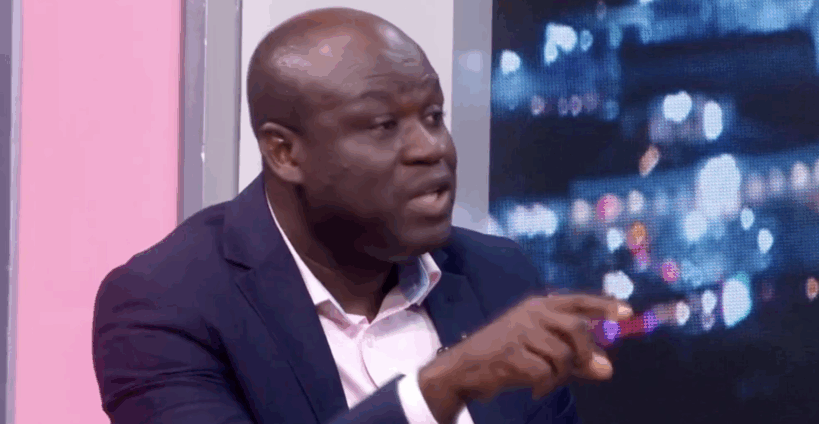
The Ghana National Chamber of Commerce and Industry (GNCCI) CEO, Mark Badu-Aboagye, has stressed that strong institutions are central to building a resilient economy and creating the conditions for businesses to thrive.
Speaking on Joy News’ PM Express Business Edition on Thursday, he argued that economic discussions in Ghana often focus on policies and macro indicators while ignoring the strength of the institutions that make the system work.
“Institutions are very key,” he said, adding that “most times when we are speaking, we leave out the institutions.”
According to him, for an economy to be strong, “the institutions must be strong,” warning that “weaker institutions weaken the economy.”
He said high-quality institutions are needed across the board, including for export and import, banking, and the broader business environment.
“Even for your export, for your import, for your banking sector, for everything you need, the institution,” he said.
A major concern raised by the GNCCI CEO was the courts' role in commercial disputes, particularly in cases involving loans and contract enforcement.
He argued that the slow pace of court processes can destroy the value of commercial transactions, leaving businesses worse off even after pursuing legal redress.
“You need courts to ensure that if it’s a commercial loan, it’s a commercial court,” he said.
He explained that in many cases, “by the time you are done with the court process, you would have lost the value of the money,” making the entire process unproductive.
“And it will not be, not make any sense,” he added.
Mr Badu-Aboagye said the solution must include a deliberate effort by stakeholders to streamline dispute resolution and establish timelines that reflect business realities.
“So if you all come together and say that if it’s a commercial loan, we are doing it for this period,” he said, suggesting that time-bound commercial justice could improve confidence in the system.
He also pointed to arbitration as an alternative mechanism that can ease the pressure on the courts and help businesses resolve disputes faster and at lower cost.
“For a Chamber, for instance, with some of our external partners, we move to arbitration,” he said.
According to him, the process allows disputes to be settled quickly without the financial strain and long delays often associated with court litigation.
“So we’re able to resolve some of these things so quickly that you don’t have to go and pay, you don’t have to struggle,” he explained.
He revealed that the GNCCI has an arbitration centre that supports members dealing with commercial disputes.
“Through arbitration, we’re able to resolve some of [them],” he said.
He added that the Chamber’s arbitration structure serves as a first point of resolution for disputes involving Chamber members.
“So we have an arbitration centre within the Chamber where you have any commercial dispute with any chamber member,” he noted.
He explained that where arbitration fails, the next step should be the commercial court system, which he believes must be structured to deliver outcomes within reasonable timeframes.
“The arbitration system. If it doesn’t work, that’s where you go to the commercial,” he said, adding that the aim is to ensure disputes are resolved efficiently.
Mr Badu-Aboagye urged that Ghana’s economic reform conversation must place institutions at the centre, not as an afterthought.
“So let’s look at some of these institutions and how we can use them to support our economy,” he said.
Latest Stories
-
Mahama commissions Christian Tetteh Yohuno Ward Complex at Police Hospital
4 minutes -
Vice President calls for wider access to Ghana’s political party histories
4 minutes -
Republic Bank JoyNews Habitat Fair to connect prospective homeowners with exhibitors in Ho from October 16 to 18
14 minutes -
Obaasima Summit: ‘AI is not a spiritual attack’ — Rev. Dr. Ofori-Boateng urges young women to embrace technology
24 minutes -
GHS to distribute 80,000 pairs of locally-made protective footwear to health workers
31 minutes -
GoldBod boosts local jobs as 90% of gold undergoes refining in Ghana – Sammy Gyamfi
34 minutes -
The search for the politically unblemished: Are we asking the impossible of public appointees?
35 minutes -
Ghana seeks climate finance access for debt-restructuring countries
45 minutes -
Afenyo-Markin urges stronger media scrutiny of public institutions
45 minutes -
GoldBod recovers GH¢38.7m in legacy PMMC debts, targets remaining arrears
47 minutes -
62 out of every 100 commercial meters inspected missing from Ghana Water database – MD
48 minutes -
GoldBod gets BoG authorisation to sell forex, Sammy Gyamfi tells PAC
51 minutes -
Ghana Water revenue mobilisation below 50% of potential – MD
57 minutes -
Ghana’s democracy must accommodate dissent and constructive criticism – Haruna Iddrisu
58 minutes -
Fact check: Trump posts fake quote of Denzel Washington supposedly praising him
59 minutes