

Audio By Carbonatix
The International Monetary Fund (IMF) says Ghana is close to completing its banking sector clean-up.
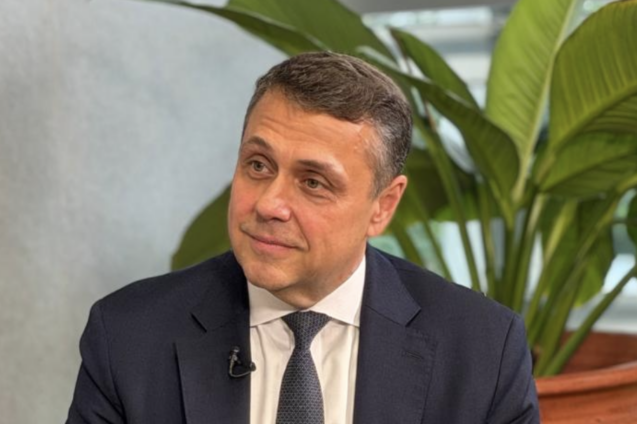
IMF Mission Chief, Dr Ruben Atoyan, expressed confidence that only a few banks remain to be fully stabilised as financial sector reforms near conclusion.
Speaking on PM Express Business Edition on Thursday, he said the country’s banking reforms have largely succeeded in restoring capital adequacy across the system.
“Well, you didn’t name the bank, so I’m not sure what exactly you’re talking about,” he said when asked about concerns over potential government action on a specific financial institution.
He explained that the broader context of Ghana’s financial sector reforms must be understood in relation to the impact of the Domestic Debt Exchange Programme, which weakened bank balance sheets and left several institutions undercapitalised.
“But I think let’s step back and look at what was an important objective for the financial sector reforms, the impact of domestic debt restructuring resulted in significant destruction of capital for the domestic banking system,” he said.
According to him, the authorities responded with a recapitalisation drive that has restored most banks to the required prudential standards.
“So many banks were undercapitalised. What the authorities have done has been quite successful during the program, bringing banks back to the full capital adequacy in line with prudential requirements,” he said.
He added that the process has nearly been completed across the sector, with only a small number of institutions still undergoing resolution or recapitalisation measures.
“That has been achieved almost for all the banks, for a couple of banks remaining,” he noted.
Dr Atoyan expressed confidence that Ghana’s financial sector reforms would be fully concluded by the end of the IMF-supported programme.
“We do expect that by the end of the program, the banking sector will be robust,” he stated.
Ghana’s banking sector has undergone significant restructuring in recent years following the sovereign debt crisis and the domestic debt exchange, which exposed weaknesses in several institutions and prompted regulatory interventions to restore stability.
The IMF says the reforms have strengthened the system’s resilience and positioned it for a more stable post-programme phase.
Latest Stories
-
Digital transformation without an ownership culture can digitise poor service
3 minutes -
Fishing communities demand revocation of offshore gold exploration licences over livelihood concerns
6 minutes -
How Ghanaian tycoon Manoj Lakhiani built a water and plastics empire from a $25,000 loan
7 minutes -
GoldBod recovers GH¢38.7m of GH¢55.8m outstanding receivables; remainder subject to legal action – Sammy Gyamfi
14 minutes -
GEXIM Bank donates GH¢200,000 worth of medical equipment to Korle-Bu Child Health Department
17 minutes -
Majority rejects Minority’s claims over GH¢49.7m South Africa evacuation
19 minutes -
GEXIM urges banks to support refurbishment of Korle-Bu Teaching Hospital’s Child Health Department
22 minutes -
Don’t appoint your cheerleader as referee
26 minutes -
Ghana needs stronger international cooperation to fight cybercrime – CSA
29 minutes -
CSA warns of growing cyber threats as Ghana’s digital dependence increases
35 minutes -
USTED dean warns GAUA strike could disrupt Ghana’s restored academic calendar
48 minutes -
Bechem meat processing factory 50% complete, set for March 2027 completion – Kwakye Ofosu
1 hour -
NDC can appoint whoever they want to EC, but Ghanaians will make a decision in 2028 – Titus Glover
1 hour -
GoldBod initiative has created over 1,300 public and private sector jobs – Sammy Gyamfi
1 hour -
Financial wellness key to retaining Ghana’s skilled workforce – Merban Capital CEO, Benjamin Ackah-Nyamike
1 hour