

Audio By Carbonatix
The International Monetary Fund (IMF) has defended the Bank of Ghana’s aggressive monetary tightening measures despite the central bank recording a staggering GH¢15.6 billion loss in 2025.
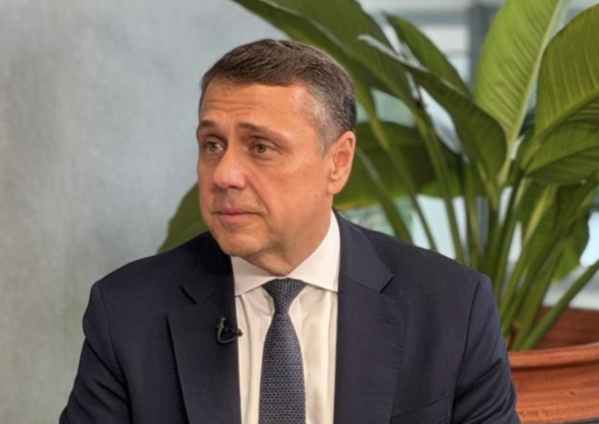
Speaking on PM Express Business Edition on Thursday, IMF Mission Chief Dr Ruben Atoyan rejected suggestions that the central bank overreached in its effort to restore macroeconomic stability.
“So, first, I would disagree with this view that the Bank of Ghana was too aggressive,” Dr Atoyan said.
“I think it was very prudent, and the achievement is, I think, manifested in the outcomes, and I think people on the ground actually recognise that.”
His comments come after the Bank of Ghana’s audited 2025 financial statements revealed a widening of the operational loss to GH¢15.6 billion, up from GH¢9.49 billion in 2024.
The accounts also showed the central bank’s negative equity position deepening sharply to GH¢93.82 billion from GH¢58.62 billion.
The deterioration has largely been linked to the cost of sterilisation and liquidity management operations undertaken to contain inflation, stabilise the cedi and restore confidence in the economy after years of severe macroeconomic instability.
Responding to concerns about whether the IMF was worried about the scale of the losses, Dr Atoyan insisted that the financial cost reflected the unavoidable realities of fighting inflation in a high-interest-rate environment.
“There is a cost of doing monetary policy, and this is something that people need to understand,” he stated.
According to him, the recently published 2025 financial statements of the central bank transparently captured the burden associated with implementing tight monetary policy during a period of elevated inflation and interest rates.
“You know that the Bank of Ghana 2025 financial statement was just published, and it transparently presents the cost of doing business with high inflation and high interest rates,” he explained.
“Absorbing liquidity from the market is costly, and that’s what we see as reflected in the statement.”
Dr Atoyan acknowledged that the operations generated significant financial pressure for the central bank, but maintained that the measures were necessary to restore economic stability.
“Yes, so it did generate some costs for the Bank of Ghana, but it was a necessary cost for the stabilisation going forward,” he said.
The IMF has consistently backed Ghana’s monetary tightening programme as part of broader reforms under the country’s economic recovery programme.
The central bank’s actions over the past two years have included aggressive interest rate hikes, liquidity absorption measures and tighter market interventions aimed at slowing inflation and rebuilding confidence in the local currency.
Latest Stories
-
Ghana Water revenue mobilisation below 50% of potential – MD
6 minutes -
Ghana’s democracy must accommodate dissent and constructive criticism – Haruna Iddrisu
7 minutes -
Fact check: Trump posts fake quote of Denzel Washington supposedly praising him
8 minutes -
UPSA students lament high fees at private hostels, call for government intervention
19 minutes -
We will upgrade Ghana’s credit ratings if government maintains fiscal discipline, policy effectiveness – Moody’s
19 minutes -
Gender Ministry supports four siblings allegedly sexually abused by their father
23 minutes -
UMB MD wins ‘CEO of the Year’, banking category at 2026 Ghana Credit Excellence Awards
24 minutes -
Don’t throw away empty egg cartons — 6 smart ways to reuse them
28 minutes -
GoldBod poised to surpass 2025 forex performance – Sammy Gyamfi
28 minutes -
Old students of Peki SHS break ground to give 70-year-old school infrastructure a facelift
43 minutes -
Ablakwa facing ‘personal vendetta’ over refusal to grant Nana B service passport – Majority
43 minutes -
Every year, the lawyers come out, and so does the nonsense! – Ace Ankomah writes
56 minutes -
Digital transformation without an ownership culture can digitise poor service
59 minutes -
Fishing communities demand revocation of offshore gold exploration licences over livelihood concerns
1 hour -
How Ghanaian tycoon Manoj Lakhiani built a water and plastics empire from a $25,000 loan
1 hour