

Audio By Carbonatix
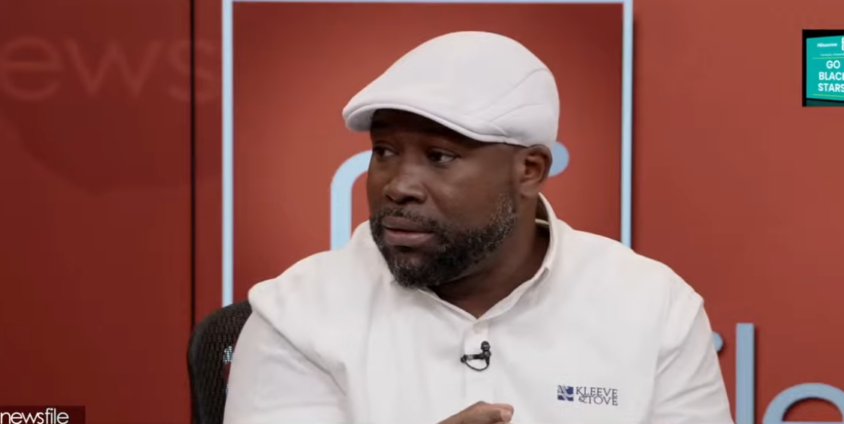
Convener of the OneGhana Movement and finance policy analyst, Senyo Hosi, has criticised the Bank of Ghana (BoG) over its handling of the GN Bank crisis, arguing that the central bank failed in its supervisory responsibilities despite clear signs of financial distress within the institution.
Speaking on JoyNews’ Newsfile on Saturday, May 23, Mr Hosi said that although the financial sector crisis was real and required urgent intervention, the Bank of Ghana should have acted earlier to prevent the situation from deteriorating.
His comments come amid renewed public debate over the revocation of GN Bank’s licence and the legality of measures taken during the banking sector clean-up exercise.
“We were in dire times, and something had to be done. We may not even have had a country. It would have been total chaos if your financial system went down. It was a major national security risk,” he said.
According to Mr Hosi, depositors across several financial institutions struggled to access their funds during the period leading up to the clean-up exercise.
“People could not get their money. People were going to some of these institutions, and they could not withdraw their cash,” he stated.
“People had made investments and could not withdraw them. That was chaos.”
He said the financial difficulties within GN Bank were publicly known and could not be dismissed as isolated allegations.
“Nobody in all honesty can say it was not public information that people were having problems withdrawing cash from GN Bank,” he said.
“They closed down about 70 branches at a certain point in time. People were genuinely struggling.”
While acknowledging the legal debates surrounding the revocation of banking licences, Mr Hosi maintained that the underlying financial challenges were evident and required regulatory intervention.
“The legal issue is one for the lawyers to discuss,” he noted, adding that the Bank of Ghana nevertheless had “a clear responsibility to act independently to ensure the stability of our financial system”.
Mr Hosi also criticised what he described as poor corporate governance practices within some financial institutions, including GN Bank.
“You carry deposited funds, and you play God, that you are the only one who has the best sense of how to use and turn money around. Lend money to yourself. You do not do that,” he said.
He expressed disappointment over the alleged prudential breaches, particularly given the reputation of Groupe Nduom founder, Papa Kwesi Nduom.
“The prudential breaches were so depressing, and respectfully, for it to be coming from somebody we held in such high esteem,” he stated.
Despite defending the need for intervention during the crisis, Mr Hosi argued that the Bank of Ghana must also accept responsibility for failing to detect and address the problems earlier.
“The other key problem you see is the complicity of the central bank. We had a crisis, agreed. But did we have to regulate the industry to the point where we had to now trigger this kind of issue? Where was supervision?” he questioned.
According to him, the role of the central bank extends beyond responding to crises after they occur.
“That is your role as a regulator. It is not just to correct problems; it is actually to pre-empt and prevent them as well. The Bank of Ghana must face and be honest about it. It failed,” he said.
Mr Hosi further argued that the banking sector crisis did not suddenly emerge in 2017 or 2018 but had been developing over several years due to weak oversight and delayed intervention.
“This whole problem did not just happen in 2017 and 2018. It has been growing,” he said.
He also criticised what he described as a tendency to shield businesses from accountability in the name of protecting local enterprises.
“When people are being irresponsible, you crack the whip. You take steps to prevent it, but when people are sustaining that irresponsibility and ill acts, you deal with them,” he stated.
Mr Hosi concluded that although some actions taken by the Bank of Ghana during the clean-up may have been justified, the regulator failed to fully optimise its supervisory role before the crisis escalated.
“I do not think the central bank’s options in trying to correct problems were optimal. Some steps were right, but I would approach it differently. Those again are policy choices,” he said.
Latest Stories
-
Mahama commissions Christian Tetteh Yohuno Ward Complex at Police Hospital
4 minutes -
Vice President calls for wider access to Ghana’s political party histories
4 minutes -
Republic Bank JoyNews Habitat Fair to connect prospective homeowners with exhibitors in Ho from October 16 to 18
14 minutes -
Obaasima Summit: ‘AI is not a spiritual attack’ — Rev. Dr. Ofori-Boateng urges young women to embrace technology
24 minutes -
GHS to distribute 80,000 pairs of locally-made protective footwear to health workers
31 minutes -
GoldBod boosts local jobs as 90% of gold undergoes refining in Ghana – Sammy Gyamfi
34 minutes -
The search for the politically unblemished: Are we asking the impossible of public appointees?
35 minutes -
Ghana seeks climate finance access for debt-restructuring countries
45 minutes -
Afenyo-Markin urges stronger media scrutiny of public institutions
45 minutes -
GoldBod recovers GH¢38.7m in legacy PMMC debts, targets remaining arrears
47 minutes -
62 out of every 100 commercial meters inspected missing from Ghana Water database – MD
48 minutes -
GoldBod gets BoG authorisation to sell forex, Sammy Gyamfi tells PAC
51 minutes -
Ghana Water revenue mobilisation below 50% of potential – MD
57 minutes -
Ghana’s democracy must accommodate dissent and constructive criticism – Haruna Iddrisu
58 minutes -
Fact check: Trump posts fake quote of Denzel Washington supposedly praising him
59 minutes