

Audio By Carbonatix
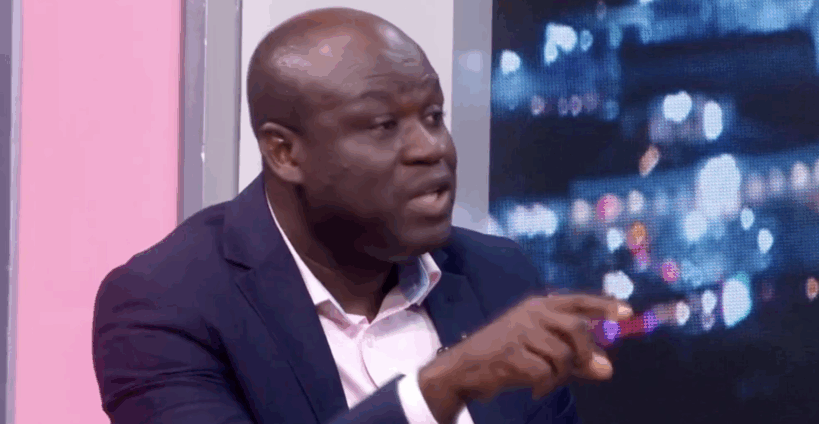
The CEO of the Ghana National Chamber of Commerce and Industry (GNCCI), says the newly launched 24-Hour Economy policy cannot succeed without first addressing the fundamental challenges crippling Ghana’s business environment.
Mark Badu-Aboagye was speaking on JoyNews’ PM Express on Monday, July 7, following the formal rollout of the National Democratic Congress’ flagship policy by President John Mahama.
“Launching a 24-hour economy will not change the harsh business environment that we are facing now,” Badu-Aboagye stated bluntly.
“The first point for me is to look at how we can improve the business… talking about the harsh business environment.”
Responding to questions by host Kofi Agyei, who cited recent improvements in inflation, the cedi, and business confidence, the GNCCI boss said these were not enough to sustain the policy.
“This is a safe space for us to possibly start accepting a 24-hour economy. It is a good start, but it’s not enough. Having inflation down to 13.7% is a necessary condition, but not sufficient to change the structure of the economy.”
He explained that the relevance of the improved macroeconomic indicators must be tested by their impact on real business costs.
“We want to see how the lower inflation will reduce the cost of credit. We want to see how the lower inflation will reduce the cost of utility, electricity and water. These are key components when it comes to manufacturing.”
Mr Badu-Aboagye pointed out that energy costs remain a major hurdle for local production.
“In Ghana, the cost per kilowatt hour per manufacturing company, ranging from 12 to 15 cents, is among the highest. For them [competitors], it is less than five cents.
"If you really want to manufacture more, we need to bring down the cost of utility, and then the cost of credit.”
He warned that a high policy rate of 28%—which translates into commercial interest rates of over 30%—is simply incompatible with a vibrant export-driven economy.
“No company would want to manufacture and export or be competitive under this condition.”
The GNCCI CEO stressed that if the 24-hour economy is intended to boost exports, then competitiveness must be the priority.
“The 24-hour economy is not only for local consumption. If it’s for local consumption, then we don’t need a 24-hour economy, because we can produce much to feed ourselves. We want to export, that is why the accelerated export is a component of the 24-hour economy.”
He added that the international market won’t reward policy declarations but competitive pricing and product quality.
“When you send your product abroad, people will not buy it because it’s coming from Ghana, because you have launched a 24-hour economy, hm? They will buy your product because one, it is competitive, and two, it is of high quality.”
Mr Badu-Aboagye concluded that unless the current gains in inflation and exchange rate are deliberately used to influence the policy rate, utility costs, and access to credit, the 24-hour economy will remain an attractive idea with no real traction.
“Let’s look at how the improvements we are seeing now—the lower inflation and the cedi appreciation—will impact on the policy rate.”
Latest Stories
-
Mahama commissions Christian Tetteh Yohuno Ward Complex at Police Hospital
4 minutes -
Vice President calls for wider access to Ghana’s political party histories
4 minutes -
Republic Bank JoyNews Habitat Fair to connect prospective homeowners with exhibitors in Ho from October 16 to 18
14 minutes -
Obaasima Summit: ‘AI is not a spiritual attack’ — Rev. Dr. Ofori-Boateng urges young women to embrace technology
24 minutes -
GHS to distribute 80,000 pairs of locally-made protective footwear to health workers
31 minutes -
GoldBod boosts local jobs as 90% of gold undergoes refining in Ghana – Sammy Gyamfi
34 minutes -
The search for the politically unblemished: Are we asking the impossible of public appointees?
35 minutes -
Ghana seeks climate finance access for debt-restructuring countries
45 minutes -
Afenyo-Markin urges stronger media scrutiny of public institutions
45 minutes -
GoldBod recovers GH¢38.7m in legacy PMMC debts, targets remaining arrears
47 minutes -
62 out of every 100 commercial meters inspected missing from Ghana Water database – MD
48 minutes -
GoldBod gets BoG authorisation to sell forex, Sammy Gyamfi tells PAC
51 minutes -
Ghana Water revenue mobilisation below 50% of potential – MD
57 minutes -
Ghana’s democracy must accommodate dissent and constructive criticism – Haruna Iddrisu
58 minutes -
Fact check: Trump posts fake quote of Denzel Washington supposedly praising him
59 minutes