

Audio By Carbonatix
Government is positioning the 24-hour economy as a major driver of Ghana’s horticulture industry, with plans to link greenhouse production to cold storage, logistics and export markets.
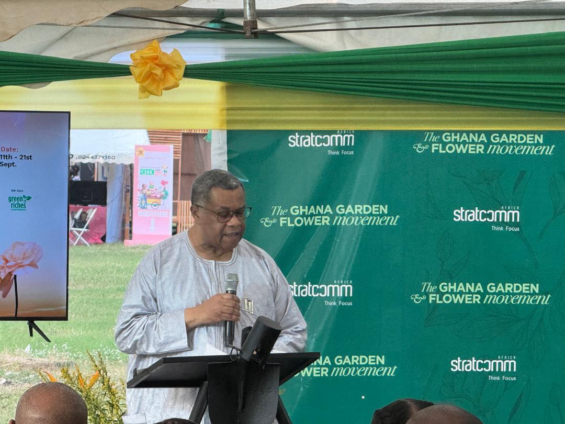
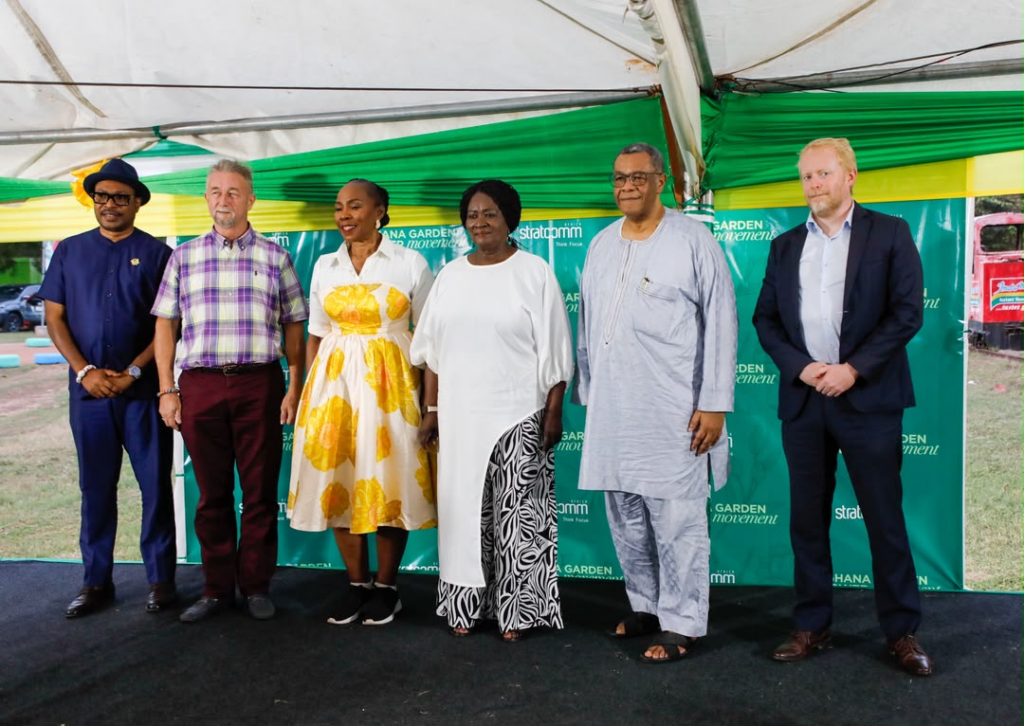
Presidential Advisor on the 24-hour Economy, Augustus “Goosie” Obuadum Tanoh, said the initiative is focused on building the systems needed to turn Ghana’s horticultural potential into a competitive industry.
He said production alone is not enough to create a successful horticulture industry.
“Producing is not the same as building an industry,” Mr Tanoh said.
He explained that a functioning industry must connect production to aggregation, processing, logistics and markets, backed by finance, standards, skills and technology.
“This is what we are working at through the 24-Hour Economy and Accelerated Export Development Program, connecting production to processing, logistics, and markets, and building the enabling systems within which competitive industries such as our flower industry can grow,” he said.
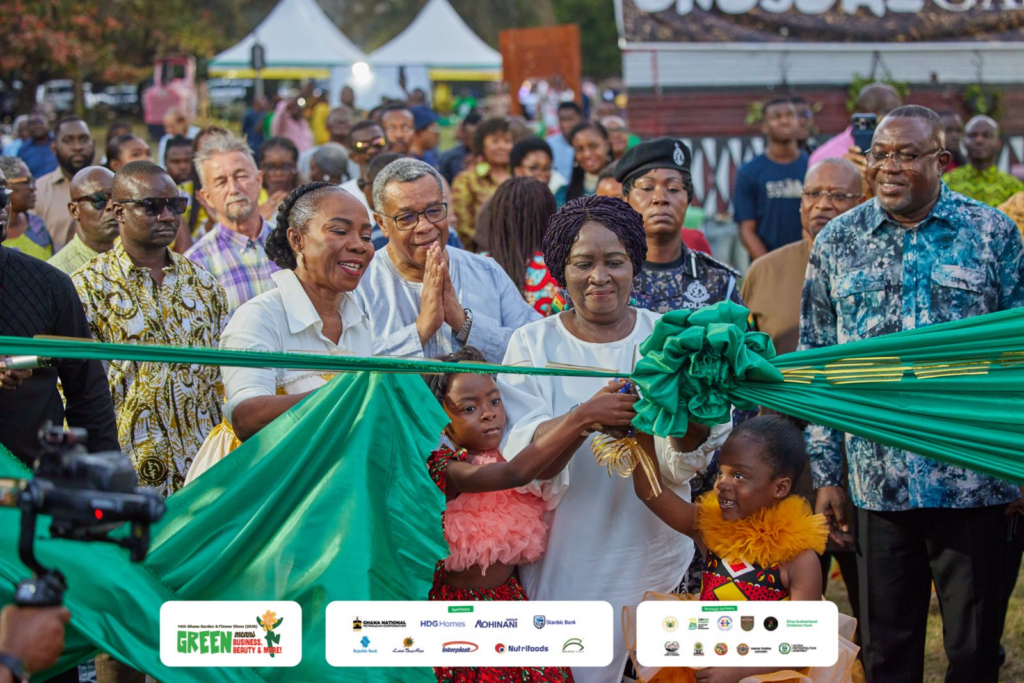
Speaking on Friday at the opening of the 14th Ghana Garden and Flower Show, Mr Tanoh said the government’s peri-urban agricultural programme, Shiqpon, will connect greenhouses and micro-irrigated food production to aggregation, cold storage and markets.
He also outlined plans to strengthen logistics for high-value agricultural exports, including cut flowers, vegetables and fruits, through the Tamale Air Cargo Hub.
“The Tamale Air Cargo Hub aims to strengthen logistics for high-value agricultural exports in the cut flower, vegetable, and fruit value chains,” he said.
Mr Tanoh said the 24-hour Economy Secretariat is also working with a private sector investor to develop a cut-flower corridor along the Daboya-Singa pathway.
The flowers, he said, would be airlifted through the Tamale Air Cargo Hub to markets in Europe, Ghana and West Africa, the Gulf and other potential destinations.
He pointed to Kenya’s flower industry as evidence of what Ghana could achieve with the right systems.
Kenya earned 556 million dollars from flower exports last year, while Ghana exported about 75 million dollars worth of mangoes to 42 markets in 2024.
Mr Tanoh said Ghana already has a domestic market for horticultural products but continues to import products it could competitively produce.
“On Valentine’s Day, we import roses from all over the place to be able to give to our loved ones. So we do have a domestic market. We do have domestic demand,” he said.
He said Ghana could also learn from Kenya’s ability to respond to international demand, noting that additional cargo aircraft were contracted last year to transport flowers to European markets for Valentine’s Day.
“We can do the same,” he said.
Mr Tanoh said the government’s plans also include the Volta Economic Corridor, which seeks to connect agricultural production, industrial development and logistics along the Volta Lake.
He said the corridor has a net-zero ambition focused on renewable energy, climate-smart production, efficient use of land and water, ecological restoration and reduced waste and emissions.
“Green means business, green means beauty, and when we build the systems that allow both to flourish, green can mean so much more for Ghana,” Mr Tanoh said.
Latest Stories
-
Kwabena Boamah appointed Board Chair for Impact Investing Ghana
2 minutes -
Striking teacher unions to meet Fair Wages and Salaries Commission on October 6
16 minutes -
EOCO working with AG to arraign Nana Baffour Awuah before weekend court
19 minutes -
Duraplast reassures customers after fire, announces October 5 reopening
27 minutes -
Call off strike, gov’t will not renege on promotion arrears pledge – Haruna Iddrisu appeals to teacher unions
29 minutes -
Committee set up to validate teachers eligible for 20% deprived-area allowance – Education Minister
34 minutes -
Five-member committee to search for new Black Stars coach after Sports Ministry-GFA meeting
1 hour -
Pinktober: Breast cancer survival exceeds 90% when detected early – Breast Society of Ghana
1 hour -
TCDA to adopt Upper West’s MATCO mango farm as northern prototype, issues warning against felling shea trees
1 hour -
‘Fear delegates’ tag: Afoko touts genuineness among delegates ahead of NPP delegates conference
1 hour -
John Boadu: The leader our party needs at this time – Amb. Edward Akwasi Boateng
2 hours -
Baffour Awuah: EOCO arrested, detained MP after hours of waiting, questioning – Afenyo-Markin
2 hours -
EOCO court warrant authorised search of Baffour Awuah’s law firm, not residence – Afenyo-Markin
2 hours -
NPP delegates conference: 3,000 to 4,000 police personnel deployed for security in Kumasi – Anthony Karbo
2 hours -
KGL Foundation commits $200,000 to support juvenile football for the next two years
2 hours