

Audio By Carbonatix
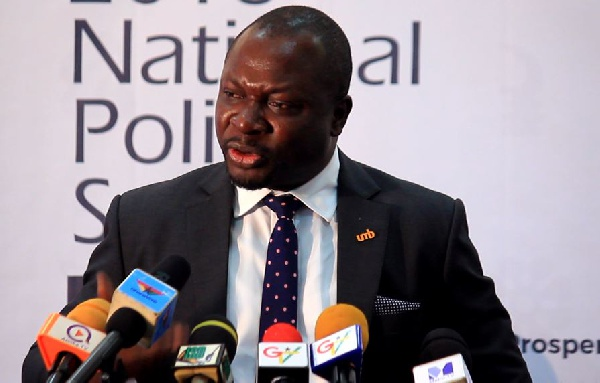
CEO of the Ghana Association of Banks (GAB), John Awuah, says the challenges in Ghana’s lending system reflect the character of the country and deep structural deficiencies that extend far beyond the banks themselves.
Speaking on JoyNews’ PM Express on November 12, he said that comparing Ghana’s lending rates to those in Côte d’Ivoire exposes systemic problems that have nothing to do with banking discipline alone.
He pointed out that many of the banks operating in Ghana also operate in Côte d’Ivoire, yet they lend at much lower rates there.
“Half of the banks operating in Ghana are also operating in Côte d’Ivoire — talk of the Ecobanks, Access Bank and the likes. How is it that in Côte d’Ivoire, the same bank is able to lend at the rate we are talking about?” he asked.
According to him, the difference is not simply about risk or management. It is about the broader systems that support financial operations.
“It’s a character of a country and the structural deficiencies that we have in this country,” he said.
He explained that processes within key state institutions affect how banks function and how credit risk is assessed.
“We have a lot of structural bottlenecks — from the Lands Commission to the court system to credit culture,” he noted.
Mr. Awuah said the absence of a unified credit reporting system makes it difficult for banks to properly assess loan applicants.
“If Mr Joseph Obeng [GUTA president who was also on the show] approaches a bank to borrow, let’s say ¢100,000, all the bank could do is say, Oh, where else do you have exposure? It is word of mouth. There is no mechanism for having a 360 view of the customer,” he explained.
He said borrowers often withhold information about other debts, making it impossible for banks to assess their true financial exposure.
“Whether he has a supplier’s credit, he won’t disclose to the bank. Whether he has taken a loan from the landlord of the property where he rents, whether he is even in arrears, he won’t disclose to the bank,” Mr Awuah said.
This lack of transparency, he warned, distorts lending decisions and increases the risk of loan defaults.
“So the bank gives ¢100,000, thinking it is going to maybe bring goods from China to sell, make money, and pay back the loan.
"Half of it goes to pay the supplier, another half goes to pay rent and salary in arrears. By the time you realise, what you funded is gone. Where is he going to get the money to pay you back?” he said.
Mr Awuah insisted that Ghana’s lending environment cannot be fixed by focusing on banks alone.
The weaknesses, he said, lie in the national systems that define how information flows, how property is verified, and how the courts enforce credit agreements.
“The system that gives the bank a 360 view of the customer is non-existent,” he emphasised.
Latest Stories
-
MMDCEs charged to ensure Landing Beach Committees do not sell premix fuel beyond approved prices
14 minutes -
The Inconvenient Truth: Democracy does not fail in The Chamber, it fails in the Committee Room
34 minutes -
There is absolutely nothing wrong with what the Chief Justice said
43 minutes -
App launched to help Ghanaians verify prospective partners’ marital status before marriage
53 minutes -
‘I have gone through a lot these past 2 days’ – A-Plus reveals after New Winneba violence
55 minutes -
DBG takes GH¢2.5bn development funding beyond Accra as it pushes industrial transformation
56 minutes -
Vice President Jane Opoku-Agyemang calls for accurate teaching of slavery history in schools
58 minutes -
Ghana has duty to preserve slave-trade sites and tell their full story – Vice President
1 hour -
West Africa can be self-sufficient in rice production – John Dumelo
1 hour -
Over 300 arrested over extremist recruitment attempts along northern border – Agalga
1 hour -
Housing Minister seeks shorter construction period for Kaneshie–First Light Road works
1 hour -
Ghana cannot afford complacency over extremist threats – Agalga
2 hours -
African leaders call for decisive investments to deliver a more sustainable food system for the continent
2 hours -
Ahmed Ibrahim orders traffic plan ahead of Pamprom Junction road closure
2 hours -
Full funding for Accra-Kumasi Expressway to be ready by year-end without borrowing – Ato Forson
2 hours