

Audio By Carbonatix
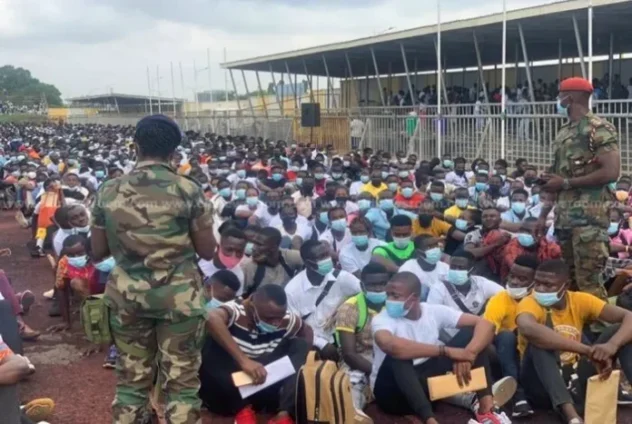
The heartbreaking incident during the recent Ghana Armed Forces (GAF) recruitment event in Ghana has once again highlighted the perilous conditions that often accompany job-seeking opportunities.
It is the latest entry in a disturbing global pattern where mass recruitment drives for limited public service jobs, particularly in developing nations, turn lethal due to overwhelming youth job desperation and catastrophic failures in crowd management.
The incident in Ghana, where thousands of applicants rushed the gates, underscores a dangerous convergence of high youth unemployment rates (often exceeding 15% in parts of Sub-Saharan Africa) and inadequate state planning.
As aspirations for employment collide with inadequate planning and safety measures, tragic outcomes have resulted in lethal stampedes, claiming lives and injuring many.
A Global Catalogue of Preventable Tragedies
Deadly stampedes during government and military recruitment are recurrent events, often claiming hundreds of lives collectively over the last two decades. These incidents highlight the immense societal pressure on youth to secure the highly coveted stability and benefits associated with government employment.
| Incident Location | Date | Estimated Casualties (Deaths/Injured) | Context of Stampede |
| Nigeria | March 15, 2014 | At least 19 deaths | The stampede occurred across multiple cities during a nationwide recruitment test for the Nigerian Immigration Service (NIS). Over 500,000 applicants reportedly paid fees and showed up for approximately 5,000 vacant positions, leading to deadly crushes at poorly managed stadium gates in Abuja |
| Nigeria | July 14, 2008 | At least 30 | Stampedes during a recruitment process by the Nigerian immigration service killed at least 30 job seekers and injured scores more as unemployed youths rushed at locked gates at different cities |
| Congo | November 21, 2023 | At least 37 | A stampede at a military stadium left at least 37 people dead in the Republic of Congo after large crowds of young people responded to a recruitment appeal |
| Ghana | November 12, 2025 | 6 deaths | They died following a stampede at the El-Wak Sports Stadium in Accra during the Ghana Armed Forces’ 2025/2026 recruitment exercise. According to a statement from the Ghana Armed Forces, the tragedy occurred when an unexpected surge of applicants breached security protocols and forced their way through the gates ahead of the scheduled screening. |
The Economics of Desperation
In many nations, securing a public sector job—whether in the military, police, or civil service—is seen as a gateway to financial stability, social security, and access to benefits that are nonexistent in the private sector. This perception often drives turnout figures to extreme, unmanageable levels:
Nigeria (2014): The NIS charged applicants non-refundable fees (estimated to be worth over $4.5 million USD in total revenue) only to host over half a million candidates for just 5,000 vacancies. This financial and emotional investment amplifies the risk-taking behaviour that leads to stampedes.
Ghana: The practice of charging non-refundable fees for recruitment forms—a practice criticised by many as "exploitation" following the El-Wak incident—exacerbates the desperation. Applicants who have paid and travelled long distances feel compelled to push through barriers, leading to chaos.
Contributing Factors to Military Recruitment Tragedies
These stampedes are typically driven by a combination of powerful economic and logistical factors:
- Extreme Unemployment Rates: In many regions, youth unemployment can exceed 25%. A military or security service job offers guaranteed income, healthcare, housing, and a path to retirement—a lifeline that thousands are willing to risk their lives for.
- Low Barrier to Entry: While the application process is rigorous, the initial call for applications often attracts applicants regardless of whether they meet the final eligibility criteria, leading to an over-saturation of crowds.
- Poor Infrastructure: Recruitment is often held in inadequate facilities (e.g., small stadiums or open fields) without proper barricades, controlled queuing systems, or sufficient emergency medical personnel on standby.
- Mismanagement and Corruption: In some cases, the suspicion of unfair processes or attempts to jump the queue exacerbates the panic, turning an ordered crowd into a deadly, unmanageable crush. The 2014 Nigerian incident was heavily linked to corruption and poor organization.
These tragedies are a stark reminder that as long as youth employment remains a crisis across the developing world, public recruitment drives will continue to be high-risk events demanding comprehensive, professional planning to prevent further unnecessary loss of life.
Latest Stories
-
NSMQ Final: St Augustine’s get GH¢110,000 motivational package from old boys
15 minutes -
AFCON 2027: Ghana has no business doing football if we can’t beat Somalia and The Gambia to qualify – George Afriyie
33 minutes -
Starlets to face Togo on October 10 in U-17 AFCON qualifying campaign
44 minutes -
FIFA U-20 World Cup: Princesses showed character-Head Coach
49 minutes -
PBee releases new single ‘Lose My Mind’ featuring SIICIE today
1 hour -
Many have been dismissed – Interior Minister exposes forged WASSCE results in security recruitment
1 hour -
NCA clears MTN, Telecel, Goal for next stage of 5G spectrum licensing
1 hour -
Father demands probe into death of Central University student in motorway crash
2 hours -
Transport Minister orders urgent action to tackle surge in port congestion
2 hours -
NPP national executive election: Here are the ballot positions
2 hours -
Court orders police to file disclosures in Labone robbery case
2 hours -
Central Regional Minister lauds Gomoa Central Assembly for effective utilisation of Common Fund
2 hours -
What must gov’ts do to make food systems drive job creation in Africa? – Fareeda Mustapha asks Rwanda’s Kagame
2 hours -
Gender Minister calls for equitable gender roles to support girls’ development
2 hours -
Prioritise rural businesses in Women’s Bank – NETRIGHT urges gov’t
2 hours