

Audio By Carbonatix
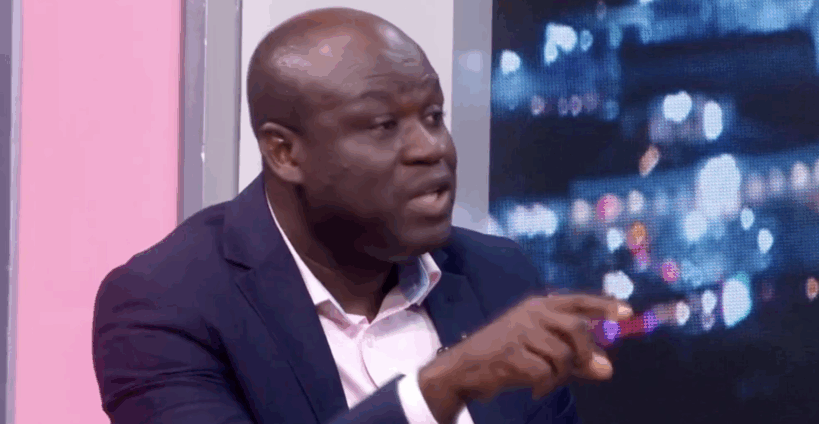
The Ghana National Chamber of Commerce and Industry (GNCCI) says government’s overhaul of the Value Added Tax system marks the end of years of frustration for local businesses.
Chief Executive Mark Badu Aboagye says the business community has pushed for this reform for almost four years and is now relieved to see it finally delivered.
“Largely, this is one of our major concerns for the past three to four years, and in all the budgets, one of our major input is for the VAT to be reformed,” he said.
He recalled that businesses were excited when government first hinted at a reform last year.
“We were happy when it was announced last year that we’re going to see a reformation and possibly a reduction in the effective batch rate,” he explained.
But that optimism faded when nothing changed for almost a year. For him, the latest budget brings closure.
“Unfortunately, it took almost a year, and then just this budget you’ve seen that it’s actually been reformed. So we are happy about it. I think one of our major issues, our major problems, has been resolved for us.”
He says the impact on businesses will be immediate because the old system was too difficult for many to work with.
“So for our members, our complaint largely was that it was so complex,” he said. The structure itself was a stumbling block.
“I mean, it’s a VAT that you see the Standard VAT being combined with straight line levies. In fact, the competition itself was a challenge for most of our members, so some of them are not saying that they don’t want to pay, but how to even compute it was also, was a challenge.”
Mr Badu Aboagye said businesses also struggled because key levies became a direct cost.
“Now we have said that the straight line level was translating into a direct cost to the businesses. So you see a direct cost of the one we pay for the NHIL, the one we pay for the get fund and also the almighty COVID level. These are levees that you cannot claim an input vacuum. So it became a direct cost to businesses,” he said.
He believes the consolidation changes everything.
“Now that we have consolidated and it is part of the Standard VAT, now becomes a VAT that a business person can also claim an input VAT, so it doesn’t become a direct cost to businesses again,” he added.
He said price effects will come later, but the system is now clearer.
“So there we are going to have there and how it affects prices. We’re going to discuss secondly. Now is simplified.
"So when you pay your 20% you know how to calculate your output, VAT, your input VAT, and how to do your deduction and the ones that you have to pay to government, obviously, you have to also pay to government.”
Latest Stories
-
Divers recover a total of 52 bodies from capsized ferry in Indonesia after a dayslong search
1 minute -
UNESCO urges Ghanaian journalists to mine archives for richer reporting
2 minutes -
Educational accountants hold workshop on financial discipline to avert PAC sanctions
6 minutes -
Devtraco Group launches Lotus residential development
13 minutes -
3rd JoyNews-Republic Bank Habitat Clinic kicks off at Junction Mall, Nungua
14 minutes -
KMA cracks down on illegal transport fares; engages 24 unions ahead of Christmas
16 minutes -
No new denominations beyond GH¢200 under Heritage Series – BoG
34 minutes -
Police train 45 personnel ahead of Traffitech-GH rollout on October 1
37 minutes -
Asanko Gold expands agric support programme to 80 farmers in Ashanti Region
42 minutes -
DR Congo running short of health workers as Ebola outbreak intensifies, WHO says
43 minutes -
GBA condemns attempted arrest of Manhyia South MP at Accra High Court
53 minutes -
Richmond Amoateng Foundation drives youth development and community unity in Juaben
58 minutes -
AFCON 2027Q: ‘Why don’t we have VAR in Africa?’ – Queiroz reacts to controversial penalty
59 minutes -
Safe NCD care needs leadership, investment and patient involvement – PharmAccess
1 hour -
Pope warns a ‘paradise of machines’ could undermine humanity as he opens France trip
1 hour