

Audio By Carbonatix
Engineer Eric Atta-Sonno has issued a strong call for Ghanaians to embrace positive attitudinal change both in workplaces and in homes, stressing that such transformation is indispensable to improving leadership and governance across the country.
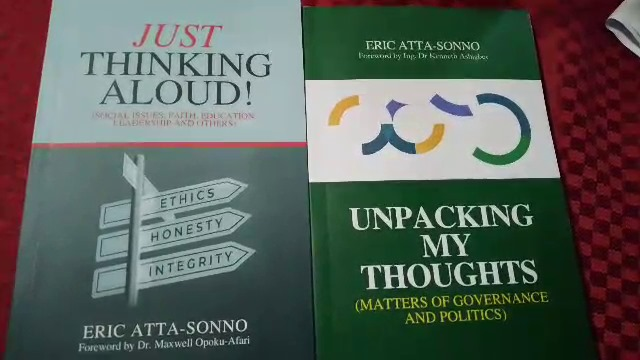
He said this at the launch of his new books, “Just Thinking Aloud” and “Unpacking My Thoughts,” where he highlighted the deep-rooted behavioural shortcomings affecting national progress.
According to him, many of the governance failures Ghana faces stem not only from leadership weaknesses but from societal habits that gradually shape those who eventually rise to lead.

Drawing from personal experiences, Engr. Atta-Sonno recounted his 2018 visit to the La Dade-Kotopon Municipal Assembly, which exposed him to worrying attitudes—delays, indiscipline, and a general lack of urgency in public service.
He also pointed to misconduct within institutions such as the Ghana Police Service, citing instances of indiscriminate parking at intersections, driving on road medians, and the frivolous use of sirens even in non-emergency situations.
“These behaviours are not isolated,” he remarked.
“Leaders emerge from the same communities in which such attitudes are normalized. If our society continues to tolerate indiscipline, we cannot expect transformational leaders to emerge from it.”

He emphasised that national development depends on individuals choosing to act responsibly, uphold standards, and hold those in authority accountable for the country’s progress.
Engr. Atta-Sonno’s newly launched books tackle a broad range of issues affecting the nation.
“Just Thinking Aloud” explores Social Issues, Faith, Leadership, and Education, while
“Unpacking My Thoughts” examines Economic Management, Social Justice, Rights and Equality, the Constitution, Democratic Consolidation, Electoral Politics, Decentralization, and Local Government.

At the same event, legal practitioner and governance expert Lawyer Eric Oduro-Osae underscored the urgent need to strengthen Ghana’s local governance systems.
He argued that effective decentralisation remains a key pillar of sustainable national development and must therefore be prioritised.
Latest Stories
-
Luv FM High School Debate: St. Hubert and Adutwum SHS seal their round of sixteen spots
1 hour -
La Liga to inspect Celta Vigo’s pitch after fungus outbreak
2 hours -
Rotten waste chokes Accra CBD as Tudu refuse lingers
2 hours -
Ghana receives final work plan for AU Champion on Gender and Development
2 hours -
Torres misses Barcelona training to finalise PSG move
2 hours -
Xavi becomes first non-Dutch Netherlands coach since 1978
2 hours -
Office of the Registrar of Companies fined GH¢240k for engaging unlicensed cybersecurity provider
2 hours -
Ghana–TradeMark Africa partnership renewal to boost trade and exports — Trade Minister
2 hours -
Poor Internet connectivity keeps disrupting teaching and learning at UEW
3 hours -
Volta Regional House of Chiefs congratulates Ablakwa, pledges stronger ties with Foreign Affairs Ministry
3 hours -
Baba Yara stadium will be ready for 2026/27 football season – NSA boss
3 hours -
Speak law, not emotions – Amaliba fires back at Mercer on Sedina Tamakloe’s release
3 hours -
NSA releases 121,754 PIN codes for 2026/2027 National Service Year
4 hours -
NSA withholds 22,269 national service PIN codes over identity verification issues
4 hours -
Eyipe’s sanitation crisis raises concerns over public health and coastal pollution
4 hours