

Audio By Carbonatix
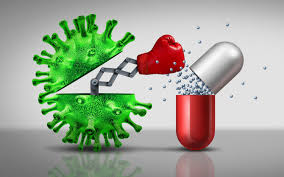
A Senior Research Fellow at the Noguchi Memorial Institute for Medical Research (NMIMR), Professor Beverly Egyiri, has said that Ghana is witnessing a dangerous rise in antibiotic resistance.
Antibiotics, also known as antimicrobials, are the medicines used to treat infections.
Speaking at the Annual Research Meeting of the Noguchi Memorial Institute for Medical Research (NMIMR) on Tuesday [Nov 25, 2025], she said the resistance occurs when germs become so strong that the medicines meant to kill them no longer work.
"This leads to treatment failures, prolonged illness and, in many cases, avoidable deaths," she said.
The event was on the theme “Advancing Healthcare Through Impactful Research and Innovation.”
She noted that many hospitals across the country are now battling infections that no longer respond to even the strongest antibiotics.
“In many hospitals, doctors are moving from drug to drug, yet the patients still do not survive. Every delay in intervening represents a life lost, and this is happening in several hospitals on the continent,” she warned.
Misuse
Prof. Egyiri stated that the problem has been worsened by the misuse and overuse of antibiotics, the ease with which people walk into pharmacies to buy them without prescriptions, and weak infection prevention and control systems in many health facilities.
She added that the COVID-19 pandemic led to even more indiscriminate use of antibiotics, accelerating the resistance challenge.
She further revealed that within African hospitals, several bacterial samples taken from patients are now resistant to nearly all available antibiotics including last-line treatment options that are usually reserved for the most severe infections.
“In some of the cases we analysed, the bacteria were resistant to everything tested. This is extremely worrying,” she said.
Another major concern, she said, is the region’s weak laboratory capacity. Only 1.3 per cent of laboratories in Africa are able to run the necessary tests to guide correct antibiotic use.
“When we do not test, we are essentially flying blind,” she explained.
mplementation
Prof. Egyiri highlighted that although many African countries, including Ghana, have developed national action plans to tackle antibiotic resistance in line with the World Health Organization’s global strategy, implementation remains slow due to limited funding and inadequate enforcement of policies.
Commitment
The Director of Noguchi, Professor Dorothy Yeboah-Manu, also highlighted the Institute’s continued commitment to advancing Ghana’s biomedical research capacity.
She said Noguchi’s recent research output has been strengthened through specialised training programmes, which have boosted the country’s scientific expertise.
She praised the strong partnership between Ghana and Japan, stressing that ongoing exchange programmes, technical assistance and infrastructure development have significantly supported Noguchi’s growth.
“We are very keen and happy about the deepening collaboration. We see new things emerging, and there is great potential for an improved partnership,” she said.
Additionally, the Japanese Ambassador to Ghana, Hiroshi Yoshimoto, reaffirmed Japan’s commitment to supporting scientific advancement in the country and commended Noguchi for its leadership in disease surveillance and public health research.
On his part, the Minister for Health, Kwabena Mintah Akandoh, also emphasized the indispensable role of research in international development and health security.
He acknowledged Noguchi’s immense contributions during the COVID-19 pandemic and its ongoing surveillance of infectious diseases such as Lassa fever.
He explained that the Ministry is currently prioritising four key areas: Modernising laboratory systems, especially DNA testing; Advancing universal health coverage through data-driven decision-making; Strengthening national training programmes; and Promoting pharmaceutical and vaccine manufacturing.
“We all felt very sad when we realised that the country could not conduct certain tests locally. But now, we are confident that Ghana will do these tests again,” he said.
Latest Stories
-
‘Carlos Queiroz not the sort of coach Black Stars need’ – Nii Lante Vanderpuye
11 minutes -
AFCON 2027Q: ‘Our Black Stars team is gone’ – Former Sports Minister
30 minutes -
Prof. Prempeh calls for public review of draft constitutional reform bills
43 minutes -
AFCON 2027Q: ‘I have never seen a poor performance from Black Stars like against Gambia’ – Nii Lante Vanderpuye
47 minutes -
Nigeria set to launch National Digital Address System 9 years after Ghana showed the way
1 hour -
Policy rate decision takes time to reflect in lower lending rates – BoG
1 hour -
Western Regional Minister applauds Karpowership’s role in Ghana’s power sector
2 hours -
Livestream: Road safety crises: Where are we getting it wrong?
2 hours -
Enterprise Life celebrates 25 years of protecting families and building trust
2 hours -
ICC London rules in favor of Ghana against Tullow over $400m tax charge
2 hours -
We are disappointed in ICC’s ruling over our corporate income tax assessment in Ghana – Tullow Oil
2 hours -
Cost of building inflation for August 2026 increases to 4.6% – GSS
2 hours -
Today’s front pages: Wednesday, September 30, 2026
3 hours -
Bawumia highlights agricultural, compulsory insurance reforms in IBAG engagement
3 hours -
Ghana will secure Tullow tax revenues while protecting Jubilee, TEN investments – Ato Forson
3 hours