

Audio By Carbonatix
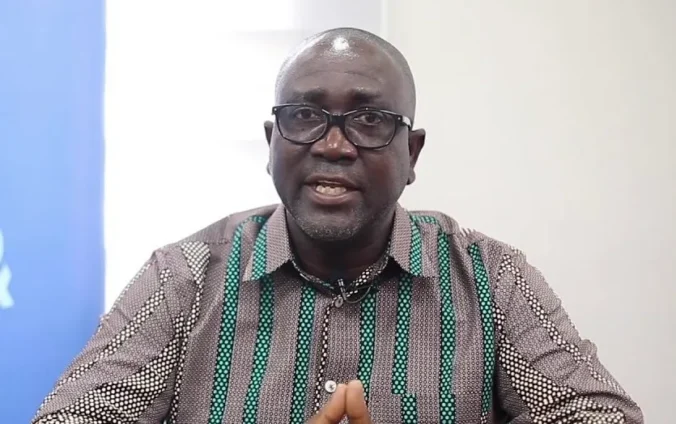
Executive Secretary of the National Media Commission (NMC), George Sarpong, is calling for civil society to take the lead in capacity-building for bloggers and emerging online creators, warning that leaving the responsibility solely to regulators could tilt the media environment toward government influence.
Speaking at the 2025 Media and Development Conference in Abuja, held under the theme “Reimagining Democracy, Development, and Data for the Next Decade,” George Sarpong stressed the need for a careful balance between media freedom and responsible regulation.
He noted that although bloggers now play a significant role in Ghana’s public information space, support for improving their professionalism should not be driven by regulatory bodies alone.
“I would want to partner with civil society to get this done,” he said. “If you left the regulators alone, they would lean towards government. And that is why a strong civil society partnership is the way forward.”
He explained that regulators naturally perform four core functions setting standards, monitoring those standards, enforcing them, and facilitating industry growth.
But he cautioned that when regulators dominate capacity-building, it risks weakening media freedoms.
According to him, civil society organisations are better positioned to lead training and support for bloggers, while regulators offer technical assistance to maintain quality and accountability.
“So whilst I completely agree with you on the need to offer any kind of capacity building to everybody who is participating in the public sphere, if there are resources for this to be done, I would want them in the hands of civil society with the regulatory support,” he added.
The comments come at a time when concerns about misinformation, online abuse, and declining media standards are prompting public calls for blogger regulation in Ghana. The NMC has consistently argued that reforms must protect press freedom while strengthening responsibility in the digital space.
The Abuja conference brought together policymakers, journalists, academics, and media development experts from across Africa to discuss the future of democratic governance and the role of data and emerging digital actors.
Latest Stories
-
World Cup visa scandal: People have leveraged public office to facilitate fraud – Senyo Hosi
3 minutes -
Glut! Farmers count losses as prices crash, customers happy
38 minutes -
GSA postpones auction of unserviceable vehicles
41 minutes -
Man charged with attempted murder after stabbing
44 minutes -
World Cup visa scandal: Senyo Hosi says issue goes beyond calls for Sports Minister’s resignation
46 minutes -
Yaw Ampofo Ankrah hasn’t taken or received any money to facilitate visas – Lawyer insists
1 hour -
World Cup visa scandal: Senyo Hosi urges focus on constitutional accountability
1 hour -
La Beach demolition: Senyo Hosi condemns lack of consultation
1 hour -
Russian glide bomb attack on Zaporizhzhia kills at least 15 people
2 hours -
Jinapor warns underperforming energy sector CEOs of consequences, says no protection for failure
2 hours -
Fire destroys head of tipper truck on Lower Volta Bridge
2 hours -
Palmer signs new Chelsea contract until 2034
2 hours -
World Cup visa scandal: Mahama will act on corruption allegations – Abass Nurudeen
2 hours -
Abass Nurudeen accuses Minority of ‘scandal scavenging’ over World Cup visa controversy
2 hours -
US Embassy recognised NSA, GFA and GTA as separate entities for visa applications – Sports Minister’s aide
2 hours