

Audio By Carbonatix
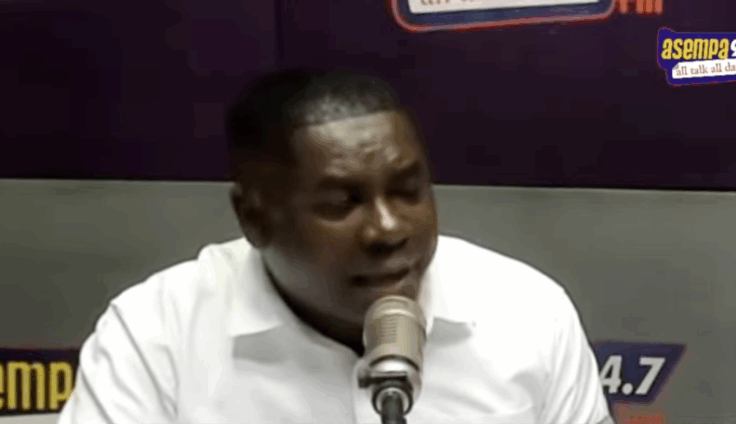
Member of Parliament for Tano North, Dr Gideon Boako, has challenged the Finance Minister’s explanation of Ghana’s rising public debt, describing the narrative as contradictory and reflecting a "lack of understanding of debt dynamics."
In a statement titled “Double-Tongued Minister for Finance,” the New Patriotic Party (NPP) member took aim at recent comments from the Finance Minister linking movements in Ghana’s public debt to changes in the cedi’s exchange rate.
“When debt levels fall they credit that to currency appreciation, and when debt levels rise, they also blame it on appreciation,” Dr. Boako wrote, questioning the consistency of the government’s messaging.
The NPP politician stressed that the administration had previously highlighted the stronger cedi as a factor in reducing the country’s debt stock.
"They were bragging that the stronger cedi helped to reduce the debt stock so why this contradiction?” he asked.
Dr. Boako argued that appreciation of the currency cannot directly cause an increase in debt levels and that attributing the recent jump of more than GHC71 billion in public debt to exchange rate fluctuations, particularly a depreciation from around GHS10.4 to about GHS11.4 against the US dollar over the past three months, was misleading.
“You came to meet a foreign-currency denominated debt level that had been assessed with an exchange rate at 14.3 to the dollar at the end of 2024,” Dr. Boako noted. “Now the exchange rate is around 11.4 to the dollar, and the debt stock has gone up and you attribute that to exchange rate pressures.”
He acknowledged that currency movements may affect debt indirectly, for instance, through capital flows, but maintained that the direct impact of the recent depreciation was insufficient to justify the scale of the debt increase.
“This clearly shows a complete lack of understanding of the debt dynamics,” Dr. Boako concluded, urging the Finance Minister to clarify the government’s position and come again with a more coherent explanation.
The comment adds to growing public scrutiny of the government’s handling of economic communication. Ghana’s debt levels and the management of public finances have been points of intense debate across the political divide, particularly as the nation continues to navigate post-pandemic recovery and external economic pressures.
Latest Stories
-
President Mahama ends Resetting Ghana tour of Ahafo Region
2 hours -
African negotiators seek delivery of climate commitments at COP31
2 hours -
BoG develops AI rules for financial sector
2 hours -
‘Big Push’: Government assures contractors of prompt payments
2 hours -
Court fines miner for breaking into gold buying shop
2 hours -
Tarkwa court jails labourer for three years over GH¢123,000 theft
3 hours -
GAEC must retain nuclear scientists for Ghana’s nuclear ambitions – Minister
3 hours -
Man reportedly mistaken for game and shot by hunter dead in forest
3 hours -
19-year-old mason jailed 15 years for defiling seven-year-old pupil
3 hours -
Ghana’s banking sector assets rise 20.47% to GH¢500.2bn – BoG Governor
4 hours -
22 injured as Sprinter bus overturns at Sege after tyre burst
4 hours -
UN housing expert urges Ghana to strengthen Rent Control Department amid housing affordability concerns
4 hours -
Delta-BCI partnership reaches 166,000 people with breast cancer education
4 hours -
Power restoration fault suspected in Kumasi Central Market fire
9 hours -
The 7-foot giant of Ngleshie Amanfro: Seven-foot Ghanaian Ephraim Saawa dreams of joining the national basketball team
10 hours