

Audio By Carbonatix
A doctoral researcher at KNUST says personal experience and community-based research reveal deep enforcement failures in Ghana’s motor insurance system, allowing bad-faith claims denial to persist despite existing laws.
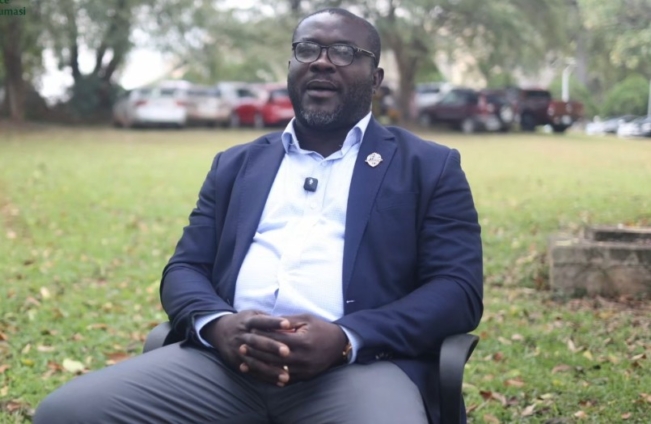
Dr. Edmund Nelson Amasah, a doctoral researcher at the Kwame Nkrumah University of Science and Technology (KNUST), says personal experience shaped his resolve to investigate what he describes as persistent regulatory failures in Ghana’s motor insurance system.
“My interest in insurance was shaped by personal experience,” Dr. Amasah said. “When my grandmother was involved in a road accident, I witnessed firsthand the fragility of Ghana’s third-party insurance system, especially for those who are uninsured or unlicensed. That experience pushed me to dig deeper into the industry and uncover what really happens behind the scenes.”
His doctoral research examines bad-faith claims denial under Ghana’s mandatory third-party motor insurance regime and argues that weak enforcement, rather than gaps in legislation alone, continues to undermine consumer protection.
Dr. Amasah said his work deliberately moved beyond textbook legal analysis, adopting a mixed-method approach that combined qualitative interviews with digital tools such as Google Forms to reach communities with limited literacy.
“To make complex insurance concepts accessible, I translated them into everyday analogies,” he said, explaining that bad faith was described as paying “five cedis instead of ten without reason,” or deducting premiums “without authorisation.”
“My goal was to help people understand and respond honestly, without feeling intimidated by technical jargon.”
The findings, he said, point to troubling contradictions at the policy level. Although Parliament has acknowledged prolonged claims delays, sometimes stretching several years the Insurance Act passed in 2021 introduced no enforceable timelines for settling claims.
At the same time, older regulations such as Legislative Instrument 1502 of 1990, which provide punitive measures for irrational claims denial or delay, remain dormant.
“I often ask myself: where is the LI?” Dr. Amasah said. “It hasn’t been repealed, but it’s not being used either.”
He also calling for the institution of an independent insurance Ombudsman that looks at the policy and helps to resolve disputes.
He argues that Ghana’s insurance ecosystem requires urgent reform, including amendments to existing laws, strict enforcement of dormant legal instruments, accessible redress mechanisms such as an independent insurance ombudsman, and sustained public education.
“Awareness alone, without regulatory change, risks washing our dirty linen in public and further undermining trust,” he said.
Latest Stories
-
Ampem Darkoa Ladies miss out on CAF Champions League qualification after penalty shootout loss
1 hour -
Herbal Medicine: Less than 15% practitioners registered
4 hours -
Road inspections not a witch-hunt against contractors — Agbodza
4 hours -
HTU clinic upgraded to primary hospital after HeFRA inspection
4 hours -
“When I am gone, just like Kwame Nkrumah people will appreciate me” – Kurt Okraku
5 hours -
“I love people who are not only critical but constructive” – Kurt Okraku
5 hours -
TECNO’s Modular Phone and TAURUS win gold at IFA 2026, recognising breakthroughs in mobile and gaming technology
5 hours -
Youth Forum in Accra calls for debt cancellation, reparations and African economic independence
5 hours -
Dr Abu Sakara urges African youth to seize global upheaval for economic emancipation
5 hours -
Fulham booed off after third defeat in a row
5 hours -
Joy FM Back-to-School Fair 2026 ends in massive success after two days of discounts and one-stop shopping
6 hours -
Man City maintain 100% start with win over Coventry
6 hours -
Kwesi Pratt urges African youth to reject ‘Gen Z revolution’, reclaim Africa’s resources
6 hours -
Forest and Tottenham both still looking for first win after scrappy draw
6 hours -
Inter Milan mount stunning comeback to beat Napoli
6 hours