

Audio By Carbonatix
On the 31st night of December, as Ghanaians gently crossed from one hardship into another with prayer, rice, and cautious optimism, the Republic witnessed a landmark development in the spiritual economy.
Grace went commercial.
At a Watch Night Service attended by a congregation large enough to qualify as a population census, Prophet Stephen Adom Kyei-Duah, leader of the Philadelphia Movement, unveiled what may become the most disruptive innovation of 2026: Adom Nyame — a divine asset so potent that believers were encouraged to sell their earthly properties and acquire it for themselves.
Land? Sell it.
House? Convert it.
Favour? Now available — apparently in bulk.
According to the Prophet, the acquisition of Adom Nyame ushers the buyer into divine favour, glory, and visible manifestation. Heaven, it seems, has finally accepted market principles. Possibly even instalment payments.
To be fair — and the Republic insists on fairness — he was quick to clarify that this was not extortion. Heaven forbid. He does not beg. He does not pressure. In fact, he openly questioned the relevance of tithes and offerings, arguing that if God truly provides, then God should not need envelopes.
This was comforting logic, right up until entire properties entered the conversation.
What remains unclear is whether heaven accepts uncompleted buildings, family houses under dispute, or lands whose owners are still arguing at the stool house. What is clear is that as 2026 opened, Ghanaians learned that grace now appreciates faster than real estate.
And as with every major policy announcement in the Republic, the impact was immediate and nationwide.
Not in the heavens.
On the roads.
Because when a spiritual product launches at scale, logistics must respond. The result was a mass movement of believers so intense that it translated directly into infrastructure stress.
While some worshippers entered 2026 spiritually uplifted, thousands of others entered it physically immobilised — on the Kumasi–Accra highway.
Reports emerged of travellers spending close to twenty-four hours in gridlock. Engines overheated. Children advanced developmentally. New Year’s resolutions expired. Somewhere between Juaso and eternity, motorists discovered a familiar national truth: although salvation may be instant, traffic is stubborn.
Many would later testify, without microphone or altar call:
“I saw 2026 before I reached Accra.”
Ironically, reports also suggested that selling items around the church premises was prohibited, with threats of confiscation. No selling allowed — except, of course, the headline spiritual product of the night.
In the Republic, this is not contradiction. It is doctrine with footnotes.
Economists are still calculating the Property-to-Favour Exchange Rate, but early estimates suggest that one uncompleted house attracts delayed testimony, while a full family house qualifies for instant breakthrough, pending objections from relatives.
Already, real estate agents are nervous. Lands Commission officials are on alert. Surveyors are reportedly updating their units of measurement from acres to cubits of favour.
And so, the Republic steps into 2026 having learned an important lesson: belief no longer moves only mountains. It now moves traffic, property markets, and national conversations.
Grace has left the prayer closet and entered the economy. And like every major system in the Republic, it has revealed a familiar pattern — grand promises at the altar, congestion on the ground.
Welcome to the New Year.
Where prayers are powerful, roads are patient, and grace — apparently — now comes with a price.
Happy New Year from the Republic of Uncommon Sense.
More laughter is loading. More sense is buffering.
If you read this without selling land, congratulations — you still qualify for free common sense. Comment, like, or share before grace adds VAT.
……….
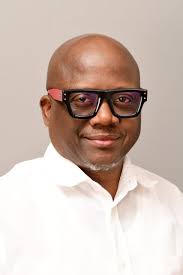
Jimmy Aglah is a media executive, writer, and satirist with extensive experience in broadcasting, content strategy, and public discourse. He writes on governance, leadership, media culture, and the everyday contradictions of public life, blending insight with restrained satire. Jimmy is the creator of the Republic of Uncommon Sense, a platform dedicated to civic reflection through wit, irony, and cultural observation.
Latest Stories
-
UG Vice-Chancellor urges swift operationalisation of National Research Fund
2 minutes -
Pope Leo to have surgery after lump found in lung
9 minutes -
Joseph Cudjoe writes: Ghana must break free from the dangerous mindset that natural resources are the foundation for wealth
32 minutes -
Children among 109 dead after boat capsizes off Djibouti, UN says
37 minutes -
OmniBSIC Bank’s 11th health walk promotes fitness and business growth
46 minutes -
2026 World Maritime Day: Danish Embassy organises “The Gulf of Guinea Speaks”
1 hour -
New Economy will tackle unemployment and restore hope – Ato Forson
1 hour -
IMMILAC president recounts personal losses as security women lead breast cancer awareness campaign in Wa
1 hour -
University of Ghana postpones October 12 reopening as GAUA strike persists
2 hours -
Bahass Foundation launches vocational skills training to support mental health recovery in Wa
2 hours -
NPP orders parliamentary aspirants and their supporters to suspend campaign activities
3 hours -
Techiman unites against child marriage: Joy Impact Makers Awardee leads charge on International Day of the Girl Child
3 hours -
Ghana Psychological Association calls for greater involvement of people with lived experience in mental health care
4 hours -
Ablakwa says Ghana could evacuate more citizens from South Africa if the situation worsens
4 hours -
Violence against girls must be tackled through individual responsibility – Gender advocate
5 hours