

Audio By Carbonatix
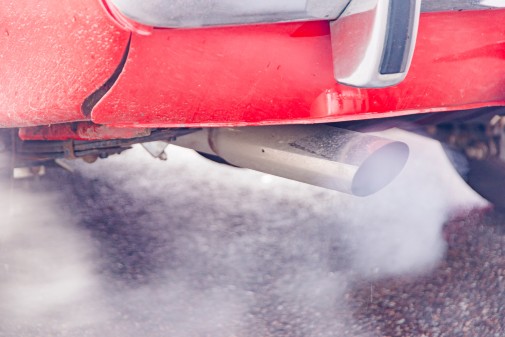
A new study in the UK has found that diesel cars with exhaust pipes on the left side produce much more air pollution near pavements than cars with exhausts on the right.
The research was led by the University of York. It shows that cars with left-side exhausts create about 40% more pollution at the kerbside than cars with right-side exhausts.
This matters because the UK drives on the left. As a result, exhaust fumes from left-side tailpipes are released closer to where people walk, stand, and cycle.
The researchers studied traffic-related air pollution near roads in cities. They used advanced testing methods to measure how vehicle exhaust spreads in the air. These methods helped them track pollution levels, especially nitrogen oxides (NOx), gases that can cause breathing and heart problems.
The study found that if all diesel cars in the UK had their exhausts on the right side, NOx pollution near pavements could be reduced by one-third.
The findings are important because diesel cars are the main source of NOx pollution. Yet only 20.1% of diesel passenger cars in the UK currently have right-side exhausts, which are usually farther from the pavement.
The research also revealed an unexpected benefit of electric vehicles. Beyond having zero exhaust emissions, electric cars help reduce pollution from nearby diesel vehicles. This happens because moving vehicles create air movement that spreads and weakens exhaust fumes.
Lead author Professor David Carslaw from the Department of Chemistry at the University of York said these findings show that even small details in vehicle design can have a big impact on air pollution close to roads.
“"These findings demonstrate that even seemingly small details in vehicle design can have a substantial impact on air pollution close to roads.”
He added that moving exhaust pipes is a simple change car makers could use to reduce roadside pollution. He also said the added benefit of electric vehicles gives another reason to speed up their use.
"The data on tailpipe placement offers a tangible and relatively simple modification that manufacturers could implement to reduce roadside pollution. Furthermore, the 'accidental' benefit of EVs in diluting existing pollution adds another compelling reason to accelerate their adoption."
To better understand air quality near roads, the researchers used a new method that takes fast air measurements at the roadside. This allowed them to study how much pollution vehicles release, what the pollution contains, and how it moves through the air.
Professor Carslaw said the study shows how many factors affect city air quality and helps provide new ideas for policy makers, politicians and the car industry to reduce the health risks caused by traffic pollution.
"This study highlights the complex connections between all the different elements that impact air quality in our cities," Professor Carslaw added. "And that's important, because it gives us new ways of thinking for both our politicians and the car industry to tackle the health challenges we face from traffic pollution."
What this means for Ghana
The findings have strong lessons for Ghana, where many cities struggle with air pollution from vehicles. In Accra, Kumasi, Tamale, and other towns, pedestrians, traders, street hawkers, and school children spend long hours close to busy roads.
Ghana drives on the right, unlike the UK, and many vehicles with right-side exhausts may be releasing fumes directly toward pavements and roadside markets, increasing health risks for the public.
A senior automobile engineering lecturer at KNUST University in Kumasi, Dr. Godwin Kafui Ayetor, says that in Ghana, vehicle exhaust pipes should ideally be on the left because pedestrians usually walk on the right side of the road and may be directly affected by the fumes.
He says that although there are no national statistics on where vehicle exhaust pipes are placed, whether on the right or left, most cars used in Ghana are imported from the United States of America which have their exhaust pipes on the right.
“The findings make common sense,” he said, adding that “most American cars have their exhaust pipes on the right.” However, he states that changing exhaust pipes to the left side, away from the pavement, could be another issue on its own because Ghana does not manufacture cars.
Many vehicles in Ghana are old and imported, with weak emission controls. Small design details, such as exhaust position, are rarely checked during vehicle inspection.
Experts say the study shows why Ghana must strengthen vehicle emission rules, improve road safety and design, and speed up the move to electric vehicles. Promoting electric bikes, electric cars, and cleaner transport could help reduce pollution and protect public health, especially for people who work and live near busy roads.
Latest Stories
-
GNFS contains fire outbreak at Teshie Lekma Road near Lekma Hospital
59 minutes -
Samia Nkrumah rejects the narrative that Ghanaians were happy after Nkrumah’s overthrow
2 hours -
A Mother’s pain: Tribute by Ivan Baidoo’s mother
2 hours -
‘Forgive us for staying away’ — Samia Nkrumah leads family back to Nkroful, pledges to preserve Nkrumah’s legacy
3 hours -
Ernest Nuamah scores twice as Lyon beat Rennes
3 hours -
‘My dear Ivan’ – A father’s tribute to a son tragically killed
3 hours -
GNPC Explorco advances Voltaian Basin drilling preparations with 13.5km access road
3 hours -
Cabinet approves facility manager for Borteyman Sports Complex – Kofi Adams
4 hours -
Sanitation is improving; critics may be ‘living in another world’ – Salaga South MP replies Bekwai MP
4 hours -
Government must do more to tackle sanitation crisis – Bekwai MP
4 hours -
World Cleanup Day: GFF begins sanitation education in local communities
4 hours -
EU Ambassador, IGP discuss stronger cooperation on policing and security
4 hours -
Africa Nations Volleyball Championship: Ghana set up quarterfinal clash with Cameroon after beating Chad
5 hours -
Meet Dr Benjamin Appiah Osei — Ghana’s three-time tourism awards winner
5 hours -
UEFA & CONCACAF demand Fifa pays $10m to all 211 members
5 hours