

Audio By Carbonatix
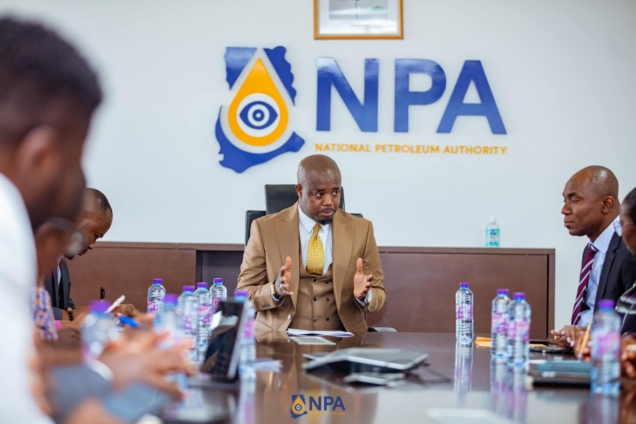
The National Petroleum Authority (NPA) has pushed back against calls to remove the Fuel Price Floor Programme, insisting the policy remains necessary due to persistent unfair pricing practices in the downstream petroleum sector.
According to the Authority, the market conditions that compelled the introduction of the price floor have not changed. It argues that pricing distortions continue to threaten industry stability.
Director of Economic Regulation and Planning at the NPA, Abass Tasunti, disclosed this in an interview on Business Live on JoyNews.
He said the regulator remains cautious about any decision that could destabilise the sector.
He noted that the NPA is mindful of the industry it regulates and does not intend to take steps that could plunge it into crisis.
Mr Tasunti also stressed that the petroleum industry is closely linked to the financial sector, making it critical for regulators to tread carefully when implementing or removing policies.
“Looking at the current developments on the market, the National Petroleum Authority has no plans to remove this policy,” he stated.
Industry Push
The NPA’s position follows renewed pressure from some industry players who are calling for the removal of the fuel price floor. Chief Executive Officer of Star Oil, Philip Tieku, has argued that scrapping the policy would allow prices to fall further, given current market conditions.
He maintains that consumers are being denied the opportunity to enjoy lower fuel prices at the pumps because of the policy.
The Executive Director of the Chamber of Petroleum Consumers (COPEC), Duncan Amoah, has also joined the call, insisting that removing the price floor is necessary to ensure consumers benefit from recent market developments.
He argues that the NPA’s actions stifle competition and constitute market interference.
Petroleum Price Floor Programme
The National Petroleum Authority rolled out the Petroleum Price Floor Programme in April 2024.
The directive requires Oil Marketing Companies (OMCs) and LPG Marketing Companies (LPGMCs) to strictly comply with the minimum price for fuel sales.
The measure aims to prevent price distortions and promote stability in the downstream petroleum sector. According to the NPA, the initiative aligns with the Petroleum Pricing Guidelines and is designed to promote transparency and sustainability in the fuel market.
The Authority has consistently argued that the policy will create a more predictable and balanced pricing structure, ultimately benefiting consumers while ensuring fair business practices across the industry.
Latest Stories
-
Allround Baby Pants launched in Ghana to ease diapering for mothers
2 hours -
Aggrieved Gold Coast Fund Management Company customers to petition Mahama over locked-up funds
2 hours -
NSMQ 2026: PRESEC, Legon dethrones defending champions Mfantsipim in thrilling battle to book semi-final spot
2 hours -
NPP set to overhaul constitution as delegates prepare to vote on sweeping reforms
2 hours -
Ghana’s cashew industry faces processing gap as Côte d’Ivoire moves to capture more value
2 hours -
“Our greatest wealth is not in our soil but our people” — Upper West Minister
2 hours -
Luex Healthcare launches children’s health education book series with Luey the Lion
2 hours -
NAGRAT urges gov’t to communicate early if September deadline cannot be met
3 hours -
We trust government to meet September deadline on teachers’ promotions – NAGRAT
3 hours -
“We dare not fail” – Gov’t promises to honour teachers’ promotion pay deal
3 hours -
The GH¢19.8 billion mirage: Inside Ghana’s state enterprise turnaround
3 hours -
Luv FM High School Debate: KNUST SHS and Osei Adutwum SHS set up thrilling final after dramatic semi-finals
4 hours -
KNUST AI Coordinator urges structured adoption of AI in teacher education
4 hours -
Nepal rescuers blast hillside in search of hydropower workers as families wait anxiously
4 hours -
Teachers who pass promotional exam to get January 2026 start date after gov’t resolves promotion dispute – Dr Apaak assures
4 hours