

Audio By Carbonatix
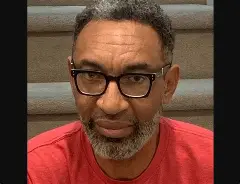
Sekou Nkrumah has called for increased understanding and tolerance in Ghana’s debates on homosexuality, emphasising that education and awareness should not be confused with promoting lifestyles.
His comments come amid ongoing debates in Ghana over the role of education in addressing sexual orientation and the rights of LGBTQ+ individuals, highlighting the tension between cultural norms, human rights, and public policy.
On his programme The Last Word on Tuesday, January 20, Mr Nkrumah responded to concerns about Ghana’s educational curriculum and how LGBTQ+ issues are represented in society.
Mr Nkrumah said, “I understood that the curriculum discussions were aimed at training teachers, not at promoting homosexuality to students,” noting that some controversy stemmed from off-air comments by a media personality that were widely circulated.
The analyst emphasised that education on sensitive topics, including human sexuality, is intended to inform and guide students rather than promote specific behaviours.
The analyst emphasised that education on sensitive topics, including human sexuality, is meant to inform and guide students rather than encourage specific behaviors.
“When a girl experiences menstruation or a boy navigates puberty, they need guidance from a trusted adult,” Nkrumah explained. “Similarly, understanding differences in sexuality requires adult guidance, not judgment or condemnation.”
Reflecting on his personal journey, Nkrumah referenced African American author James Baldwin, noting his exploration of social issues and homosexuality in his works.
“I realised that being homosexual, like being heterosexual, is about love and attraction. It is not for anyone to judge as right or wrong,” he said.
He highlighted that Ghana’s varied cultural and religious makeup requires a careful and balanced approach.
“We cannot pretend that homosexuality does not exist. Some are born that way, while others may be influenced by their experiences. In either case, society must respond with compassion, not condemnation,” he added.
Nkrumah also warned against hypocrisy in public discourse, pointing out that those who condemn others may privately act in ways that contradict their public stance.
He urged Ghanaians to prioritise tolerance, education, and understanding over stigmatisation.
In his remarks, Nkrumah said societal acceptance of different ways of life should be a gradual process. “We must respect individual differences while determining, as a society, what aligns with our cultural and moral framework. Denying reality or imposing foreign values will not create a harmonious society,” he stated.
Latest Stories
-
Nurses and midwives indispensable to resilient health system – Bawumia
43 seconds -
About 565,000 BECE candidates qualify for SHS placement – CSSPS
1 minute -
Virtual InfoSec Africa renews partnership with Cyber Security Authority
5 minutes -
TMA is highest authority in Tema, TDC must comply with its regulations — President
28 minutes -
Cyanide, unregistered cigarettes hidden under bags of millet, soya beans in major highway bust in Techiman
32 minutes -
Security agencies call on civilians to volunteer information to combat crime
36 minutes -
New maternal units commissioned in North Tongu to improve access to care
37 minutes -
Enterprise Insurance reaffirms industry leadership with 4 wins at 6th CIIG
45 minutes -
GES release national harmonised prospectus for 2026/27 SHS admissions
46 minutes -
Presidency orders TMA, TDC to end dispute over Tema development authority
51 minutes -
Ayew brothers among Ghanaians without clubs after transfer window closes
1 hour -
GPHA records GH¢2.82bn net profit as revenue rises to GH¢7.62bn
1 hour -
Today’s front pages: Thursday, September 3, 2026
1 hour -
Police arrest over 10 students over Okuapeman-Mount Sinai clashes
2 hours -
WAFU B WCLQ: Ampem Darkoa Ladies thrash Dynamique FC to reach final
3 hours