

Audio By Carbonatix
A 2,300-mile "ice monster" sweeping across the United States has effectively severed the cultural and economic lifeline between North America and the African continent, leaving thousands of diaspora travellers stranded and families in cities like Accra, Lagos, and Nairobi on high alert.
This historic winter storm, officially named Winter Storm Fern, has moved beyond a local weather event, paralysing the critical air bridges that connect major U.S. hubs to African capitals and forcing the total shutdown of major universities and schools where thousands of African international students are enrolled. With the highest number of flight cancellations since the 2020 pandemic and catastrophic power grid failures, the storm is now a full-scale international crisis affecting everything from global transit to the essential "gig economy" delivery services relied upon by the diaspora.
Total Flight Cancellations Reach Post-Pandemic Highs
Airlines havecancelledd over 17,000 flights overall since the storm began its trek from the Rockies. According to aviation analytics firm Cirium, the winter storm has triggered the highest number of US flight cancellations since the COVID-19 pandemic. As of 3:30 p.m. ET Sunday, airlines had cancelled 8,906 of 23,735 scheduled US departures, making it the worst single day for cancellations since the early days of the pandemic in 2020.
These numbers represent about 38% of all flights scheduled nationwide. FlightAware shows that cancellations continued to climb into the evening, with airlines in the United States surpassing 11,000 cancelled flights by 6:45 p.m. ET Sunday. The disruption has hit the West African corridor particularly hard, as one-third of all international arrivals from overseas werecancelledd on Sunday. Major carriers like Delta and United have issued expansive travel waivers, but because many African routes only fly once daily, a single cancellation is creating week-long backlogs for travellers.
Delta Air Lines said Sunday night that it is resuming flights “where it’s safe to do so.” However, the airline warns that low temperatures in Atlanta – where it’s based – and continuing storms across the Northeast may still affect flighon ts Monday.
Major Airport Hubs Face Total Shutdowns
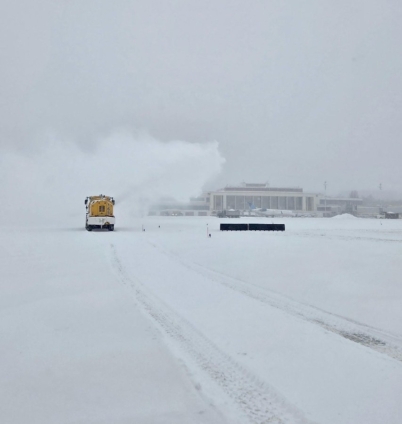
Primary entry points for international travellers have suspended operations. Boston Logan International and Rhode Island’s T.F. Green shut down entirely on Sunday. New York’s LaGuardia Airport closed for runway treatment, canceling 91% of departures and 97% of arrivals. At Newark Liberty and JFK, which handle the bulk of travel to Africa, the majority of flights were grounded, with Newark seeing 87% of flightscancelledd. Washington’s Reagan National Airport saw over 90% of its schedulcancelleded, remaining open only for stranded passengers and employees.
Rhode Island’s T.F. Green International Airport also closed Sunday afternoon “due to the severity of winter weather conditions.” According to FlightAware, 88 flights were cancelled at T.F. Green, where the airport had earlier warned that the “overwhelming majority” of scheduled travel would be grounded.
Thousands of Travelers Stranded at Global Transit Hubs
The crisis paralysed Middle Eastern hubs used frequently by African passengers. Emirates and Etihad Airways have cancelled multiple flights from Dubai and Abu Dhabi to the U.S. East Coast. This has left hundreds oftravellerss from Ghana and Nigeria stranded in the Middle East. Kenya Airways also cancelled direct flights between Nairobi and New York, citing "dangerous conditions" that made operations impossible.
Major Universities Across Multiple States Close
Universities from New England to the Deep South have cancelled Monday classes. Boston University, Tufts, and Brown have shut down campuses. The University of Georgia, the University of North Georgia, Miami University of Ohio, and Clemson University are closed. The University of Mississippi will remain closed through Tuesday. The University of Maryland delayed its spring semester, and Middle Tennessee State University moved to remote learning.
K-12 School Systems Close or Move to Remote Learning
Primary education has been severely disrupted. New York City, Philadelphia, Boston, and Baltimore closed all public school buildings. Houston, Cleveland, Dallas, and New Orleans also cancelled all classes. In the Washington D.C. area, Fairfax, Prince George’s, and Montgomery (Monday and Tuesday) counties are shut down. Memphis-Shelby County is closed due to hazardous conditions. In Atlanta, Gwinnett, Fulton, and City Schools of Decatur moved to remote learning, while DeKalb Countycancelledd classes. Nashville schools are closeon d Monday and Tuesday.
Extensive Power Outages and Infrastructure Damage
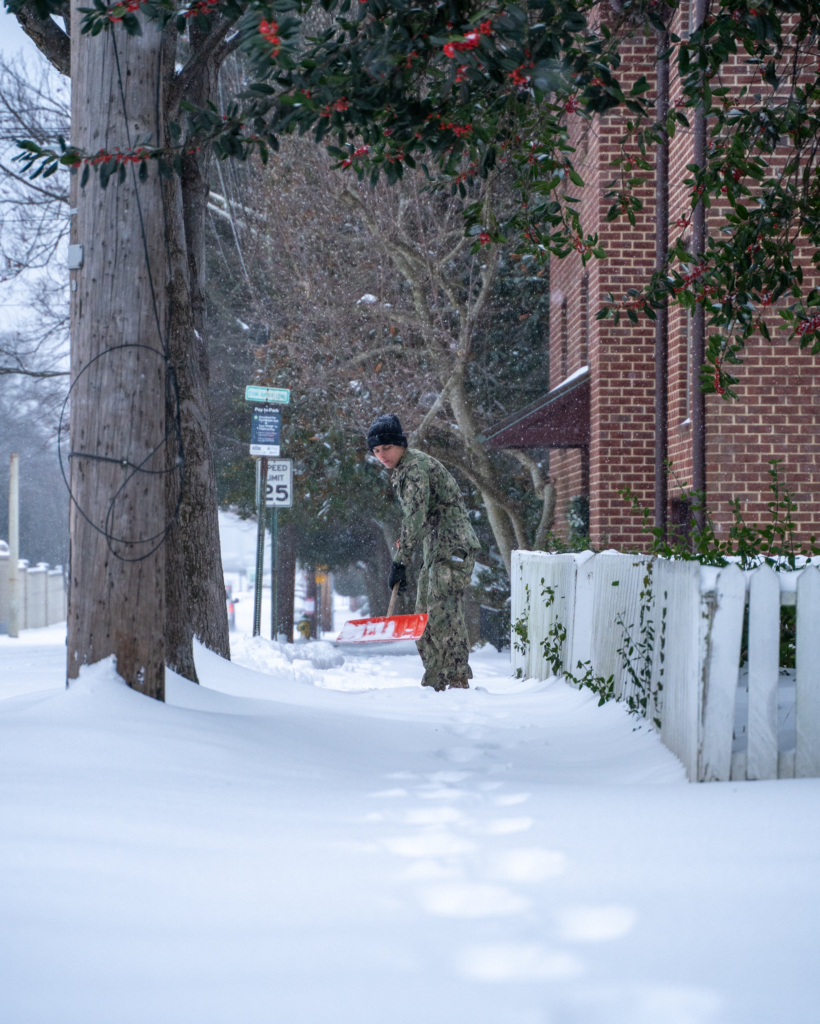
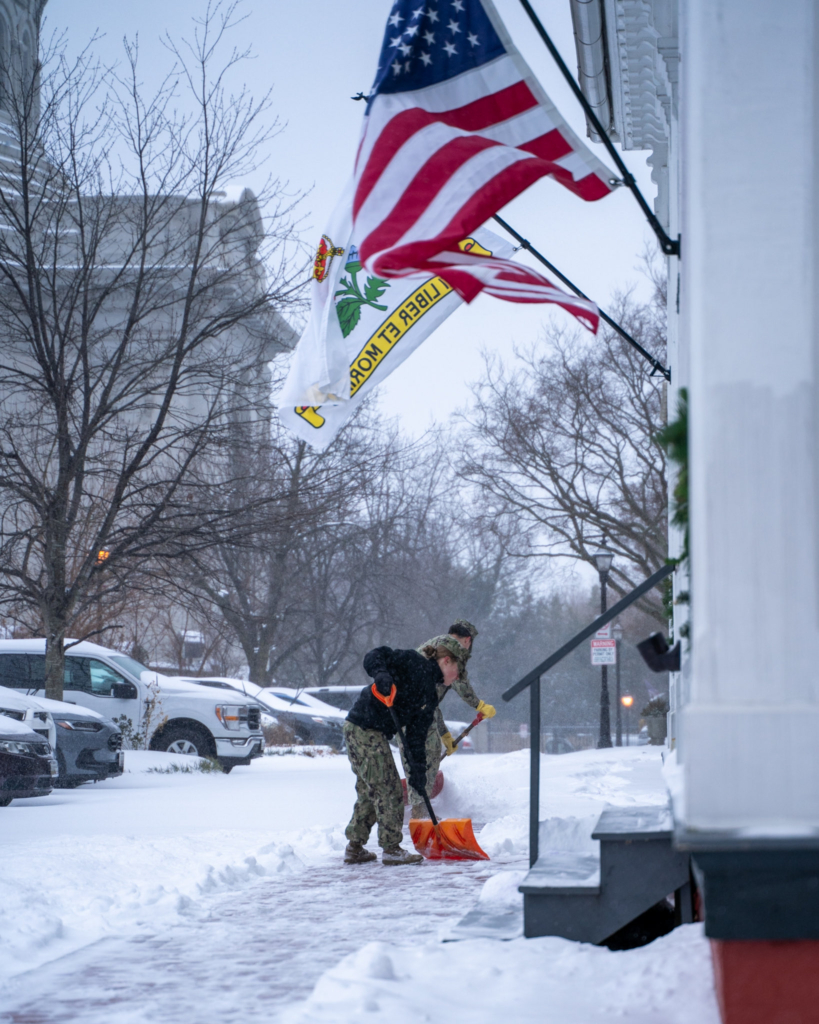
The US has reached 1 million customers without power from the winter storm, according to tracking website PowerOutage.us. Southern states have the most outages. Ice accumulation has caused tree limbs to fall on power lines. The outage footprint is now expanding into the mid-Atlantic.
Tennessee has over 330,000 customers without power. Mississippi has over 160,000, while Louisiana has over 135,000. Texas reports over 90,000 outages. Davidson County, Tennessee, accounts for 204,500 of the state's total.
Gov. Tate Reeves of Mississippi reported "catastrophic damage" to a TVA distribution line via the Tippah Electric Power Association, noting that hazardous roads and downed trees are hindering utility crews. In response, Energy Secretary Chris Wright issued emergency orders for operators to bypass pollution limits and utilise backup power from data centres.
Ride-Share and Delivery Services Face Disruptions
The "gig economy" infrastructure, which provides vital employment and service to the diaspora, has also frozen. Lyft is allowing drivers to cancel rides without penalty for safety, while DoorDash has suspended some local operations and implemented a "Weather Impact Fee" for drivers. Grubhub is pausing deliveries on a rolling basis in high-risk regions. These disruptions have left many residents without reliable transport or food delivery during the freeze.
Deadly Cold and Urban Service Suspensions
At least 11 people have died as the coldest temperatures of the winter settle across 15 states where snow has piled a foot or higher. Nearly 90 million people are under extreme cold alerts. In New York City, Mayor Zohran Mamdani suspended the ferry system and the Citi Bike share program. The bike-sharing system is shut down until Monday, according to a service update posted to X.
Mayor Mamdani has urged residents to stay indoors as heavy snow continues to blanket the city, emphasising that conditions are dangerous. Public libraries in New York remain shuttered, though the Mayor noted residents could access the e-book "Heated Rivalry" via library cards while staying home to avoid the "whiteout or near-blizzard conditions."
Sports and Cultural Event Postponements
The winter storm has forced the postponement of major cultural events. The Memphis Grizzlies postponed their NBA game against the Denver Nuggets scheduled for Sunday afternoon. The team announced the change just 30 minutes before doors opened. According to the National Weather Service, dangerously cold conditions are expected this evening. In Northern Mississippi, temperatures will drop to single digits by Monday night, with single-digit lows and teens in the south by Tuesday morning, further threatening residents currently without heat.
The Resilience of a Frozen Diaspora
This "ice monster" is more than a meteorological event; it is a test of the connective tissue that binds the African continent to its global citizens. For the student in Accra unable to log into a remote lecture at the University of Maryland, the Ghanaian businessman whose exports are rotting in a grounded Newark warehouse, or the family in Lagos waiting on a traveller who is now stranded in Dubai, the stakes are profoundly human.
As the U.S. begins a slow, frozen recovery, the resilience of this interconnected community remains the only thing that hasn't been put on ice. This blizzard serves as a stark reminder that in our hyper-connected world, a blackout in Mississippi and a closed runway in New York are not just American headlines—they are African emergencies.
Latest Stories
-
Labour Minister banks on dialogue to end teachers’ strike, rules out alternative measures
3 minutes -
Transport operators slam gov’t; vow to defy suspension of preaching and hawking restrictions
3 minutes -
Domestic abuse is about power and control, not ordinary relationship conflict – ARK Foundation
5 minutes -
Keep your windows open or risk lung cancer – GAEC warns over deadly radon gas
11 minutes -
‘I was beaten, threatened with death, and was told to stay’ – Abuse survivor recounts ordeal in marriage
48 minutes -
Ato Forson has performed wonders with common fund releases – Northern Regional Minister
1 hour -
Zelensky accuses US of inaction as Russian strikes kill over 70 in two days
1 hour -
Bipartisan majority of Americans blame Trump policies for rising costs, Reuters/Ipsos poll finds
1 hour -
New Trump rules will make it harder for farmers to access US funds for energy projects
1 hour -
John Jinapor warns energy sector board chairs, CEOs against toxic working relationships
1 hour -
Recover, protect and properly account for every cedi of public money – Finance Minister
1 hour -
GTA denies collecting money for US, Canada visas ahead of 2026 World Cup
1 hour -
GTA CEO Maame Efua Houadjeto denies involvement in World Cup visa scandal
2 hours -
Rockland Farms CEO Calls for Greater Support for Women in Agriculture
2 hours -
AFCON 2027Q: Interim Black Stars technical team to take charge of November games
2 hours