

Audio By Carbonatix
There is a painful truth many prefer to whisper, if at all. It sounds harsh. It feels unfair. But history, markets, and global behaviour keep confirming it with uncomfortable consistency: The World Does Not Doubt Africa as Much as Africans Doubt Africa. Before investors hesitate, before partners patronise, before global powers dictate terms, something quieter happens first. Africans themselves hesitate. We apologise for our own continent. We describe Africa as a risk before others do. We expect failure faster than success. We wait for validation from abroad before trusting our own ideas, institutions, products, and people. This is not an attack. It is a mirror. And it is the most inconvenient truth of all.
Belief Comes Before Investment
Capital is not emotional. It is observant. It follows confidence, consistency, and conviction. Trust precedes trade. Respect follows self-belief expressed through action. No serious investor backs a founder who constantly explains why their idea might fail. No strategic partner commits to a project whose owners sound apologetic about their own capacity. No market rewards people who speak down their own value before negotiations even begin. Yet Africa often introduces itself defensively to the world. We open conversations with disclaimers. We sell opportunities with apologies. We negotiate from fear rather than from strength. NyansaKasa(words of wisdom) puts it plainly: “A man who introduces himself as weak should not complain when he is treated gently.” Belief is not arrogance. It is clarity.
The Psychology of Self-Doubt
Africa is not short of assets. The continent holds about 30 percent of the world’s known mineral reserves, over 60 percent of the world’s uncultivated arable land, and the youngest population globally, with a median age under 20. Africa’s consumer market is projected to exceed 2.5 billion people by 2050. What Africa often lacks is not potential, but confidence in its own capacity. We doubt our institutions before they fail. We distrust our products before testing them. We praise foreign solutions while mocking local ones. We celebrate African success only after it is endorsed abroad. NyansaKasa(words of wisdom) laughs softly, but painfully: “The child who waits for neighbours to praise his mother will starve at home.” This psychology is not accidental. It is inherited, reinforced, and normalised through history, education, media, and policy behaviour.
The Colonial Hangover We Rarely Admit
Colonialism did not only extract resources. It damaged confidence. It taught generations that progress comes from elsewhere. That quality is imported. That excellence has an accent. That authority is foreign. Political independence arrived, but mental independence lagged behind. So today, many Africans behave like tenants in their own house, constantly seeking permission from visitors before rearranging the furniture. NyansaKasa(words of wisdom) sighs deeply: “When a man is freed but still bows, the chains have moved to his mind.” This is why Africa often negotiates timidly, plans defensively, and defers instinctively, even when holding the stronger hand.
The World Responds to Self-Belief
History is brutally honest on one point: belief precedes respect.
China
For decades, Chinese products were ridiculed. “Made in China” was shorthand for poor quality. China ignored the laughter. It invested heavily in education, infrastructure, industrial learning, and scale. It protected strategic sectors and demanded performance. Belief came first. Respect followed later. Today, China is central to global manufacturing and technology.
South Korea
In the 1960s, South Korea was poorer than many African countries. It had few natural resources and a war-ravaged economy. What changed was not charity, but conviction. South Korea believed it could industrialise. It invested in education, export discipline, and national champions. Today, it hosts global brands in electronics, automobiles, and shipbuilding. NyansaKasa(words of wisdom) chuckles: “The drummer who waits for applause will never start the rhythm.”
Vietnam
Vietnam emerged from war isolated and poor. It chose manufacturing, export competitiveness, and policy consistency. Without begging for validation, Vietnam positioned itself as a reliable production hub. Today, it competes confidently in global supply chains.
Rwanda
Rwanda’s turnaround is not accidental. After genocide, it chose institutional discipline over perpetual mourning. It believed governance, systems, and accountability mattered. The result is improved service delivery, investor confidence, and social order that defies its size. NyansaKasa(words of wisdom) notes: “A people who believe in order eventually live in dignity.”
Bangladesh
Once labelled a “basket case,” Bangladesh believed in its manufacturing potential. It invested in textiles, women’s employment, and export scale. Today, it is one of the world’s largest garment exporters, employing millions and driving inclusive growth.
Estonia
With limited resources and a small population, Estonia believed it could leapfrog into the digital age. Through e-government, digital literacy, and institutional trust, Estonia became one of the most digitally advanced societies globally.
None of these waited for applause. They acted first. The world followed.
Africa’s Habit of Outsourcing Confidence
Africa too often waits for foreign endorsement before trusting itself. A project is credible only after a foreign partner joins. A business is serious only after it expands abroad. A professional is excellent only after overseas recognition. A policy is sound only after multilateral praise. NyansaKasa(words of wisdom) laughs aloud: “Some people borrow mirrors to check their own faces.” This habit weakens bargaining power and delays progress.
The Real Cost of Not Believing
The cost of self-doubt is staggering and measurable. Africa loses an estimated 70 to 90 billion dollars annually to illicit financial flows. Capital flight drains domestic investment. Brain drain removes skilled professionals faster than systems can replace them. Policies reset with every election. Projects are abandoned halfway through political cycles. Talented Africans leave not because they hate Africa, but because Africa doubts them. NyansaKasa(words of wisdom) says plainly: “When a village doubts its youth, the youth will seek another village.”
Belief Is Not Blind Optimism
Believing in Africa does not mean denying problems. It does not mean pretending corruption, inefficiency, or weak governance do not exist. Belief means committing to fix problems, not using them as permanent excuses. NyansaKasa(words of wisdom) warns: “A doctor who lists diseases without treating patients is only educated, not useful.” Belief is discipline. Belief is patience. Belief is consistency.
Institutions Reflect Collective Belief
Strong institutions emerge where societies believe continuity matters. Where belief is weak, institutions are dismantled with every election. Projects are abandoned. Policies are reversed. Nothing compounds. Where belief is strong, institutions outlive leaders. Systems endure beyond politics. Reforms are layered, not discarded. NyansaKasa(words of wisdom) observes: “A people who demolish yesterday daily will never finish tomorrow.”
Leadership Mirrors Public Confidence
Leaders rarely rise above the expectations of their societies. If citizens expect little, leaders deliver little. If citizens worship personalities, institutions weaken. If citizens excuse failure, accountability disappears. Belief must be collective. NyansaKasa(words of wisdom) laughs knowingly: “A captain cannot steer well when passengers applaud storms.”
Media, Narrative, And Self-Perception
Africa often tells its story through crisis. Even success is framed as a surprise. “African country achieves…” “African startup succeeds despite…” As if competence is accidental. Narratives shape belief. Belief shapes behaviour. Behaviour shapes outcomes. NyansaKasa(words of wisdom) says gently: “A story told often becomes a road many will walk.”
What Believing In Africa Actually Means
Belief is not rhetoric. It is behaviour. It means backing local capacity before foreign endorsement. It means investing patient capital, not speculative applause. It means building skills, not endlessly importing consultants. It means trusting institutions enough to reform them, not abandon them. It means thinking generationally, not electorally. NyansaKasa(words of wisdom) jokes with sharp clarity: “Faith without work is noise. Work without faith is fatigue.”
Youth and The Confidence Question
Africa’s youth are its greatest asset and its clearest mirror. When they see belief, they stay and build. When they see doubt, they leave and adapt elsewhere. NyansaKasa(words of wisdom) laughs sadly: “A young tree grows toward sunlight. If the land is dark, it leans away.”
The Inconvenient Truth
The world does not owe Africa belief. Markets do not reward sympathy. Power does not respect potential. Belief must be demonstrated, not demanded.Africa must first trust its own hands before asking others to hold them. NyansaKasa(words of wisdom) concludes firmly: “No one sells confidence to a buyer who doubts himself.”
Final Reflection
Africa’s future will not be determined by how much the world believes in Africa. It Will Be Determined By How Much Africans Believe In Africa. Belief will shape policies. Belief will attract capital. Belief will retain talent. Belief will build institutions. Until then, the world will continue to hesitate, not because Africa lacks value, but because Africa keeps questioning its own worth. NyansaKasa (words of wisdom) leaves us smiling and thinking: “When a man stands tall, even the wind negotiates.” That is the inconvenient truth.
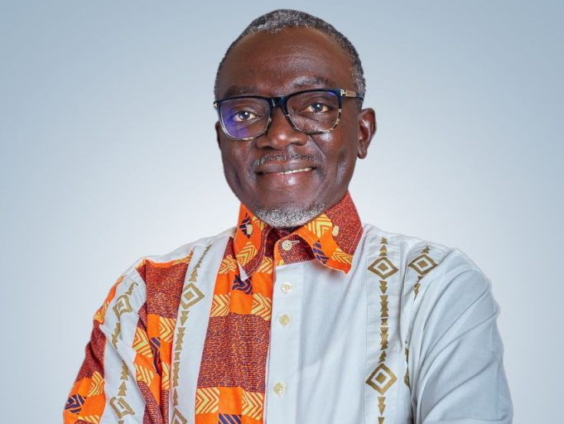
Professor Douglas Boateng
Chartered Director (UK IoD) | Chartered Engineer (UK) | Generationalist | Governance and Industrialisation Advocate and Strategist
Latest Stories
-
Trump says he is considering firing US ambassador to Greece
48 minutes -
Man City bananas ‘brought fun back’, says Varadi
52 minutes -
Meta releases Muse Wonder AI models to challenge Anthropic and OpenAI
1 hour -
Daily Insight for CEOs: The CEO as Chief Decision Maker
1 hour -
Burnham had formal meeting with Man City chair while mayor
1 hour -
Is Ghana producing too many lawyers? What is the best lawyer-to-citizen ratio?
1 hour -
NDC sinking Ghana’s democracy with Emelia Agbenyo’s appointment – Miracles Aboagye
1 hour -
Seedorf back in football as Corinthians head coach
2 hours -
Hincapié and Zubimendi injured in post-match training session
2 hours -
Fridges in French supermarkets hit by cyberattack
2 hours -
Qantas flight grounded after bedbug outbreak
2 hours -
Reality Zone with Vicky Wireko: International Day of the Girl, shaping today’s girl for tomorrow’s future – ZONTA Clubs lead the way
2 hours -
Global health must be led by countries, not designed for them – Mintah Akandoh
3 hours -
Mahama honoured at 2026 World Health Summit in Berlin for global health leadership
3 hours -
Breast cancer is not a death sentence – Besease Kontire Obaapanin, Magmina Foundation lead awareness campaign
3 hours