

Audio By Carbonatix
By hosting the 2025 Africa Cup of Nations (AFCON), Morocco achieved far more than the successful staging of a major sporting tournament.
The kingdom used the competition to project a coordinated strategy that blends security, diplomacy and soft power—transforming football into a deliberate instrument of political influence.
Held from 21 December 2025 to 18 January 2026, AFCON 2025 has been widely described as one of the most tightly managed editions in the tournament’s recent history.
According to the French daily Le Monde, no major security incidents were recorded across more than fifty matches played in six host cities, reinforcing Morocco’s reputation for effective management of large-scale international events.
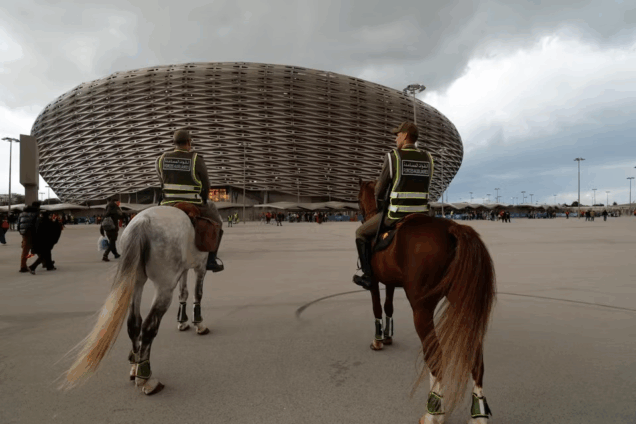
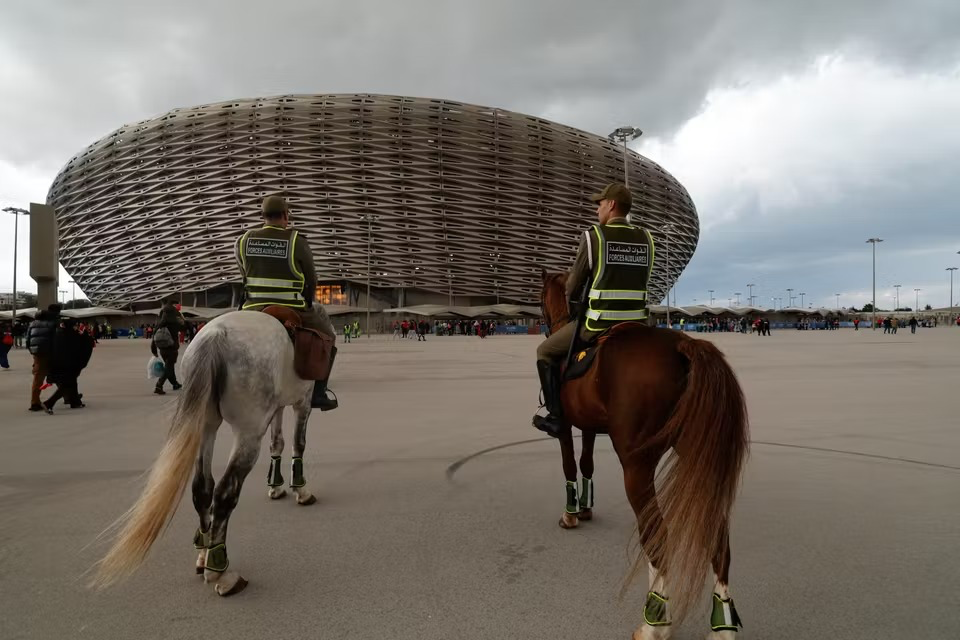
Unprecedented security measures were deployed throughout the competition. These included multiple screening checkpoints at stadium entrances, extensive video surveillance, drone use, and a reinforced, highly visible security presence.
Police stations and mobile courts were also established within stadium precincts, enabling rapid response and enforcement.
The organisational efficiency drew praise from African football officials and international players alike, contributing to a tournament largely free of disruptions.
This outcome was not accidental. It reflects a long-term policy direction championed by King Mohammed VI, under which football has become a central pillar of Morocco’s influence strategy.
Heavy investment in modern infrastructure, sustained development of sporting institutions and active sports diplomacy have positioned football as a universal language through which the kingdom enhances its regional and international standing.
AFCON 2025 was, therefore, conceived as a strategic showcase—demonstrating Morocco’s readiness to host global events, particularly ahead of the 2030 FIFA World Cup, which it will co-host with Spain and Portugal.
In this context, football has evolved into a tool of institutional credibility, diplomatic outreach and international reassurance.
Security formed the backbone of this approach. Moroccan authorities used the tournament to promote what they describe as a “Moroccan model” for managing major events, combining prevention, deterrence and targeted enforcement.
The framework attracted international attention, including from a delegation of the United States Federal Bureau of Investigation (FBI), which visited the country to observe organisational systems ahead of future global competitions.
Beyond the matches themselves, Rabat also hosted international forums and symposiums on the security of major sporting events, reinforcing Morocco’s image as a reliable partner within global security cooperation networks.
A Regional Contrast Highlighted
From a geopolitical perspective, Le Journal du Dimanche (JDD) argues that Morocco’s success underscores a widening contrast with other African football powers, particularly Algeria.
While Morocco has strategically integrated sport into its regional influence architecture, Algeria—despite its strong footballing tradition—is portrayed as lagging behind in organisational capacity and long-term strategic positioning.
The comparison reflects a broader transformation in African football. Success is no longer measured solely by performances on the pitch, but increasingly by states’ ability to leverage sport as a vehicle for political credibility, economic projection and diplomatic engagement.
AFCON 2025 thus served as more than a continental tournament. It became a strategic demonstration that, in contemporary Africa, football is emerging as a fully fledged arena of power—situated at the intersection of sport, diplomacy and state authority.
Latest Stories
-
GoldBod cannot make losses trading gold – Afenyo-Markin
3 minutes -
Papaye, KFC and Pizzaman customers among most targeted as TrustGH uncovers nearly 1,000 scam numbers cloning Google business profiles of major food chains
13 minutes -
2026 U20 WWC: ‘We are in a tough group’ – Black Princesses’ Linda Owusu Ansah
20 minutes -
2026 U20 WWC: Ghana’s Ambassador to Czech Republic welcomes Black Princesses to Poland
46 minutes -
Oti NPP executives demand completion of stalled government projects
58 minutes -
Jinapor demands answers as Alima Mahama is asked to pay for Embassy spending outside her tenure
1 hour -
Russia doubles scholarships for Ghanaian students to 240 annually
1 hour -
Cedi’s year-to-date loss slumps to 4.09% as recent gains gather pace
1 hour -
‘Home has spoken’ – Justin Kodua Frimpong says as Ashanti delegates back his re-election bid
2 hours -
Mustapha Abdul-Hamid, seven others’ NPA case adjourned to August 27
2 hours -
Alima Mahama Refund: Jinapor challenges Ablakwa’s authority, says only Auditor-General can surcharge
2 hours -
Wontumi Conviction: 2 star witnesses placed under police protection amid death threats
2 hours -
Srem-Sai reveals surge in death threats after Wontumi conviction
2 hours -
GCB, Ecobank, 4 others are top tier banks in Ghana – PwC Banking Survey
2 hours -
Today’s front pages: Tuesday, August 18, 2026
3 hours