

Audio By Carbonatix
The government’s ambitious quest to end Ghana’s multi-million-dollar reliance on imported poultry has reached a critical milestone.
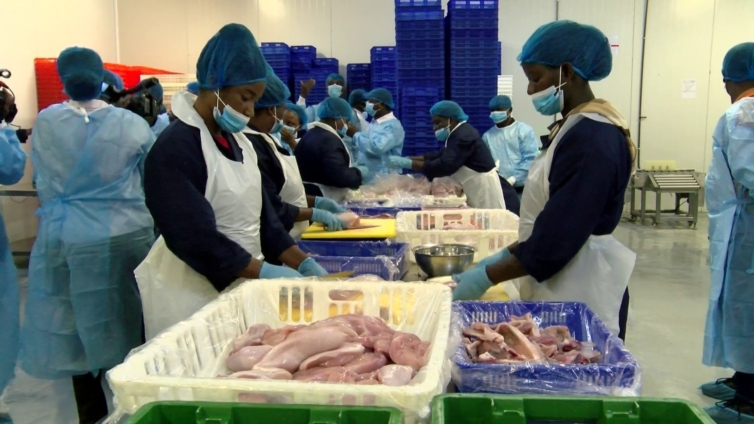
The pilot stage of the ‘Nkoko Nkitinkiti Project’ has successfully processed its first 50,000 birds, marking a major leap toward the national goal of producing 18 million birds by the end of 2026.
National Coordinator of the National Broilers Project Directorate, Kelvin Ocran, leading a high-level delegation from the office of the Minister of State in charge of Special Initiatives, conducted a working visit to the Aglow Farms poultry processing plant at Gomoa Potsin on Thursday, January 29, 2026.
The visit was intended to assess the facility’s operational readiness for the massive scale-up expected in the second quarter of the year.
The 80 Million Bird Ambition
The ‘Nkoko Nkitinkiti’ initiative, launched by President John Dramani Mahama in November 2025 as part of the broader ‘Feed Ghana’ programme, aims to achieve 100% local self-sufficiency within three years.
According to Mr. Ocran, the success of the pilot at Aglow Farms provides the empirical proof needed to move from small-scale trials to industrial-level production.
“The main vision now is to be able to produce about 18 million birds this year, and this pilot has proven that yes indeed we can,” Mr Ocran stated. “Aglow processed almost 25,000, but in total, we produced about 50,000 birds for our pilots. The project has gone through many phases, beginning with feed trials across seven different companies to ensure we have the most efficient growth rates.”
The Next Phase: Poultry Estates and Cold Chains
The government is already looking beyond the initial processing success.
Mr. Ocran revealed that a second, more robust phase is set to roll out in October 2026, centred on the concept of ‘Poultry Estates’.
These high-tech hubs will integrate the entire value chain—from hatcheries to final storage—in a single location.
“We are looking forward to rolling up the poultry estate around October, when we’ll have about three million birds' production in one facility. This will include a dedicated processing plant, a cold blast system for rapid freezing, and huge storage systems across the board to prevent post-harvest losses,” Mr Ocran added.
Aglow Farms: A Strategic Partner
For Aglow Farms, being selected for the pilot is a feather in their cap. The facility, which is already a leader in the local industry, currently operates a 12-hour shift system, producing 10,000 birds per shift.
Nana Boakye, Manager of Aglow Farms, expressed optimism that the partnership with the ‘Nkoko Nkitinkiti’ project would allow the farm to expand its footprint significantly.
"Currently, we’re doing about 1.5 million birds on our own. With our own retail outlets opened last year, this programme allows us to push even more products into the open space, ensuring Ghanaians consume fresh, locally grown chicken rather than imported frozen products of uncertain age,” he noted.
Economic Impact and Food Security
The project is not just about meat; it is a massive job-creation engine. The three-tier system targets:
- Large-scale Anchor Farmers: 50 farmers receiving thousands of chicks each.
- Medium-scale Operators: Supporting existing farms with infrastructure.
- Household/Backyard Producers: Providing 50 birds each to 60,000 households.
As the insights from Gomoa Potsin are integrated into the national strategy, officials believe the ‘Nkoko Nkitinkiti project’ will finally break the structural bottlenecks—such as high feed costs and limited processing—that have hampered the sector for decades.
Latest Stories
-
‘Our missing players are more important’ – Gambia coach fires shot at Ghana
12 minutes -
Today’s front pages: Tuesday, September 29, 2026
15 minutes -
Ghana ‘showing up differently’ on global stage – Joyce Bawah Mogtari
42 minutes -
Ghana’s tuna industry in crisis as 20 hook-and-line vessels collapse
1 hour -
South Tongu MP launches apprenticeship programme for 159 young people
2 hours -
The Pusiga connection behind Gertrude Atongi’s work in New York
2 hours -
Teachers took promotion exams in December to beat government clearance deadline – GNAT
2 hours -
NPA launches 2026 staff welfare week with focus on teamwork and employee wellbeing
2 hours -
Ghana, Saint Kitts and Nevis sign labour deal to strengthen protections for Ghanaian nurses
2 hours -
Delayed promotions put teachers’ retirement benefits at risk – GNAT
2 hours -
No ‘Bawumia candidates’ in NPP executive elections – Anthony Karbo
2 hours -
Over 3,000 displaced as flooding overwhelms Hohoe communities
2 hours -
Sunyani East NPP executives begin reconciliation drive ahead of 2028 polls
2 hours -
Agric Minister engages Ga Mantse on agriculture transformation agenda
3 hours -
Aayalolo expansion targets private car users, not trotro operators – Mahama Ayariga
3 hours