

Audio By Carbonatix
Vice President Professor Jane Naana Opoku-Agyemang has called for a coordinated regional response to security and development challenges, warning that fragmented approaches have proven inadequate in confronting threats that increasingly cut across national borders.
The Vice President said challenges such as violent extremism, terrorism, organised crime, cyber threats and youth unemployment are intercontinental and transnational in nature, requiring closer alignment between security strategies, foreign policy and development agendas.
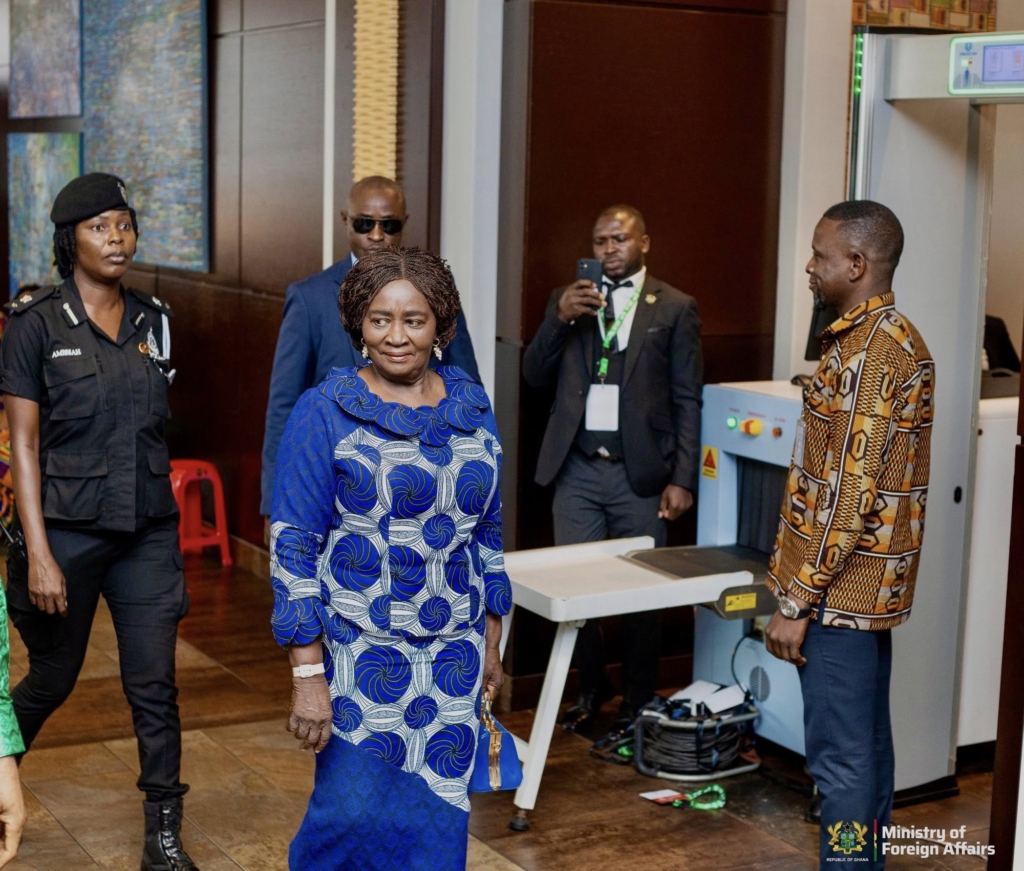
According to her, the complexity of the current security environment demands integrated frameworks that prevent crises rather than react to them.
She stressed that with strong political commitment and coordinated regional action, West Africa could lay the foundations for lasting peace and shared prosperity.
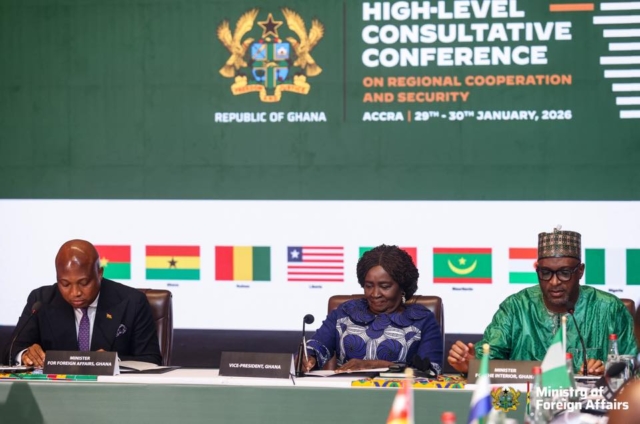
The Vice President said this when delivering the keynote address at the ministerial session of the High-Level Consultative Conference on Regional Cooperation and Security in Accra.
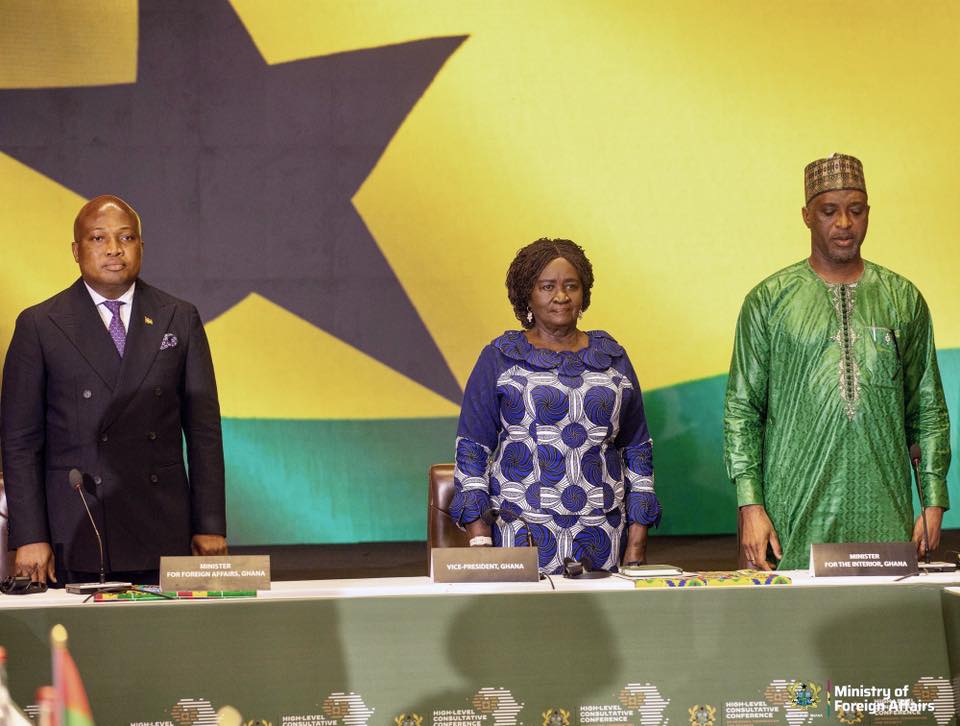
The two-day conference, convened under the auspices of President John Mahama, opened on Thursday, January 29, 2026, bringing together ministers and experts from Burkina Faso, Ghana, Guinea, Liberia, Mali, Mauritania, Niger, Nigeria, Senegal, Sierra Leone, and Togo.
Representatives of international and regional bodies, including the African Union, the United Nations Development Programme, the Kofi Annan International Peacekeeping Training Centre and the Centre for Democratic Development, are also participating.
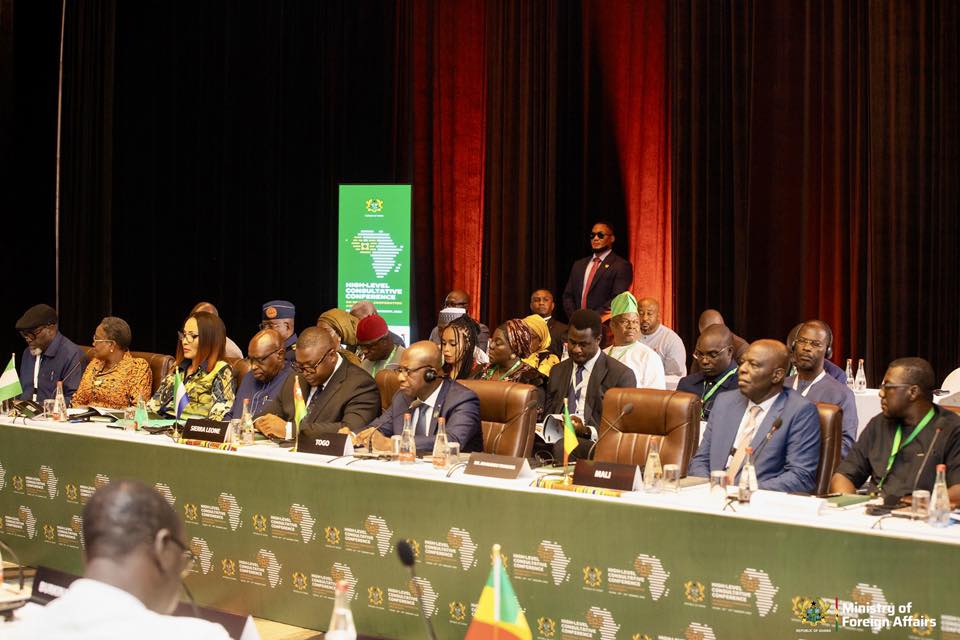
The meeting is aimed at strengthening regional collaboration in response to evolving security threats.
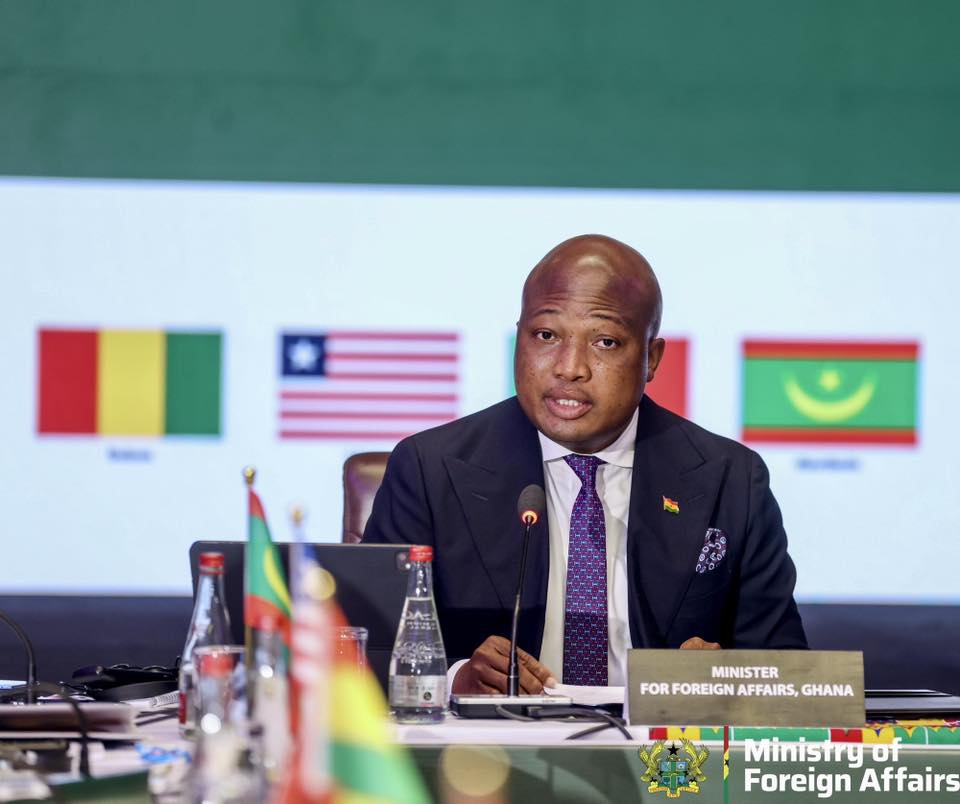
Adding to the urgency of the discussions, Foreign Affairs Minister Samuel Okudzeto Ablakwa observed that the region is facing what he described as an existential threat, as violent extremism continues to spread southwards from the Sahel.
He pointed to the frequency of terror attacks as evidence of the scale of the challenge and urged countries to move beyond episodic diplomacy towards a structured, multidimensional framework for sustained cooperation.
Earlier, a senior officials’ meeting was held to provide technical guidance on coordinated responses to the region’s security situation.
Addressing that session, the Interior Minister, Muntaka Mohammed-Mubarak, noted that the security landscape in West Africa and the Sahel has reached an unprecedented level of complexity, with extremist groups exploiting governance gaps, inter-communal tensions, economic hardship, and environmental pressures to entrench their influence over civilian populations.
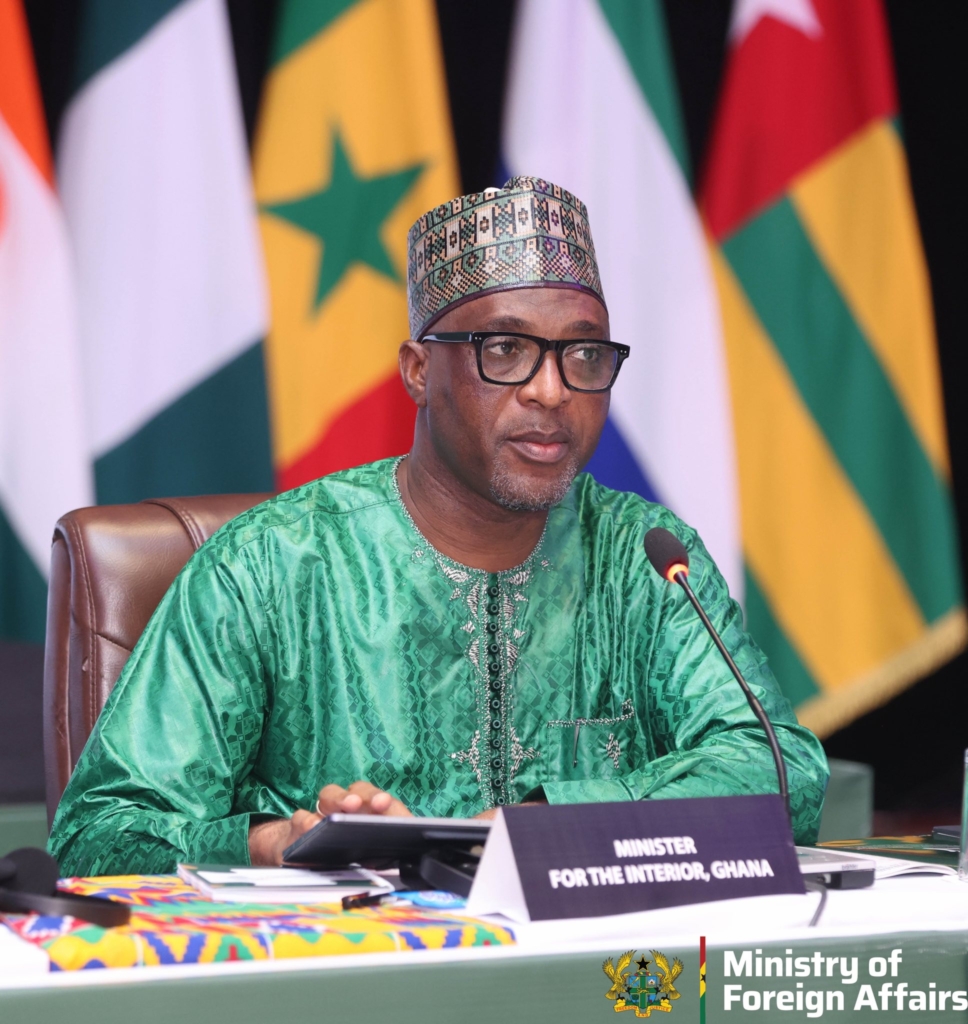
While acknowledging existing efforts, he called for renewed strategic direction, stronger coordination and a fundamental shift in perspective.
National Security Coordinator, COP Osman Abdul-Razak, echoed similar concerns, stressing that the threats confronting the region cannot be effectively addressed in isolation.
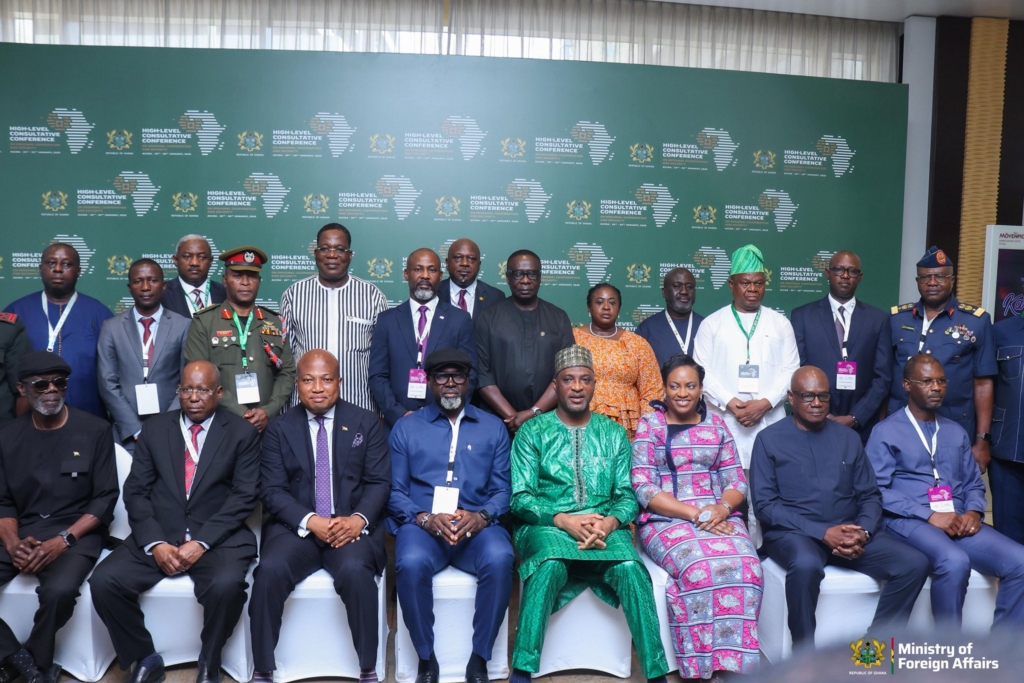
He advocated enhanced cooperation, trust-building and robust intelligence-sharing mechanisms as critical pillars of any meaningful regional security architecture.
Latest Stories
-
Power restoration fault suspected in Kumasi Central Market fire
4 hours -
The 7-foot giant of Ngleshie Amanfro: Seven-foot Ghanaian Ephraim Saawa dreams of joining the national basketball team
4 hours -
Government promises support for Kumasi Central Market fire victims
5 hours -
Vibes The Movie: Big Ghun’s Ghanaian film earns five nominations at 2026 REFFA
5 hours -
MamaCare CEO warns unresolved conflicts among health workers could undermine maternal and neonatal care
6 hours -
Health professionals urged to translate medical knowledge into practice to save mothers
6 hours -
Conflicts among care providers linked to maternal, neonatal deaths – Expert
7 hours -
GIS marks 10th TIME conference, champions improved teaching practices
7 hours -
BRICS Or Balance? What Ghana’s bid really means
8 hours -
GPRTU wants full TRAFFITECH-GH implementation to start in 2027
8 hours -
Mahama announces plans to import electric wheelchairs for PWDs
8 hours -
KGL U17 Colts 2026: Western beat Prempeh Elite Academy to set up final final with Greater Accra Region
8 hours -
Late Solanke strike salvages 10-man Spurs draw at Man United
9 hours -
Gender Ministry to monitor welfare of Nana Akua Addo’s children amid domestic violence case
9 hours -
Benedict Okyere Yeboah: Ghana’s football problem goes beyond sacking a coach
9 hours