

Audio By Carbonatix
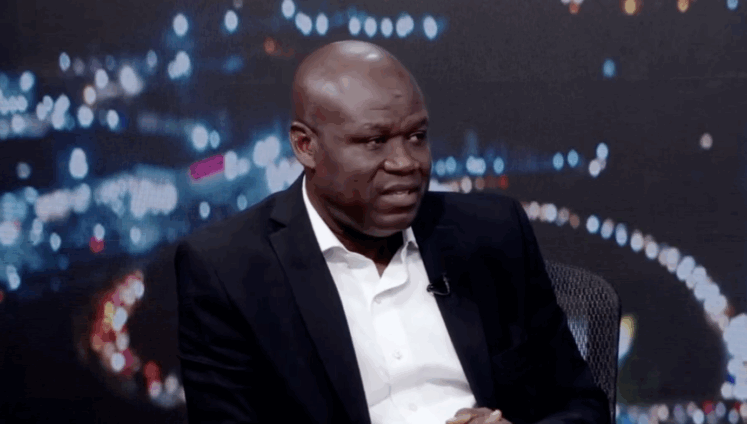
Mark Badu-Aboagye, the CEO of Ghana National Chamber of Commerce and Industry (GNCCI), says failure to build a strong value-added manufacturing base has left the country dangerously exposed to global shocks.
He warned that the economy cannot progress if it continues exporting raw materials.
Speaking on Joy News’ PM Express Business Edition on Thursday, Mr Badu-Aboagye said the country’s growth ambitions will remain limited unless it strengthens its manufacturing sector and begins to add value to its output.
“If you keep on producing and exporting these raw materials, if you don’t add value to them, if you don’t strengthen your manufacturing sector, you are going nowhere,” he said.
He cited Ghana’s experience with gold, arguing that value addition would reduce the country’s vulnerability to global price swings.
“Mind you, I think we have set up a gold refinery in Ghana. If you’re able to do that, then we’ll not be so afraid of gold prices going up, because we’d have added value to it,” he said.
Using cocoa as another example, Mr Badu-Aboagye said Ghana and Côte d’Ivoire remain at the bottom of the earnings chain despite producing the world’s most valuable cocoa beans.
“If you take our cocoa, for instance, and we are able to add value to it, the value chain for chocolate, those who are producing the cocoa - Ghana, Cote d’Ivoire - out of over $100 and so billion, we just get about $3 billion,” he said.
He stressed that the largest profits in commodity trading accrue to those who process and manufacture finished products.
“So those who are making the money are those who are adding value to the raw material,” he added.
Mr Badu-Aboagye said Ghana must stop treating macroeconomic stability as an end in itself and instead focus on restructuring the economy.
“That’s why I say we should begin to move from the stability, the honeymoon, to a point where we change the structure of the economy and add value to whatever we produce. We need to start somewhere,” he said.
In that context, he expressed frustration with the failure of the One District, One Factory (1D1F) initiative, calling it a missed opportunity that left Ghana “naked” in the face of external disruptions.
“That is why I got so hurt when the One District, One Factory didn’t work,” he said.
While he acknowledged concerns about the programme’s design, he argued that even limited success would have made a difference.
“Even though I had issues with the structure, because it’s not every district that you can set up a factory, and they will do well,” he explained.
He said some districts would require support for raw materials, while others were too far from markets to sustain certain industries.
“Some of the districts you have to provide raw material. Some of the districts, by their nature, are so far away from the market,” he said.
But he insisted that Ghana did not need to build factories in every district to benefit from the idea.
“If you have been able to do and build just, let’s say, 30 out of the numerous 1D1F, which are strongly built 30 to produce one of the things that we import, just the tissues, just the fruit juices, just the basic things,” he said.
He argued that local production of basic goods, combined with value addition and exports, could have provided a buffer against shocks and reduced import dependence.
“Produce them and also add value to be able to export them, would have been able to protect ourselves from these shops,” he said.
Mr Badu-Aboagye also raised concerns about Ghana’s dependence on exporting gold in its raw form, arguing that it leaves the country at the mercy of foreign buyers.
“You are crying for gold because you are spotting it in its raw form. And those who determine the price of gold are not you,” he said.
He said global demand is driven by buyers outside Ghana, including major trading hubs.
“It is those outside there because how many Ghanaians buy gold to use? It is the Dubai and the Indians,” he said.
According to him, these buyers can influence pricing decisions based on their own stock levels.
“They are the ones that are so they, as a cartel, can decide… they’ve also built their inventory, their stock. It will get to a time they won’t need gold again,” he warned.
“So if you want to give me gold, you have to lower the price,” he added.
Mr Badu-Aboagye also cited oil as another vulnerability, noting that Ghana is a net importer and that rising global prices have immediate domestic consequences.
"For instance, we are net importers of oil, so once we have an issue with oil, oil prices begin to rise. The pass-through effect of increases in oil prices in our economy is so rapid,” he said.
His remarks reinforce concerns from the business community that Ghana remains overly exposed, overly import-dependent, and overly reliant on raw exports—leaving the economy fragile in the face of global shifts.
For Mr Badu-Aboagye, the answer is clear: Ghana must add value, build manufacturing strength, and start producing more of what it consumes, or it will continue to repeat the same cycle of vulnerability.
Latest Stories
-
Ghana’s BRICS move requires clear strategy to manage risks – Godfred Bokpin
37 minutes -
Pay teachers realistic income – Duncan Amoah to gov’t
53 minutes -
Bechem to become chicken capital of Ghana – Mahama projects
55 minutes -
Gov’t targets recruitment of 16,500 health professionals in 2026
1 hour -
Two-week strike will not derail academic calendar – GNAT President
2 hours -
Headmaster detained after BBC investigation into alleged sexual abuse of students
2 hours -
GNAT pushes for clear implementation procedures of teachers’ conditions of service
2 hours -
Recurrent strikes threaten quality of education and academic calendars – Prof Bokpin
2 hours -
‘Cockroach’ group leaders among hundreds detained in Delhi protest
2 hours -
Don’t let speed of information become your judgement – CJ tells new lawyers
3 hours -
World Cup visa scandal: People have leveraged public office to facilitate fraud – Senyo Hosi
3 hours -
Glut! Farmers count losses as prices crash, customers happy
3 hours -
GSA postpones auction of unserviceable vehicles
3 hours -
Man charged with attempted murder after stabbing
4 hours -
World Cup visa scandal: Senyo Hosi says issue goes beyond calls for Sports Minister’s resignation
4 hours