

Audio By Carbonatix
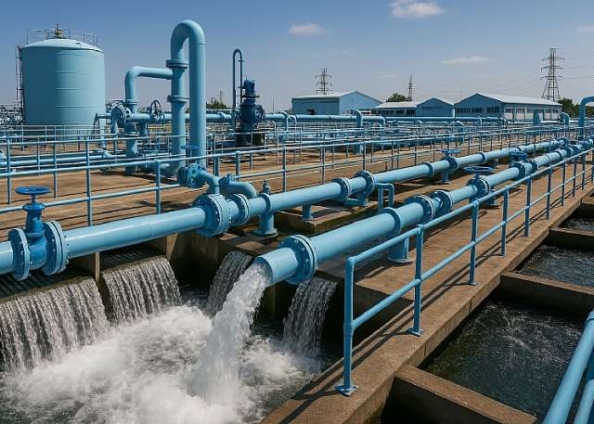
Managing Director of Ghana Water Limited (GWL), Adam Mutawakilu, has disclosed that replacing the country’s ageing water transmission pipelines would cost more than GH₵3.5 billion (US$356 million) — far beyond the company’s current financial capacity.
Speaking on the Joy Super Morning Show, Mr Mutawakilu said most of Ghana’s major transmission lines are old, weak and operating below capacity, posing a significant challenge to effective water distribution.
“Most of this transmission capacity utilisation is low. Most of the transmission lines are weak and need to be replaced, and that is a huge cost,” he said.
“We are talking about 356 million dollars to replace the old pipes and put in new pipes — that’s more than 3.5 billion Ghana cedis.”
He explained that the company’s annual revenue falls well short of what would be required to undertake such a large-scale overhaul.
“For example, we make almost 1.8 billion cedis — that’s about 100 to 150 million dollars for the whole year. This is the whole amount, not taking salaries or maintenance into account,” he said. “So, if you take it, you realise that we are not in good shape.”
His comments come amid recurring water shortages in Accra and parts of the Greater Accra Region, which have sparked public concern and political debate over infrastructure planning and investment.
Mr Mutawakilu noted that the combined impact of ageing treatment plants, deteriorating pipelines and limited revenue has left the utility struggling to meet the rising demand for water driven by population growth.
“The problem is not just the number of plants; it’s the transmission lines connecting them,” he said. “Without replacing these old pipelines, a lot of water is lost, and supply remains inconsistent, especially in urban areas.”
The GWL Managing Director urged policymakers to prioritise capital investment in both water production and distribution infrastructure, warning that further delays could worsen service disruptions and public dissatisfaction.
“Water is essential for life and development,” he said. “We must match infrastructure investment with our population growth, or these challenges will continue to escalate.”
Managing Director of Ghana Water Limited (GWL), Adam Mutawakilu, has disclosed that replacing the country’s ageing water transmission pipelines would cost more than GH₵3.5 billion (US$356 million) — far beyond the company’s current financial capacity.
Speaking on the Joy Super Morning Show, Mr Mutawakilu said most of Ghana’s major transmission lines are old, weak and operating below capacity, posing a significant challenge to effective water distribution.
“Most of this transmission capacity utilisation is low. Most of the transmission lines are weak and need to be replaced, and that is a huge cost,” he said.
“We are talking about 356 million dollars to replace the old pipes and put in new pipes — that’s more than 3.5 billion Ghana cedis.”
He explained that the company’s annual revenue falls well short of what would be required to undertake such a large-scale overhaul.
“For example, we make almost 1.8 billion cedis — that’s about 100 to 150 million dollars for the whole year. This is the whole amount, not taking salaries or maintenance into account,” he said. “So, if you take it, you realise that we are not in good shape.”
His comments come amid recurring water shortages in Accra and parts of the Greater Accra Region, which have sparked public concern and political debate over infrastructure planning and investment.
Mr Mutawakilu noted that the combined impact of ageing treatment plants, deteriorating pipelines and limited revenue has left the utility struggling to meet the rising demand for water driven by population growth.
“The problem is not just the number of plants; it’s the transmission lines connecting them,” he said. “Without replacing these old pipelines, a lot of water is lost, and supply remains inconsistent, especially in urban areas.”
The GWL Managing Director urged policymakers to prioritise capital investment in both water production and distribution infrastructure, warning that further delays could worsen service disruptions and public dissatisfaction.
“Water is essential for life and development,” he said. “We must match infrastructure investment with our population growth, or these challenges will continue to escalate.”
Latest Stories
-
12th FASU Games: University of Ghana win 23 medals in Cairo
47 minutes -
Jordan Ayew, Yirenkyi feature as Ghanaian trio exit Carabao Cup
4 hours -
Microsoft says AI rival Anthropic could have ‘disastrous impact’ on humanity
4 hours -
De la Fuente extends Spain contract to 2032
4 hours -
Raphinha hat trick in Barcelona’s 7-goal rout of Santander
4 hours -
Carabao Cup fourth-round draw: Liverpool to host Chelsea as Arsenal drawn away to League Two Fleetwood
4 hours -
Mbappe, Vini and Konate obscure Real’s Ceuta message
4 hours -
Reggie Rockstone named Unichem Ghana brand ambassador
5 hours -
Man United lose to Brighton from 2-0 up to end 50-year record
5 hours -
Man United lose to Brighton from 2-0 up to end 50-year record
5 hours -
Petrol and diesel price rises push UK inflation higher
5 hours -
City of David Foundation donates to Koforidua Hospital, Koforidua Prison
5 hours -
AMA says Konkomba traders were consulted ahead of Agbogbloshie 24-hour market project
5 hours -
Let’s pilot Chinese in public schools before scaling up – EduWatch
6 hours -
Ghanaian tech professionals develop SMS-based AI tool for non-smartphones
6 hours