

Audio By Carbonatix
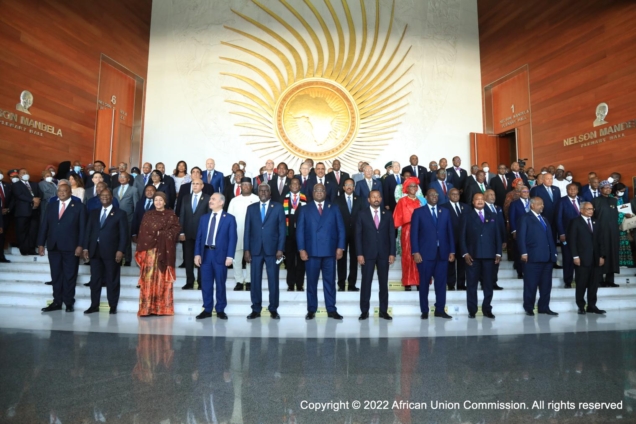
The 39th African Union Summit concluded Sunday, February 15, 2026, with a forceful mandate for historical justice and a sharp warning to global powers that the continent will no longer accept a secondary role in international governance. Meeting in the Ethiopian capital, Addis Ababa, African heads of state adopted a landmark resolution recognising the transatlantic slave trade and racialised chattel enslavement as foundational crimes against humanity.
The two-day summit officially saw Burundi President Évariste Ndayishimiye assume the rotating chairmanship for 2026, taking the mantle from Angola’s João Manuel Gonçalves Lourenço. While the official theme focused on water security—addressing a crisis where 400 million Africans lack access to clean water and waterborne diseases claim roughly 115 lives every hour—the atmosphere was dominated by the "Silencing the Guns" agenda and a collective demand for structural reform of the United Nations Security Council.
UN Chief Slams Indefensible Status Quo
United Nations Secretary-General António Guterres delivered a stinging critique of the current global order during the opening ceremony. He emphasised that the exclusion of Africa from permanent membership on the Security Council is a relic of a bygone era that undermines global legitimacy.
"This is 2026 – not 1946," Guterres told the assembly. "Whenever decisions about Africa and the world are on the table, Africa must be at the table."
Guterres warned that developing nations face a staggering $4 trillion annual financing gap for Sustainable Development Goals. He further addressed the "climate injustice" facing the continent, noting that Africa faces devastating floods and droughts despite contributing the least to global emissions. "Africa did not cause the climate crisis," he said, calling for a tripling of adaptation finance for the region.
Security and Stability Take Precedence
AUC Chairperson Mahmoud Ali Youssouf confirmed that peace and security remained the primary concern for regional leaders. A major outcome was the adoption of the Memorandum of Understanding on the African Standby Force, designed to strengthen coordination between the AU and regional blocs.
"If we contemplate developing this continent and creating the integration conditions for our countries, we need to silence the guns," Youssouf stated during the closing press conference. "We need peace on this continent. We need stability on this continent, and we have a programme for that."
The assembly reaffirmed a policy of zero tolerance for unconstitutional changes of government. Leaders also expressed strong solidarity with the Palestinian people, with Youssouf calling for an end to the "extermination" of civilians in Gaza. Palestinian Prime Minister Mohammad Mustafa attended the summit to express gratitude for Africa's "long-standing solidarity" in the face of ongoing conflict.
Ghana Leads Global Offensive on Reparatory Justice
Ghanaian President John Dramani Mahama emerged as a pivotal figure at the summit, having been elected First Vice Chairperson of the AU for 2026. Mahama successfully spearheaded a resolution that provides a unified continental mandate to seek global recognition and reparations for the horrors of the slave trade.
"The adoption of this decision by consensus demonstrates Africa’s unified voice and commitment to acknowledging historical injustices," Mahama said. He noted that the initiative is not directed at any specific nation but is "directed towards truth, recognition and reconciliation."
Ghana is now set to lead a high-level diplomatic offensive. On February 20, 2026, Ghana will begin intensive engagements in New York with CARICOM and the Group of 77. The goal is to build a broad consensus before formal consultations on the resolution text take place between February 23 and March 12, 2026.
Integrating the G20 and Economic Sovereignty
Building on the AU’s historic participation in the G20 Summit in Johannesburg last November, leaders underscored the importance of a coordinated African position on debt restructuring. A key outcome was the launch of the Africa Energy Efficiency Facility (AfEEF), a project aimed at mobilizing $3 billion by 2030 to increase the continent's energy productivity.
"The financing of development programmes is becoming more and more challenging," Youssouf noted. He revealed that for the first time, the AU has invited the business community to act as primary contributors to continental growth, moving away from a reliance on foreign aid.
Demographic Pressures and the Legitimacy Gap
The summit took place against a backdrop of rising internal pressure. Africa currently holds the world's youngest population, with over 400 million people aged 15 to 35. This demographic reality stands in stark contrast to a leadership tier often viewed as "a club of old leaders" that is out of touch with the youth.
"What the youth is really asking and why people are frustrated is because this is not an African Union for citizens," said senior analyst Liesl Louw-Vaudran. "It’s not a people-driven African Union."
To bridge this gap, the Assembly reaffirmed the importance of innovation and digitalisation as drivers of transformation. Leaders pledged to ensure that the 2026 focus on water and sanitation serves as more than a ceremonial theme, but as a catalyst for human security and public health across the continent.
Latest Stories
-
GES asks applicants to check status of 2026 promotion applications on October 15
8 minutes -
Kobe Boujee joins Olympics.com team for Dakar 2026 Youth Olympic Games
16 minutes -
Slaty egret’s shifting nesting sites offer clues to changing ecosystems
22 minutes -
First phase of arrears for promoted teachers to be paid on Friday – Haruna Iddrisu announces
25 minutes -
Caveman Watches partners with Mfantsipim School for 150th anniversary
47 minutes -
We’ll pursue GH¢15m defamation suit against Sammy Gyamfi to its logical conclusion – Afenyo-Markin’s lawyers
47 minutes -
Martin Kpebu urges Afenyo-Markin not to return to court over Sammy Gyamfi lawsuit
56 minutes -
GRA submits preliminary report on drug shipment case to Mahama – Commissioner-General
1 hour -
Sammy Gyamfi using ‘procedural roadblocks’ to dodge defamation case? – Afenyo-Markin’s lawyers
1 hour -
The illusion of a good deal: Why some everyday money-saving habits may be costing you more
2 hours -
Family seeks autopsy, police investigation into death of student 12 days after Abomosu SHS enrolment
2 hours -
Trade Minister urges employers to leverage industrial opportunities to create jobs
2 hours -
Asantehene plants trees to commence Jimi Watercourse Rehabilitation destroyed by galamsey
2 hours -
15 arrested, 6 trucks impounded over sandwinning activities on Kumasi-Accra Expressway
2 hours -
OFFICIAL: Vinicius will miss El Clásico, suspended four games
2 hours