

Audio By Carbonatix
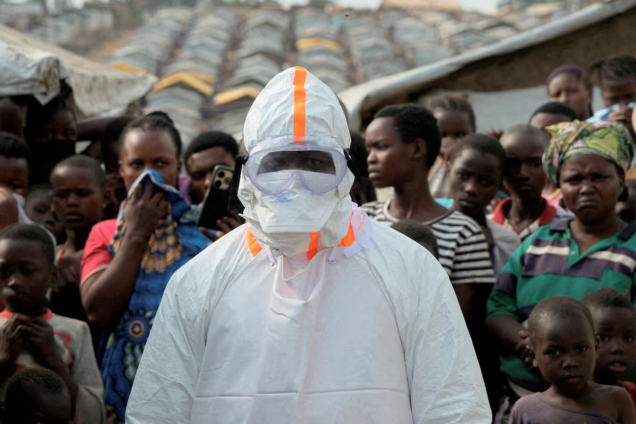
The Democratic Republic of Congo faces a severe shortage of healthcare professionals to staff specialised treatment centres. The World Health Organisation issued this warning as the nation battles the fastest-growing Ebola epidemic in recorded history.
Spreading Across Provinces And Populations
The epidemic has expanded across seven provinces throughout the country. Government figures record a total of 7,773 confirmed cases and 3,759 deaths. Recent weeks show declining numbers in certain regions. Cases dropped by twenty-six per cent in Ituri province and fifteen per cent in Haut-Uele between August 31 and September 20. Transmission patterns remain unpredictable. The outbreak stays largely out of control across a wide geographic footprint. Marie Roseline Belizaire addressed the regional disparities. "While cases and deaths are declining in some provinces, they continue to rise in others," Belizaire said. "The outbreak is still not under control and remains spread across a wide geographic area."
Surging Rates In North Kivu
The eastern province of North Kivu experienced a sharp spike. Cases surged seventy-three per cent over three weeks. Catherine Smallwood noted that cases and deaths eventually began declining in North Kivu following weeks of increases. Health authorities add new treatment beds daily. Facilities still lack sufficient staff and operational partners.
Compounding Crises On The Ground
Multiple compounding factors accelerate viral transmission. Armed insecurity, widespread population displacement, massive movement, and ongoing health worker strikes create extreme operational hurdles. The current trajectory threatens to eclipse past historical crises. The World Health Organisation reports that this epidemic is on track to surpass the 2014 through 2016 West Africa outbreak. That previous disaster remains the deadliest on record, with over 11,000 fatalities primarily concentrated in Guinea, Liberia, and Sierra Leone.
Severe Human Resource Bottlenecks
Staffing shortages cripple medical responses in active zones. Catherine Smallwood emphasised the core issue. "The human resources gap is one of the biggest gaps," Smallwood said. Anne Ancia outlined the massive staffing requirements for medical infrastructure. A single Ebola treatment centre needs approximately 300 professionals. This workforce includes general practitioners, nurses, hygienists, and anaesthetists. "Estamos construyendo centros de tratamiento, pero no siempre tenemos los recursos humanos necesarios para operarlos," Ancia said. "Those health workers must be paid."
Wage Disputes And Payroll Verification
Front-line workers previously launched strikes over unpaid wages. These job actions severely damaged patient access to care. Health Minister Roger Kamba explained administrative delays in July. The government launched a verification process for payroll lists after discovering ghost workers and unauthorised names added to response rosters. Frontline workers reported that officials promised to clear salary arrears. Many staff members received only partial payments while others received nothing at all.
Devastating Vulnerability Among Young Children
Children under the age of five face disproportionately high mortality risks. Marie Roseline Belizaire stated that young children endure a case fatality rate exceeding sixty per cent. Adult fatalities hover around fortyper centt. Clinical detection among infants presents unique diagnostic hurdles. Catherine Smallwood explained the clinical complexities. Smallwood noted that detecting cases among children under five is exceptionally difficult because young patients cannot accurately articulate their symptoms, and disease presentation often remains confusing.
Navigating The Humanitarian Imperative
Resolving these intersecting crises requires coordinated financial transparency, robust security guarantees for aid workers, and sustained international backing to protect vulnerable populations while medical teams race to contain the contagion.
Latest Stories
-
MTN Ghana trains civil society organisations on artificial intelligence
32 minutes -
GoldBod FX framework aims to make dollar supply predictable – Acheampong
1 hour -
How does a Ghanaian team make it to the BAL?
1 hour -
Ghana’s investment climate presents opportunities for industrial growth and job creation.
1 hour -
‘I paid thousands to a company for jobs that never came’
1 hour -
SSNIT intensifies informal sector enrolment drive with Techiman float
2 hours -
Ghana seeks long-term mining investments that benefit local communities – Armah-Kofi Buah
2 hours -
GHATOF demands compensation for 85 businesses affected by La Pleasure Beach demolition
2 hours -
Bono Regional Minister calls for investor education to drive economic growth
2 hours -
Ghana’s Ambassador to China, Kojo Bonsu, presents credentials to Nepalese President
2 hours -
Fairtrade Africa’s Cocoa Hubs Project strengthens rural service centres in cocoa-growing communities
2 hours -
MPs are not development officers – Edem Kpotosu
2 hours -
SEC cautions investors against fraudulent investment schemes
2 hours -
Land Ministry urges rCOMSDEP operators to reserve earnings for land reclamation
2 hours -
Commercial drivers give authorities one week to clear traders from lorry terminals, bus stops
2 hours