

Audio By Carbonatix
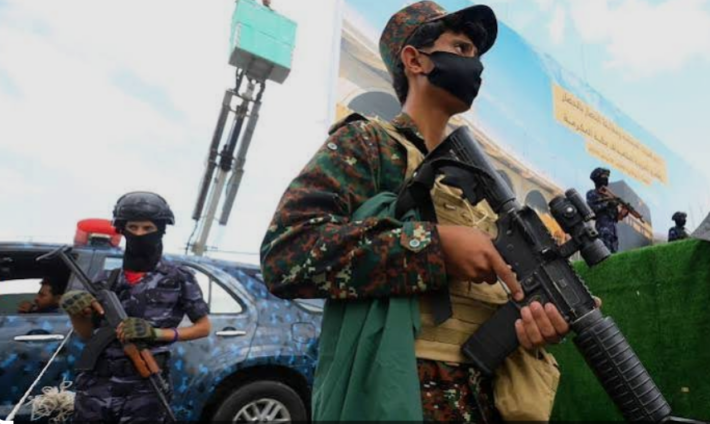
Foreign ministers representing the Group of Seven nations issued a joint directive demanding that Tehran halt its military assistance to Houthi rebels in Yemen as global diplomatic tensions reach a critical juncture on the eve of the annual United Nations General Assembly in New York. The coalition specifically urged Iran to end its arming of and support for the insurgent faction, warning that current escalations jeopardise international stability. Iranian President Masoud Pezeshkian is scheduled to address the global assembly amid this heightened diplomatic pressure.
Strategic Maritime Chokepoints and Regional Security Threats
The renewed hostility centres heavily on Yemen's vital coastline along the Red Sea. Recent insurgent advances have secured strategic territory near the Bab al-Mandab Strait, a crucial maritime gateway connecting the Indian Ocean to global shipping lanes. The G7 explicitly condemned in the strongest terms Houthi attacks on Saudi Arabia and international shipping routes. Ministers warned that these actions risk exacerbating the conflict, undermining international trade, and creating global economic instability.
Allegations of Material Support and Tehran's Position
Western powers and United Nations panels continue to document extensive military transfers to the insurgent movement. A panel of UN experts concluded in 2024 that the Houthis had been transformed into a powerful military organisation due to the transfer of materiel, assistance and training from Iran's Revolutionary Guards, Hezbollah and Iraqi specialists. UK and Western naval forces have repeatedly intercepted illicit shipments bound for Yemen. Tehran has consistently denied these allegations, maintaining that its backing of the group is strictly political.
Direct Appeals and International Diplomatic Demands
The diplomatic coalition outlined strict behavioural requirements for the insurgent leadership. "We call on the Houthis to immediately cease all military actions, all threats and attacks against civilian shipping, and to return to the political process in good faith," stated the foreign ministers of the UK, Canada, France, Germany, Italy, Japan and the United States. Furthermore, the alliance emphasised its enduring diplomatic stance regarding the war-torn nation. "Looking forward, we will continue to support the legitimate Government of Yemen and reaffirm our strong commitment to the unity, sovereignty, independence, and territorial integrity of Yemen," the ministers added.
Military Retaliation and Devastating Humanitarian Impact
On-the-ground conditions continue to deteriorate rapidly for civilians caught in the crossfire. More than 120,000 Yemenis have been displaced by the sudden surge in fighting along Yemen's Red Sea coast, according to recent United Nations estimates. Saudi-led coalition forces have responded with hundreds of retaliatory air strikes, including recent bombings in the strategic port city of Mokha that reportedly killed at least six people. The wider civil war, which began when the Houthis ousted the government from Sanaa in 2014 and drew a regional intervention in 2015, has completely unraveled a four-year informal ceasefire that stalled in July.
Allied Military Responses and Global Strategic Adjustments
Foreign governments are actively recalibrating their security commitments in response to the widening regional crisis. Prime Minister Andy Burnham announced that the UK will provide defensive air-to-air refuelling support for Saudi Arabia, utilising a single British Voyager aircraft based in Cyprus. France has also pledged support and says it is ready to work on securing Saudi energy infrastructure via a strictly defensive approach, according to diplomatic sources. Meanwhile, United States leadership weighs broader strategic moves. President Donald Trump has wavered for weeks over whether to act on a Saudi request for help in fighting the Houthis, telling reporters he remains in deciding mode regarding ongoing security policy in the Middle East.
Navigating a Fragile Regional Horizon
As diplomatic manoeuvres intensify in New York and military escalations persist across the Red Sea, the path toward a sustainable resolution remains narrow, requiring simultaneous adherence to international maritime law, protection of civilian infrastructure, and a renewed commitment to inclusive political dialogue.
Latest Stories
-
Trump says he is considering firing US ambassador to Greece
38 minutes -
Man City bananas ‘brought fun back’, says Varadi
42 minutes -
Meta releases Muse Wonder AI models to challenge Anthropic and OpenAI
51 minutes -
Daily Insight for CEOs: The CEO as Chief Decision Maker
52 minutes -
Burnham had formal meeting with Man City chair while mayor
58 minutes -
Is Ghana producing too many lawyers? What is the best lawyer-to-citizen ratio?
1 hour -
NDC sinking Ghana’s democracy with Emelia Agbenyo’s appointment – Miracles Aboagye
1 hour -
Seedorf back in football as Corinthians head coach
1 hour -
Hincapié and Zubimendi injured in post-match training session
2 hours -
Fridges in French supermarkets hit by cyberattack
2 hours -
Qantas flight grounded after bedbug outbreak
2 hours -
Reality Zone with Vicky Wireko: International Day of the Girl, shaping today’s girl for tomorrow’s future – ZONTA Clubs lead the way
2 hours -
Global health must be led by countries, not designed for them – Mintah Akandoh
3 hours -
Mahama honoured at 2026 World Health Summit in Berlin for global health leadership
3 hours -
Breast cancer is not a death sentence – Besease Kontire Obaapanin, Magmina Foundation lead awareness campaign
3 hours