

Audio By Carbonatix
We Called Them Our Future, Then Looked Away While Their Present Burned.
We speak endlessly of children as "our future," yet millions are being sexually abused, trafficked, forced onto streets, married too young, impregnated as children, pushed into hazardous labour or commercial sexual exploitation, and left to negotiate adult dangers with childhood bodies. UNICEF estimates that more than 370 million girls and women alive today experienced rape or sexual assault before turning 18, including 79 million in sub-Saharan Africa. The Sustainable Development Goals promised to end violence against children by 2030. With barely four years remaining, the uncomfortable question is no longer whether the world loves children. It is whether our budgets, institutions, families and justice systems prove that love when children need protection most.
We have become extraordinarily good at saying beautiful things about children. Children are our future. Children are blessings. Children are tomorrow's leaders. We dress them in uniforms, photograph them on commemorative days, recite their rights, and close political speeches by promising them a better world.
Then some of those same children go home to violence. Some sleep on streets. Some are trafficked, or sexually assaulted by adults they trusted. Some become mothers before they have finished being children themselves. Some work when they should be learning. Some cry where nobody hears and discover early that a society which calls them "the future" can be remarkably absent when their present needs protecting.
Perhaps humanity should stop congratulating itself. The statistics are not troubling. They are an indictment.
A Global Indictment
UNICEF's first global estimates of childhood sexual violence found that more than 370 million girls and women alive today, roughly one in eight, experienced rape or sexual assault before turning 18. Including noncontact forms of abuse, that figure rises to 650 million, or one in five. Between 240 million and 310 million boys and men are also estimated to have experienced rape or sexual assault in childhood. Not thousands. Hundreds of millions, a population larger than most continents, carrying a wound most of the world would rather not name.
These are not distant tragedies confined to conflict zones or the desperately poor. They occur in wealthy suburbs and struggling townships, in gated estates and informal settlements, in homes that look, from the outside, entirely respectable. The perpetrator is overwhelmingly someone the child already knows and trusts: a relative, a neighbour, a teacher, a family friend, which is precisely why so much of it stays hidden. Stranger danger makes for a simpler story than the truth: childhood's greatest threats usually live inside the house.
NyansaKasa (Words of Wisdom): A civilisation should not be judged only by the skyscrapers it builds, but by how safely its smallest children can sleep beneath them.
Africa's Own Numbers
The African figures are especially painful. UNICEF estimates that 79 million girls and women in sub-Saharan Africa- more than one in five experienced rape or sexual assault before their eighteenth birthday, the largest absolute number in any world region. These are not statistics from elsewhere. They are our daughters, nieces, pupils and neighbours, and our sons must not disappear from this conversation either, since sexual violence against boys remains deeply underreported, often obscured by shame and stigma.
Ghana has made genuine progress: declining child marriage rates, gender parity in basic education, and recent legislative reform. But progress and urgency can coexist. UNICEF reports that around 15 per cent of Ghanaian girls aged 15–19 have experienced pregnancy, that nearly nine in ten Ghanaian children live in multidimensional poverty, and that roughly one in five Ghanaian women aged 20–24 were married before 18. Behind each percentage is a life, a girl who left school, migrated for work, was abandoned by the child's father, and returned home with neither trade nor support. We call this "teenage pregnancy," but our language is often too sanitised. How old was she? How old was the man? Was there coercion, exploitation, an offence, and did anyone investigate? Pregnancy does not descend from the clouds.
South Africa's numbers should make the whole continent pause. Citing police statistics, UNICEF reported that in one recent quarter, more than three children were murdered every day, with attempted murder cases up 35.7 per cent year on year. Separately, Statistics South Africa data cited by UNICEF suggest 58 children are sexually abused daily, with children accounting for roughly 40 per cent of reported sexual offences. South Africa's adolescent fertility rate, about 61 births per 1,000 girls aged 15–19, is more than double the average for upper-middle-income countries. These are reported cases; the true burden is almost certainly greater.
NyansaKasa (Words of Wisdom): When a child becomes pregnant, society should not look only at her stomach. Wisdom asks about the circumstances, the responsibility, the protection that failed, and the future now at risk.
The Exploitation Economy
Travel through many African cities and children are selling, begging, carrying loads, cleaning windscreens, sleeping in unsafe places until vulnerability simply becomes part of the urban scenery. No child is born belonging to a street. Something happened first: poverty, family breakdown, violence, migration, neglect, loss of parental care, or several at once.
Then there is trafficking, which reveals humanity's failure most starkly. The United Nations reports that children accounted for 38 per cent of detected trafficking victims globally in 2022, up from 13 per cent in 2004. Among trafficked girls, 60 per cent were sexually exploited; among boys, forced labour, criminality and begging featured prominently. Children are being bought, transported and exploited while humanity discusses artificial intelligence and space travel. We can send machines beyond Earth but cannot guarantee a vulnerable child will not be sold.
Language matters here. A commercially sexually exploited child is a victim, not a participant in "child prostitution." Adults pay; traffickers profit; intermediaries facilitate. Society must never let terminology transfer moral responsibility onto the child. The child is not the business model. The adults exploiting her or him are.
NyansaKasa (Words of Wisdom): When an adult purchases access to a child's vulnerability, do not ask what the child was selling. Ask what happened to the adult's humanity.
Promises We Are Breaking
In 2015, the world adopted the Sustainable Development Goals. Target 16.2 is explicit: end abuse, exploitation, trafficking and all violence against children by 2030. We are now in 2026, and the United Nations reports that 1.6 billion children, roughly two-thirds of all children alive, regularly endure violent punishment by caregivers at home. How exactly do we intend to arrive at 2030? Another conference will not get us there.
Nor will another national child protection policy sitting unimplemented in a ministry drawer. Africa, in particular, has no shortage of well-drafted frameworks, well-intentioned commissions, and well-attended launches. What it too often lacks is the recurrent, unglamorous budget line for caseworkers, shelters, forensic units, and family courts the one that turns a policy document into a functioning system. Legislation without financing is a promise made twice and kept never. These goals were never meant to be wall decorations. They were promises.
What Is Wrong With Us
Perhaps what is wrong with us is that we are emotionally moved by children's suffering but insufficiently institutionally disturbed by it. We condemn, we sympathise, we hold workshops — and then our budgets reveal our actual priorities. Social welfare departments remain overstretched. Cases move slowly. Families suppress abuse to protect reputation rather than the child. Communities shield perpetrators. And everybody insists that children are our future.
NyansaKasa (Words of Wisdom): If children are truly our future, child protection should appear not only in our speeches but in our budgets, policing, schools, courts and homes.
The strongest child protection system is one that prevents abuse, detects vulnerability early, intervenes quickly, and delivers justice and recovery when prevention fails. That means challenging norms that tolerate sexual violence; giving children age appropriate ways to recognise and report abuse; training police and teachers to respond correctly; building pathways back into education for young mothers; attacking trafficking networks financially as well as criminally; policing online exploitation; and publishing transparent, annual child protection scorecards, because what gets hidden is easily forgotten.
Shame alone achieves nothing but moral discomfort can become political energy. The world should be ashamed that hundreds of millions carry childhood sexual violence into adulthood. Yet this cannot become a competition in national shame: no country has clean hands merely because another's statistics look worse. Abuse exists in rich countries too; trafficking crosses every border; exploitation respects neither religion, income, race, nor nationality. This is humanity's problem. It is a mirror, not a scoreboard, and every nation must look into it honestly.
A child who reports abuse has already shown courage. The police officer, the teacher, the parent, the court should not require more of her. The adult world must carry the heavier load, because childhood is supposed to be the one period when adults do.
Future generations may look back at our age with disbelief, astonished that societies capable of extraordinary scientific achievement allowed children to be raped, trafficked, beaten, exploited and abandoned in such numbers, despite knowing. We cannot claim we did not know. That is precisely why the moral burden is now heavier.
NyansaKasa (Final Reflection): The greatest test of civilisation is not how loudly adults speak about the future, but how fiercely they protect the children who must live in it.
Every child deserves something profoundly ordinary: to sleep safely, attend school, play, grow, dream, own their own body, and reach adulthood before being burdened with it. That should not be an ambitious development target. It should be the minimum admission requirement for calling ourselves civilised. Until a child's safety matters more than adult silence, institutional convenience, family embarrassment or criminal profit, one question will remain painfully justified: what is wrong with us?
ABOUT THE AUTHOR
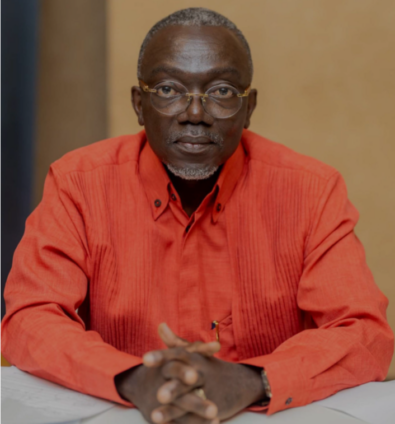
Ing. Professor Douglas Boateng is a pioneering international industrial, manufacturing and production systems engineer, governance strategist and Pan African thought leader whose work continues to influence boardroom thinking, supply chain transformation and industrialisation strategy across the continent and beyond. As Africa's first appointed Professor Extraordinaire in Supply Chain Management, he has long championed the integration of procurement, value chain development, industrialisation and governance into national and continental development agendas. An International Chartered Director and Chartered Engineer, he has received numerous lifetime achievement awards and authored several authoritative books. He is the scribe of the globally acclaimed NyansaKasa (Words of Wisdom). His work rests on the conviction that Africa's transformation — and the protection of its children — will come through deliberate action, strong institutions and leaders willing to build for generations they will never meet.
© 2026 Ing. Prof. Douglas K. Boateng. All rights reserved.
Latest Stories
-
EcoBank invests in digital education of 4 Garisson School to mark 40 years in Africa
16 minutes -
AGI urges investment in skills and raw materials to strengthen local manufacturing
19 minutes -
GPL 2026/27: ‘We have to rectify our mistakes’ – Boadu reacts to Aduana FC defeat
20 minutes -
No disability access, no building permit – KMA declares
20 minutes -
Asantehene to lead environmental restoration effort at Jimi Land Reclamation Site
24 minutes -
Poor Ghanaians are being jailed because they cannot afford justice – Crime Check Foundation
25 minutes -
No conflict in appointing Emelia Agbenyo as Deputy EC Chair – NDC
26 minutes -
87-year-old man jailed 20 years for defiling 9-year-old girl at Ofankor
28 minutes -
Sankofa Gold targets 70kg output after 9-month shutdown
31 minutes -
Tamale, Bolgatanga had just one Legal Aid lawyer between them – Kwesimintsim MP
38 minutes -
PAC orders eviction of former irrigation company MD from official residence
42 minutes -
Legal Aid Commission has offices in only 45 of Ghana’s 261 districts, needs 180 more staff
44 minutes -
Challenging Heights welcomes Ghana’s Tier 1 ranking, calls for more anti-trafficking funding
1 hour -
Cedi extends depreciation against dollar; going for GH¢12.10 at forex bureaus
1 hour -
ECG cannot keep lending electricity for free
1 hour