

Audio By Carbonatix
A single board decision, made quietly and early, can determine whether public money builds a nation or merely purchases assets.
There is a particular kind of national regret that never makes the evening news: the project completed on budget, delivered on time, technically flawless by every measure, that nonetheless leaves a country no stronger than before the contract was signed. No scandal, no headline, simply an opportunity quietly spent rather than wisely invested. Every year, developing economies commit vast sums to deciding what to buy, and remarkably little reflection to deciding what that spending should ultimately build. The uncomfortable truth is that this is rarely a procurement failure. It is a boardroom governance failure, and it begins long before any tender is drafted. A country can complete a technically sound, competitively priced infrastructure project, satisfy every procurement rule, and still discover, twenty years later, that nothing about its people, institutions or industries grew stronger because of it. That is a peculiar and quietly expensive kind of failure: money spent correctly, on paper, while the nation ends up no wiser, no more capable and no closer to its own development than before the contract was signed. Value for money should therefore be understood first as a matter of boardroom governance, shaped by the board's strategic intent, interrogated by the relevant committee and returned to the full board as a measurable proposition, long before it becomes a procurement calculation. Price matters enormously, but so should lifecycle cost, jobs, skills, local supplier development, technology transfer and foreign exchange exposure. A boardroom that approves billions without asking what development those billions will leave behind may achieve procedural compliance while missing a generational opportunity.
There is a question asked repeatedly in procurement meetings across the developing world: how much will it cost? It is an essential question, but it should rarely be the first one. The first question belongs higher up the governance architecture: what are we trying to achieve? In a developing economy, the answer cannot always end with the asset being purchased.
If a state owned enterprise spends $640 million constructing infrastructure, the board should rightly expect a technically sound asset delivered competitively and transparently. But should that be all? What happens to the money as it travels through the economy, what skills are transferred, and what remains after the contractor packs the final container and departs? These are not merely procurement questions. They are governance questions. As NyansaKasa (Words of Wisdom) puts it, the procurement department can tell the board what something costs, but a wise board must first decide what the expenditure is expected to accomplish.
Value for Money Starts With Governance
Modern boardroom governance principles already place strategy, major expenditure and risk oversight firmly within board responsibility, a discipline reflected in global frameworks such as the G20/OECD Principles of Corporate Governance, which state that boards should review corporate strategy and budgets while overseeing major capital expenditures. So when an organisation embarks on a transformational infrastructure programme, value for money should not suddenly materialise once procurement professionals begin preparing tender documents, by which point the most consequential decisions may already have been made. The board must establish strategic outcomes, the relevant committee should interrogate them, and procurement should construct a competitive process capable of delivering them.
The Committee Room Is Where the Difficult Questions Should Begin
Functional committees exist because modern organisations are too complex for the full board to examine every matter with equal depth. The OECD recognises that specialised committees enable deeper scrutiny, while the board as a whole retains responsibility for decisions. A major investment might first receive deeper scrutiny from a finance or risk committee, which should not simply ask whether procedure was followed, but what constitutes value in this particular investment. Depending on the scale of an organisation's capital expenditure, developing world boards would also do well to consider establishing a dedicated procurement committee of the board, mandated specifically to define value, interrogate major contracts and monitor delivery, rather than leaving this responsibility to whichever committee happens to have room on its agenda. Suppose a utility intends to procure a $1 billion generation project. The relevant committee might determine that value comprises technical reliability, whole-life cost, and commercially realistic technology transfer, all of which can become measurable requirements. As NyansaKasa (Words of Wisdom) puts it, when the board fails to define value before procurement begins, it should not be surprised when the tender defines value for the board.
The World Has Already Moved Beyond Price Alone
This is not a departure from global procurement standards, but an alignment with them. The World Bank now requires evaluation criteria beyond price for most large international procurement it finances, considered alongside price and lifecycle costs to assess quality and risk management, not because price has ceased to matter, but because price alone cannot reliably describe value. The African Development Bank is similarly explicit that value for money in development financed infrastructure should consider economy, effectiveness and efficiency alongside broader development outcomes. The choice is not lowest price versus reckless spending, but price considered within a richer, measurable definition of value.
Imagine two technically compliant proposals, one costing $130 million and another $140 million. The first looks irresistible, ten million dollars saved, but suppose it depends almost entirely on imported labour, while the second, genuinely competitive, trains local technicians and develops domestic suppliers. Which represents better value? We cannot answer from price alone, since promised benefits must be quantified and made contractually enforceable. As NyansaKasa (Words of Wisdom) puts it, the lowest price without development intelligence can create dependency, while local content without commercial discipline can create expensive mediocrity. Neither, on its own, is value for money.
Every strategically significant expenditure should therefore begin with an agreed value-for-money development matrix covering purchase price, whole-life cost, skills transfer and supply chain resilience, disclosed transparently in bidding documents so criteria are never introduced after bids have arrived. The rules must precede the players: the board defines outcomes, the committee interrogates them, procurement runs a lawful process, and oversight verifies delivery. This is how development objectives become part of governance rather than mere aspiration.
Building Infrastructure Should Also Mean Building Capability
Africa's infrastructure needs are considerable, and every infrastructure deficit also represents a potential capability-building opportunity. A country that does not yet manufacture locomotives competitively need not limit its contribution to land and payment alone. Could engineers be trained, or components progressively supplied domestically? The same thinking applies to energy, health facilities and digital infrastructure. As NyansaKasa (Words of Wisdom) puts it, a developing country should be careful about repeatedly acquiring finished solutions that leave its people no more capable of producing the next solution themselves. The industrial transformations of South Korea, Japan, and Singapore were not achieved through lowest-price thinking detached from strategy; each built state capacity around long-term national objectives. None of these models should be copied mechanically, but one principle travels well: national expenditure can help build national capability.
State Owned Enterprises Carry a Particular Responsibility
State-owned enterprises carry a particular responsibility, since their activities frequently sit within electricity, water, mining and transport, precisely the sectors most capable of shaping industrial development. A state utility spending billions should not regard procurement merely as an operational support function. Caution, however, is essential: a board must never allow procurement to be shaped by political instruction, or allow development policy to become patronage. Developmental procurement must therefore be more transparent than conventional procurement, not less, with every criterion defensible and every claimed benefit measurable.
Local content, it should be said plainly, is not automatically local development. A foreign product imported in pieces and assembled locally does not necessarily constitute industrialisation. How much value is genuinely added, and can local firms eventually export? As NyansaKasa (Words of Wisdom) puts it, painting local content on an imported box does not, by itself, turn the contents into industrialisation.
The Board Must Monitor What the Bidder Promised
One of the greatest weaknesses in development commitments is what happens after contract award. During tendering, every party speaks warmly of local employment and skills transfer; three years later, who verifies that these commitments were honoured? The same development matrix used to evaluate the investment should become a monitoring instrument, with functional committees periodically reviewing outcomes and management held accountable for delivery. The board should not merely approve development value. It should govern its realisation.
This is precisely the kind of question that some of the continent's most influential governance voices will gather to consider. On 7 October 2026, distinguished boardroom and development leaders will convene at the Labadi Beach Hotel in Accra for the Boardroom Governance Summit to examine how board committees shape boardroom effectiveness, including the discipline of defining value before procurement begins. Chairpersons, regulators and directors will consider whether their committees genuinely interrogate strategic intent, or simply endorse decisions management has already made.
What Is Wrong With Us?
Perhaps what is wrong with us is that we tend to discuss value for money too late. The board approves strategy, procurement prepares the tender, bids arrive, and only then does someone ask whether local development might still be included. By that stage, much of the opportunity may already have passed. Development value should begin upstream, in the boardroom, well before tender documents and price comparisons, because once strategic outcomes are properly defined, procurement can be designed to deliver them competitively.
The solution requires a connected chain. Boards should formally articulate a value for money philosophy, committees should test proposed metrics for rigour, and procurement should design transparent processes around them, with legal teams making contractual commitments and audit functions testing compliance. Technology can make this increasingly measurable, with digital platforms tracking supplier participation and lifecycle cost data, comparing forecast against actual performance. Developmental procurement should become progressively evidence driven rather than merely aspirational.
For developing economies, scarcity makes this urgent. A wealthier country may absorb an inefficient billion dollar procurement decision with relative ease; a developing country may spend a generation paying for it. The board should keep asking whether the price is competitive and the risk manageable, but it should add one more question: what development value will remain once the money has been spent? That question does not weaken value for money. It completes it.
The Cheapest Price Should Never Become Our Most Expensive Legacy
Imagine two countries each borrowing $1 billion to build comparable infrastructure. Twenty years later, the first retains the asset, alongside continuing dependence on foreign technicians and imported components. The second retains the asset, alongside trained engineers, capable suppliers and companies now competing regionally. Both originally recorded an identical project cost, yet history will record two markedly different outcomes.
This is why the conversation must begin before procurement, where strategy properly belongs, in the boardroom, and be examined where deeper scrutiny belongs, in the relevant committee, before returning to where collective accountability ultimately resides, the full board. As NyansaKasa (Words of Wisdom) reflects, a wise board asks not only how cheaply something can be bought, but what knowledge, jobs and sustainable value will remain once the money has left the account. Value for money in developing economies cannot simply mean spending less. Sometimes the greater responsibility lies in ensuring that scarce expenditure produces more: more capability, more resilience, more sustainable value. Perhaps the most important question facing any boardroom is not whether management secured the lowest acceptable price, but whether, in meeting today's needs, the board also helped build something the country will need tomorrow.
About the Author
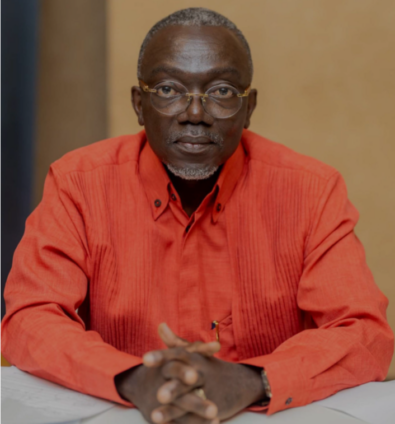
Ing. Professor Douglas K. Boateng is a strategist in governance, industrialisation and supply chains, and serves as a professional chairperson, an international Chartered Director (UK) and a Chartered Engineer (UK). A Pan Africanist and social entrepreneur at heart, he has spent his career working across public institutions, corporate boards and industrial policy, in Africa and beyond, guided by the conviction that strong institutions are built one honest decision at a time. His contributions to industry and academia have been recognised with more than six lifetime achievement awards throughout his career. He is the founder of NyansaKasa (Words of Wisdom), a collection of daily aphorisms he has written and shared since late 2019, distilling decades of experience advising governments, boards and enterprises on governance, accountability and institutional resilience into words meant to challenge and to endure. He convenes the Boardroom Governance Summit, Africa's largest boardroom focused summit, and writes a widely read weekly opinion column titled "Inconvenient Truth" and "What Is Wrong With Us," featured on some of the region's leading digital media platforms. Professor Boateng can be reached via LinkedIn or at info@panavest.com.
© NyansaKasa (words of wisdom)
Latest Stories
-
Conflicts among care providers linked to maternal, neonatal deaths – Expert
59 minutes -
GIS marks 10th TIME conference, champions improved teaching practices
1 hour -
BRICS Or Balance? What Ghana’s bid really means
2 hours -
GPRTU wants full TRAFFITECH-GH implementation to start in 2027
2 hours -
Mahama announces plans to import electric wheelchairs for PWDs
2 hours -
KGL U17 Colts 2026: Western beat Prempeh Elite Academy to set up final final with Greater Accra Region
2 hours -
Late Solanke strike salvages 10-man Spurs draw at Man United
2 hours -
Gender Ministry to monitor welfare of Nana Akua Addo’s children amid domestic violence case
3 hours -
Benedict Okyere Yeboah: Ghana’s football problem goes beyond sacking a coach
3 hours -
GPL 2026/27: Darkwah Wiafe’s winner sees All Blacks beat Kotoko
3 hours -
ITF World Tour : Patel Wins Boys’ Singles Final at J100 Accra
3 hours -
Ghana must pursue BRICS partnership if it brings economic benefits – Kpebu
3 hours -
Success and Wright Claims J100 Accra Girls’ Doubles Championship
3 hours -
ITF J100: America’s Wright wins J100 Accra Girls’ Singles Title
3 hours -
Expedition hopes to find aviator Amelia Earhart’s plane on remote island
3 hours