

Audio By Carbonatix
Every nation inherits difficulty. What separates them is not the size of the problem but how long a society is willing to keep calling the same crisis new
When a Problem Becomes Part of the Furniture
There is something quietly revealing about a problem that outlives several governments, countless committees and enough conferences to fill a respectable hotel ballroom. At first the problem causes outrage. A task force follows. A report is produced, recommendations are announced, cameras flash, and expectations rise. Time passes, and the report grows steadily more familiar with the shelf on which it rests. Eventually another crisis arrives and, with astonishing innocence, society asks how this could possibly have happened again. There is humour in the ritual, though the laughter should make us uncomfortable rather than comfortable.
It Is Not the Problem That Is the Problem
NyansaKasa (Words of Wisdom): "It is not the problem that is the problem. It is our inability to solve the problem which is the problem." That distinction matters enormously, because problems are entirely normal. Permanent problems are not. Many communities around the world continue confronting inadequate sanitation, unreliable infrastructure and stubborn unemployment, and none of these challenges is trivial. Yet when a fundamentally similar problem survives for thirty or forty years, attributing its persistence purely to complexity becomes harder to sustain with a straight face.
Nobody Is Uniquely Cursed With Difficulty
One of the quieter dangers of living with a problem for too long is beginning to believe that one's own circumstances are uniquely impossible. History rather firmly suggests otherwise. Singapore emerged from the 1960s facing unemployment, inadequate housing and limited natural resources. Today more than three-quarters of its resident households live in public housing developed through a sustained national programme rather than an occasional political promise. The Netherlands, with roughly a quarter of its territory below sea level, could hardly afford an annual national debate about whether water is wet, and so it built institutions, engineering systems and long-term water management instead. None of these histories can simply be photocopied elsewhere, since context always matters. But each establishes a useful principle. A difficult problem does not automatically condemn a nation to permanent difficulty.
Redesigning the House, Not Just Fighting the Fire
NyansaKasa (Words of Wisdom): "The wise do not merely survive yesterday's fire. They redesign the house so tomorrow's spark has less to burn." Japan's philosophy of continuous improvement, widely known as kaizen, treats failure as raw material for learning rather than simply an event to be endured. What links such societies is not some elusive cultural gene. It is the deliberate institutionalisation of learning, so that a failure repeated twice prompts an honest question about what changed after the first one.
Africa's Real Emergency May Be Implementation
Africa does not suffer from a shortage of plans. The continent has Agenda 2063. Governments publish national development frameworks, ministries produce strategies, and universities generate research of genuine intellectual quality. The challenge more often lies in the space between intention and execution. The World Bank estimates that Sub-Saharan Africa needs to create roughly 15 million jobs annually through 2030 simply to keep pace with its growing working-age population, while the United Nations projects that the continent's population could approach 2.5 billion by 2050. Those figures should reshape how problem-solving itself is approached. Housing, transport, water and employment can no longer remain isolated projects. They require integrated systems designed for the populations that will actually exist decades from now, not merely the ones being counted today.
Prevention Rarely Gets a Ribbon to Cut
Complex problems require systems thinking, yet politics everywhere naturally prefers visible intervention. A ribbon can be cut around a new building. Nobody holds a ceremony because preventive maintenance quietly stopped a sewer from collapsing. That may be development's cruel joke, that prevention is politically silent while failure arrives with television cameras already rolling. NyansaKasa (Words of Wisdom): "We often celebrate the person carrying buckets toward the fire more loudly than the person who quietly removed the matches."
Confusing Activity With Progress
Another habit deserves gentle but honest examination. Commitment is too often measured by how busy an institution appears. Meetings occur, committees are established and communiqués are issued, yet activity and progress are not synonyms. The relevant question is never how many meetings addressed a problem. It is whether the problem itself became smaller as a result. Botswana's post-independence experience demonstrated the value of institutional continuity and prudent management of mineral revenue, while Rwanda has shown how sustained administrative discipline and community participation can measurably shift outcomes in sanitation and public order. NyansaKasa (Words of Wisdom): "Experience is expensive when every generation insists on paying the same school fees."
The Reset Must Begin With How We Define Success
A more solution-oriented culture would move from a habit of announcement toward one of completion, maintenance and measurable outcomes. Major national challenges deserve generational programmes with targets that survive a change of government, rather than a fresh restart with every election. A housing strategy should ask where citizens will actually live in 2040, and what transport, schools and employment those settlements will require. Independent, publicly visible measurement matters just as much, since an outcome citizens can see for themselves becomes far harder to quietly abandon. Education must also play its part, raising a generation as comfortable solving problems as it is identifying them.
The System and the Citizen
NyansaKasa (Words of Wisdom): "Government can build the system. Citizens decide every morning whether the system will work." No government can permanently solve sanitation while households casually contribute to the mess. Engineers cannot protect waterways that citizens continue treating as convenient dumping grounds. This is not an argument for shifting blame away from institutions. It is a reminder that durable solutions are always a partnership between the built system and the daily choices of the people who use it.
What Is Wrong With Us
Perhaps this is where the question becomes personally uncomfortable rather than merely academic. What is wrong with us is not that problems exist. Singapore had problems. Japan had problems. The Netherlands has confronted an existential one called water for centuries. The difference lies entirely in what a society decides to do after recognising them. A flood that returns every year is no longer simply an emergency. Persistent youth unemployment is no longer simply a statistic. A road repaired repeatedly at great expense is no longer simply a pothole problem. Each is quietly telling us something about our problem-solving architecture, if we are willing to listen.
Hope Instead of Accusation
This is where hope, rather than accusation, becomes the more useful instinct. Every region possesses engineers, entrepreneurs, academics and young innovators capable of extraordinary things. What is often missing is not talent but continuity, accountability and institutional memory, along with a willingness to replace the tempting question of who should be blamed with the far more productive one of what will prevent this from happening again. The future will not judge any generation by the number of problems it inherited, since every generation inherits problems. It will judge us by how many we knowingly handed over untouched.
Misfortune, or a Choice
NyansaKasa (Words of Wisdom): "A problem inherited may be misfortune. A problem understood but repeatedly passed to the next generation becomes a choice." That is the inconvenient truth sitting quietly beneath every recurring crisis. The problem itself may genuinely be difficult. But after decades of recognising it, discussing it, financing it and surviving it, perhaps the sharper question is no longer simply what is wrong. Perhaps the question worth sitting with, uncomfortably, is what is wrong with us that we have grown so accustomed to problems we already know how to solve.
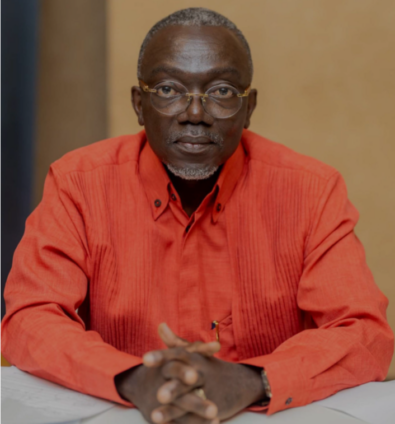
About the Author Ing. Professor Douglas K. Boateng is a strategist in governance, industrialisation and supply chains, and serves as a professional chairperson, an international Chartered Director (UK) and a Chartered Engineer (UK). A Pan-Africanist and social entrepreneur at heart, he has spent his career working across public institutions, corporate boards and industrial policy, in Africa and beyond, guided by the conviction that strong institutions are built one honest decision at a time. His contributions to industry and academia have been recognised with more than six lifetime achievement awards throughout his career. He is the founder of NyansaKasa, Words of Wisdom, a collection of daily aphorisms he has written and shared since late 2019, distilling decades of experience advising governments, boards and enterprises on governance, accountability and institutional resilience into words meant to challenge and to endure. He convenes the Boardroom Governance Summit, Africa's largest boardroom-focused summit, and writes a widely read op-ed weekly series titled "Inconvenient Truth" and "What Is Wrong With Us," featured on some of the region's leading digital media platforms. Professor Boateng can be reached via LinkedIn or at info@panavest.com.
Latest Stories
-
Conflicts among care providers linked to maternal, neonatal deaths – Expert
59 minutes -
GIS marks 10th TIME conference, champions improved teaching practices
1 hour -
BRICS Or Balance? What Ghana’s bid really means
2 hours -
GPRTU wants full TRAFFITECH-GH implementation to start in 2027
2 hours -
Mahama announces plans to import electric wheelchairs for PWDs
2 hours -
KGL U17 Colts 2026: Western beat Prempeh Elite Academy to set up final final with Greater Accra Region
2 hours -
Late Solanke strike salvages 10-man Spurs draw at Man United
2 hours -
Gender Ministry to monitor welfare of Nana Akua Addo’s children amid domestic violence case
2 hours -
Benedict Okyere Yeboah: Ghana’s football problem goes beyond sacking a coach
3 hours -
GPL 2026/27: Darkwah Wiafe’s winner sees All Blacks beat Kotoko
3 hours -
ITF World Tour : Patel Wins Boys’ Singles Final at J100 Accra
3 hours -
Ghana must pursue BRICS partnership if it brings economic benefits – Kpebu
3 hours -
Success and Wright Claims J100 Accra Girls’ Doubles Championship
3 hours -
ITF J100: America’s Wright wins J100 Accra Girls’ Singles Title
3 hours -
Expedition hopes to find aviator Amelia Earhart’s plane on remote island
3 hours