

Audio By Carbonatix
If we keep breaking our own record for returning to the IMF, future generations may not remember our excuses. They will remember the debts, the lost opportunities and the courage we lacked to break the cycle.
The Thermometer Does Not Create The Fever
Every family understands the difference between visiting a hospital because of an unexpected emergency and living permanently in the emergency ward. Emergencies happen. Responsible families seek help when they genuinely need it. But if the same family repeatedly finds itself in the emergency room every few years because it refuses to address the underlying causes of its illness, eventually someone must ask a difficult question: is the problem the hospital, or is the problem how the family lives?
Perhaps that is where Africa, and particularly countries that repeatedly seek assistance from the International Monetary Fund, must courageously pause for reflection. The IMF was never designed to become a nation’s permanent economic residence. It was created as a lender of last resort for countries experiencing severe balance-of-payments crises. In many instances, it has prevented collapse and provided breathing space at critical moments in national histories. Yet there is an inconvenient truth we cannot continue avoiding.
When emergency assistance becomes a recurring national habit rather than an exceptional event, the conversation must shift from the institution providing assistance to the conditions repeatedly creating the emergency. Perhaps the IMF is not the disease. Perhaps it is the thermometer. And thermometers do not create fever. They merely reveal it.
“The IMF should be an emergency room, not a nation’s permanent family doctor. Emergency rooms treat symptoms. Healthy habits prevent repeated emergencies.”
NyansaKasa — Words of Wisdom
Far too often, public debate centres on whether the IMF’s conditions are too harsh or whether its prescriptions help or hinder development. These are legitimate discussions. Yet they risk distracting us from a far more fundamental question: why do some countries repeatedly require emergency assistance whilst others gradually build the resilience to avoid returning?
What History Teaches Those Willing To Learn
History offers uncomfortable but valuable lessons. South Korea entered an IMF programme under extraordinarily difficult circumstances during the Asian Financial Crisis of 1997. Yet what followed was remarkable. Painful reforms were implemented, institutions strengthened and competitiveness restored. South Korea did not aspire to become a permanent IMF client. It treated the crisis as an opportunity to rebuild its economic foundations. Today it stands among the world’s leading industrial and technological powers — not because it never stumbled, but because it refused to become comfortable with stumbling.
Ireland accepted an international rescue programme after the 2008 financial crisis, yet successive governments remained committed to restoring fiscal credibility and rebuilding investor confidence. The objective was never merely to exit the programme. It was to reduce the likelihood of needing another one. Botswana demonstrated that prudent stewardship of mineral revenues and long-term planning could become a foundation for stability rather than recurring fiscal crises. Norway transformed temporary oil revenues into one of the world’s largest sovereign wealth funds, preserving wealth for generations yet unborn rather than consuming it in the present.
These examples are not identical. Every economy faces unique challenges. Yet they share one defining characteristic: they viewed crisis as a turning point rather than a recurring destination. Africa must begin asking itself whether it has done the same. Too often we celebrate surviving crises rather than preventing the next one. We congratulate ourselves for negotiating rescue packages whilst paying insufficient attention to building the institutions capable of making future rescues unnecessary.
Breaking The Cycle Before It Breaks The Nation
The greatest tragedy of repeated economic crises is not that they occur. The true tragedy is when a nation repeatedly returns to the same crisis because it refuses to confront the habits that created it in the first place.
A nation can borrow money. It cannot borrow discipline. A nation can receive financial assistance. It cannot import fiscal responsibility. A nation can negotiate another bailout. It cannot negotiate away the consequences of poor governance. The IMF can provide financial oxygen when an economy struggles to breathe. It cannot permanently strengthen the lungs. That responsibility belongs to the nation itself.
One of the most damaging consequences of recurring IMF programmes is not merely the conditions attached to them. It is the gradual erosion of national confidence. Citizens begin to believe that economic crises are inevitable. Businesses become hesitant to invest. Young professionals seek opportunities elsewhere because they no longer trust that tomorrow will be better than today. Interest payments consume resources that could have built schools, hospitals, railways and industrial parks. In other words, yesterday’s borrowing quietly steals tomorrow’s opportunities.
“Every debt is a conversation between today’s leaders and tomorrow’s children. Sadly, tomorrow’s children are never invited to the negotiating table.”
NyansaKasa — Words of Wisdom
The Most Inconvenient Truth Of All
No nation has ever borrowed its way into sustainable prosperity. Every prosperous nation has ultimately produced, innovated, exported, industrialised and governed its way to long-term strength. Germany built manufacturing excellence. Japan built quality. South Korea built technology. Singapore built efficiency, trust and world-class institutions. None of these transformations occurred because external institutions rescued them indefinitely. They occurred because leaders and citizens accepted that discipline is often more important than abundance.
Africa possesses resources many developed nations can only dream of — gold, lithium, manganese, fertile land, strategic geography and, above all, the youngest population on earth. Yet resources alone have never guaranteed prosperity. If they did, the world’s richest nations would be those with the largest mineral deposits rather than those with the strongest institutions. Perhaps our greatest export has been raw materials when it should have been finished products: cocoa beans rather than chocolate, bauxite rather than aluminium, critical minerals rather than high-value manufacturing. Every container of unprocessed exports quietly carries away employment opportunities that could have transformed communities at home.
Future generations deserve economies that create wealth rather than merely redistribute scarcity. They deserve governments that plan beyond election cycles. They deserve institutions strong enough to resist fiscal indiscipline regardless of which party occupies office. This demands more than better governments. It demands better citizenship. Governments cannot spend recklessly unless societies tolerate recklessness. National transformation begins when citizens demand not only promises but prudence; not only growth but sustainability; not only development but disciplined stewardship.
“A nation that repeatedly borrows from tomorrow eventually discovers that tomorrow has sent the bill back — with interest.”
NyansaKasa — Words of Wisdom
The greatest danger is not returning to the IMF. It is becoming psychologically comfortable with returning. The day a nation begins treating repeated economic rescue as ordinary rather than exceptional is the day it quietly lowers its ambitions.
History is patient. Future generations will be even more so. They will not remember how passionately we defended our economic crises. They will remember whether we had the courage to end them. For the IMF should remain what it was always intended to be: an emergency partner in extraordinary times — not a permanent destination on a nation’s economic journey.
About The Author
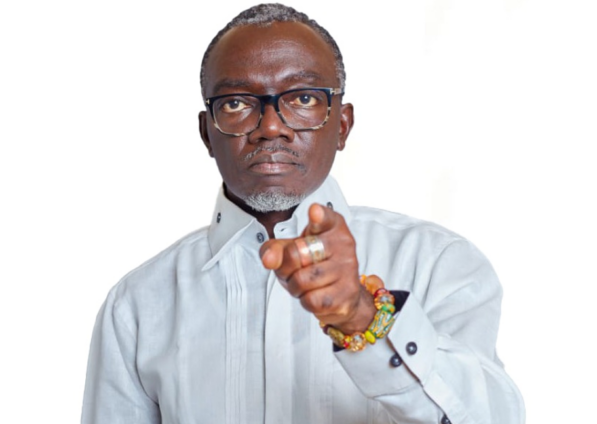
Ing. Professor Douglas Boateng is a pioneering international industrial engineer, governance strategist and Pan-African thought leader whose work continues to shape boardroom thinking, supply chain transformation and industrialisation across the continent and globally. Africa’s first appointed Professor Extraordinaire in Supply Chain Management, he has consistently championed the integration of governance, procurement strategy and industrialisation into national and continental development agendas. An International Chartered Director and Chartered Engineer, he is the Founder and Scriber of the globally acclaimed NyansaKasa (Words of Wisdom), with a cumulative global readership of one million, and the IoD Ghana Director of the Year 2024. His work is driven by a single conviction: Africa’s transformation will not come from rhetoric but from deliberate action, strong institutions and leaders willing to build for future generations.
Latest Stories
-
Foreign Minister inspects VFS Global Visa Centre, highlights commitment to service quality standards
8 minutes -
Declan Rice close to agreeing new Arsenal deal
23 minutes -
‘Draining’ few days for Gauff after online racist abuse
32 minutes -
Media worker, journalist remanded over alleged GH¢800,000 fraud
41 minutes -
PAC sends Ghana Water hearing back, demands Minister and MD appear over financial status
50 minutes -
Foreign Affairs Minister inspects 20+ visa centres, demands better conditions for Ghanaian applicants
1 hour -
Guardiola set to attend Man City v PSG next week
1 hour -
GACL to hold full-scale emergency simulation exercise on October 15
2 hours -
327 entries submitted for 30th GJA Media Awards
2 hours -
Mahama proposes rent-to-own scheme for unfinished houses
2 hours -
Mahama wants banks to introduce affordable housing loans within six months
2 hours -
Photos from National Conference on Housing Finance
2 hours -
Italy, Ghana unite 40 artists for ‘Beyond Creation’ exhibition at Accra Art Centre
2 hours -
Premature to call for Sports Minister’s removal while CID probe is ongoing – Ernest Norgbey
3 hours -
NPP mourns Samuel Arthur Odoi-Sykes
3 hours