

Audio By Carbonatix
Every generation inherits a world shaped by those who came before it. Every generation also carries the responsibility to improve upon what it received. The world’s most successful societies did not merely change governments — they changed the way they thought. Could one of Africa’s most enduring challenges be that we continue trying to solve twenty-first-century problems with twentieth century thinking?
When The Future Knocks But The Mind Remains Locked
One of the great paradoxes of civilisation is that while the world never stops changing, the human mind frequently resists change with remarkable tenacity. We admire innovation yet cling to familiar habits. We celebrate progress yet hesitate the moment progress requires us to abandon comfortable assumptions. We speak passionately about transformation whilst quietly preserving the very mindsets that created the problems we hope to solve.
Every generation inherits institutions, beliefs, traditions and systems from those who came before. That inheritance is valuable — it provides identity, continuity and wisdom. Yet history teaches an equally important lesson: every inheritance eventually reaches a point at which it must be questioned, improved or replaced. What resolved yesterday’s challenges may become tomorrow’s constraint.
The danger is not tradition itself. The danger is allowing tradition to become a substitute for thought.
“Yesterday’s wisdom deserves respect. Tomorrow’s challenges demand renewal.”
NyansaKasa — Words of Wisdom
Respecting history does not require becoming imprisoned by it. On the contrary, history consistently honours societies that had the courage to build upon inherited wisdom rather than merely preserve it unchanged. Progress rarely begins with new technology. It begins with new thinking.
The World Did Not Change Because It Waited For Permission
When one examines the transformation of nations such as Japan, Singapore, South Korea, Germany, Estonia and the Nordic countries, a striking pattern emerges. Their greatest breakthroughs did not occur because circumstances suddenly became favourable. They occurred because these societies deliberately challenged outdated assumptions before circumstances compelled them to do so.
Japan rebuilt after the devastation of the Second World War by embracing continuous improvement, discipline and lifelong learning. Singapore transformed itself from a resource-poor island into one of the world’s most competitive economies by understanding that yesterday’s limitations need not dictate tomorrow’s possibilities. Estonia, having regained independence barely a generation ago, refused to replicate outdated bureaucratic systems and instead embraced digital governance so comprehensively that it is now recognised as one of the world’s most digitally advanced societies. Rwanda’s recovery demonstrates how national transformation begins when a society deliberately rejects destructive patterns and consciously cultivates values centred on reconciliation, discipline and long-term purpose.
None of these countries abandoned their history. They simply refused to become its prisoners.
“Progress begins the day courage becomes stronger than comfort.”
NyansaKasa — Words of Wisdom
What Is Wrong With Us? When We Keep Watering Dead Ideas
Perhaps nowhere is this challenge more visible than across many developing economies, where conversations about transformation frequently coexist with systems that quietly resist it. We continue educating young people for industries that are rapidly changing or disappearing. We continue planning cities on assumptions formed decades ago despite unprecedented urbanisation. We continue discussing industrialisation whilst importing goods that could increasingly be manufactured locally. We expect different results from remarkably similar thinking.
There are moments when a society resembles a farmer determined to produce a better harvest whilst stubbornly refusing to improve the soil, replace depleted seed or adapt to changing seasons. Each season disappointment grows. Yet the methods remain untouched.
“A farmer who blames the harvest whilst refusing to enrich the soil eventually harvests excuses instead of crops.”
NyansaKasa — Words of Wisdom
Sustainable transformation cannot emerge from expired thinking. It requires fresh imagination, intellectual humility and the courage to acknowledge that many of yesterday’s solutions have reached the limits of their usefulness. The African Continental Free Trade Area presents the largest integrated market in the developing world, creating opportunities that previous generations could scarcely have imagined. Yet these opportunities cannot be fully realised whilst our thinking remains anchored to assumptions the future has already outgrown.
When Courage Becomes The Fertiliser Of Civilisation
Meaningful transformation rarely begins with technology, capital or political power alone. It begins with courage — not the courage displayed on battlefields, but the quieter courage to challenge familiar assumptions, abandon obsolete practices and embrace better ways of thinking long before circumstances leave no alternative.
Africa now stands before such a moment. Our continent possesses one of the youngest populations on earth. By 2050, one in every four people on the planet is projected to live in Africa. This demographic reality should represent one of humanity’s greatest economic opportunities. Yet demographics alone do not create prosperity. Young people equipped with yesterday’s thinking cannot compete effectively in tomorrow’s economy. Artificial intelligence, advanced manufacturing, renewable energy, robotics and digital commerce are reshaping industries at extraordinary speed. Nations that prepare their citizens for this landscape will prosper. Those that hesitate risk watching opportunity migrate quietly elsewhere.
“The future does not wait for those who are comfortable. It rewards those who are prepared.”
NyansaKasa — Words of Wisdom
Perhaps that explains why many organisations, institutions and even governments struggle despite possessing talented people. Their greatest challenge is not a shortage of intelligence. It is an abundance of expired assumptions. They reward yesterday’s behaviour whilst expecting tomorrow’s performance. They celebrate innovation in speeches whilst quietly punishing those who challenge established routines.
The Reset We Seek Cannot Begin In Government Alone
Whenever nations speak of transformation, public debate gravitates naturally towards elections, budgets and economic policy. These matter. Competent governance is indispensable. Yet history demonstrates consistently that governments rarely transform societies on their own. At best, they create the conditions within which transformation becomes possible. It is citizens who ultimately determine whether those conditions produce lasting change.
Sustainable transformation is never exclusively political. It is profoundly cultural. It begins around dining tables long before it reaches cabinet tables. It begins in classrooms long before it reaches boardrooms. It begins in homes long before it reaches parliament.
“The character of tomorrow’s nation is first written in today’s home.”
NyansaKasa — Words of Wisdom
That truth should shape how we educate our children. Knowledge alone is no longer sufficient. Tomorrow’s citizens must also develop curiosity, adaptability, ethical leadership, entrepreneurial thinking and the confidence to question outdated ideas — respectfully but without hesitation. A nation that teaches its children only how to remember yesterday may unintentionally deny them the ability to create tomorrow.
At Some Point, The Explanation Becomes The Prison
What is wrong with us is not that we honour our history. History deserves honour. What is wrong with us is not that we respect our traditions. Strong societies are rooted in identity. What is wrong with us is that we sometimes allow yesterday’s successes to become today’s limitations. We preserve methods long after circumstances have changed. We defend assumptions that no longer serve us. We grow emotionally attached to systems that the future has quietly outgrown.
The tragedy is not that change is difficult. The tragedy is that refusing to change eventually becomes far more difficult still.
The future will not be inherited simply because we desire it. It will be earned because we prepare for it. Africa possesses every reason for optimism: a youthful population, abundant resources, entrepreneurial energy, cultural richness and an expanding continental market that provides foundations previous generations could not have imagined. Yet these advantages will fulfil their promise only if we cultivate minds capable of seeing possibility where others see obstacles, and the future where others remain imprisoned by the past.
Expired thinking rarely announces its retirement. It disguises itself as experience, as convention and as the accumulated weight of precedent — and it is precisely this disguise that makes it so difficult to identify and so costly to ignore.
And perhaps history will ask our generation only one enduring question: did we have the courage to think differently before the future forced us to?
About The Author
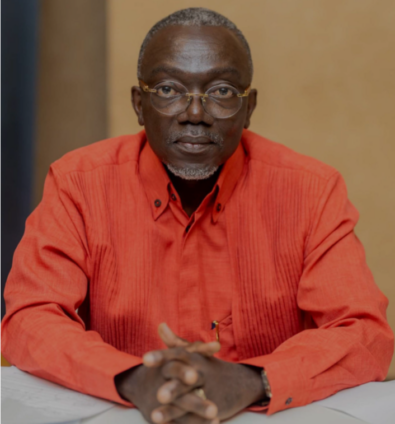
Ing. Professor Douglas Boateng is a pioneering international industrial engineer, governance strategist and Pan-African thought leader whose work continues to shape boardroom thinking, supply chain transformation and industrialisation across the continent and globally. Africa’s first appointed Professor Extraordinaire in Supply Chain Management, he has consistently championed the integration of governance, procurement strategy and industrialisation into national and continental development agendas. An International Chartered Director and Chartered Engineer, he has received numerous lifetime achievement awards and authored several authoritative publications. He is the Founder and Scriber of the globally acclaimed NyansaKasa (Words of Wisdom), with a cumulative global readership of one million. His work is driven by a single conviction: Africa’s transformation will not come from rhetoric but from deliberate action, strong institutions and leaders willing to build for future generations.
© 2026 Ing. Professor Douglas K. Boateng. All Rights Reserved.
Latest Stories
-
FTBLRLIFE targets Ghana in expansion of global grassroots football network
1 hour -
Former ‘American Idol’ contestant sentenced to life without parole for wife’s murder
2 hours -
Education Ministry commends Ghanaian teachers on World Teachers’ Day 2026
3 hours -
NPP can reconcile with aggrieved members who want to return – Nana Akomea
3 hours -
Tamale Child Deaths: Vehicle owner arrested as IGP deploys homicide team
3 hours -
From ShattaFest to MoMo Fest: Entertainment takes centre stage in youth engagement
3 hours -
Nigerian military aircraft crashes, killing 32
3 hours -
MTN encourages Ghanaians to use MoMo for saving, investing and financial planning
3 hours -
Absa Bank Ghana names Stephen Ato Frimpong as Board Chair
3 hours -
Pickford ‘almost caused crash’ with careless driving
4 hours -
Author and former politician Jeffrey Archer dies aged 86
4 hours -
No education reform can succeed without teachers – Education Ministry
4 hours -
Gauff condemns racist abuse after China Open win
4 hours -
Medvedev disqualified for hitting spectator with ball
4 hours -
Oliseh scores twice in late comeback win for France
4 hours