

Audio By Carbonatix
The Society of Obstetricians and Gynaecologists of Ghana (SOGOG) has reaffirmed its commitment to ending preventable maternal deaths by 2030, designating Kumasi as a key intervention area.
Maternal mortality remains a critical public health crisis, with Ghana recording an estimated 300 deaths per 100,000 live births, significantly higher than the World Health Organization target of 70 per 100,000.
Recent performance data from the Ashanti Regional Health Directorate confirm an alarming 51% surge in maternal deaths, with 232 fatalities recorded in the first half of 2025 alone.
This figure significantly exceeds the national safety threshold.
Citing the urgency, the Society is therefore calling for stronger collaboration between government, healthcare professionals, traditional leaders, religious organisations, development partners, and communities to ensure that no woman loses her life during pregnancy or childbirth.
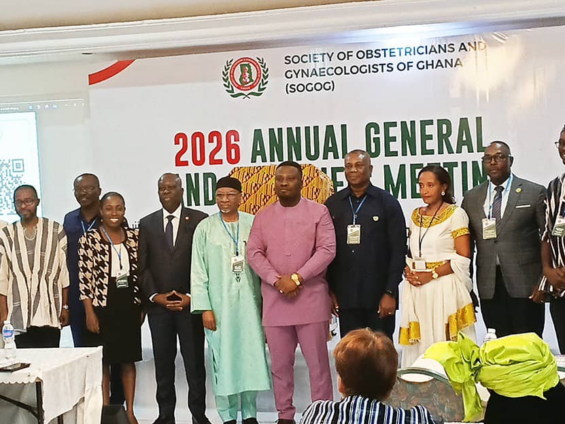
The declaration and the call were made at the opening of the Society’s 2026 Annual General and Scientific Meeting held in Kumasi, where experts emphasized the need for sustained investment, innovation, and evidence-based interventions to strengthen maternal and reproductive healthcare and achieve Sustainable Development Goal (SDG 3) targets on reducing maternal mortality.
Delivering the welcome address, the President of SOGOG, Prof. Thomas Okpoti Konney, said that although Ghana had recorded improvements through expanded antenatal care, increased skilled birth attendance and sustained investments in ¹maternal health programmes, many women continued to die from preventable pregnancy and childbirth-related complications.
He noted that postpartum haemorrhage, hypertensive disorders of pregnancy, infections, unsafe abortions, and complications during labour and delivery continue to be the leading causes of maternal deaths in Ghana.
Prof. Thomas Konney, who is also a consultant Gynaecological Oncologist at KATH and Lecturer at KNUST School of Medical Sciences, explained that many of these deaths could be prevented through timely diagnosis, quality emergency obstetric care, and improved access to skilled healthcare professionals.
“The statistics before us are not just numbers. Behind every maternal death is a grieving family, a devastated community and a lost future,” Prof. Konney stated.
He stressed that every maternal death represented a failure of the healthcare system and called for renewed national commitment to reversing the trend.
Prof. Konney said Ghana must step up efforts to meet the SDG target of fewer than 70 maternal deaths per 100,000 live births by 2030, and announced the Kumasi Declaration as a roadmap to achieve it.
He emphasised that every woman, regardless of her geographical location, educational background, social status or economic condition, deserved access to quality, respectful and timely maternal healthcare.
"Our collective responsibility is clear. Every mother deserves dignity, quality care, and the chance to survive pregnancy and childbirth. I therefore announce the Kumasi Declaration, our roadmap to achieve zero maternal mortality by 2030,” he said.
He stressed that every maternal death represented a failure of the healthcare system and called for renewed national commitment to reversing the trend.
He challenged all stakeholders to move beyond discussions and commit themselves to implementing practical interventions capable of saving the lives of mothers and newborns.
As part of efforts to strengthen maternal healthcare delivery, Prof. Konney outlined five strategic commitments that SOGOG would pursue.
They include promoting excellence in clinical care through continuous professional development, strengthening the maternal health workforce by improving specialist training and equitable deployment, supporting research and innovation to generate evidence-based solutions, intensifying advocacy for policies that improve maternal health services, and expanding partnerships with stakeholders.
He also urged communities to discourage harmful cultural practices that expose pregnant women to avoidable health risks.
He commended the Ministry of Health, the Ghana Health Service and other agencies for implementing interventions that had contributed to improvements in maternal healthcare across the country.
The SOGOG President further acknowledged the invaluable support of development partners, sponsors, researchers and healthcare professionals whose contributions continue to strengthen maternal and reproductive healthcare.
He paid glowing tribute to obstetricians, gynaecologists, midwives, nurses and other frontline health workers for their dedication and sacrifices in safeguarding the lives of mothers and babies.
The Ashanti Regional Minister, Dr. Frank Amoakohene, underscored the government’s commitment to strengthening healthcare delivery in the country and reducing maternal mortality.
He disclosed that approximately 35 of the Agenda 111 hospitals are set for commissioning, with facilities in Oforikrom and Atwima Trede among them.
He also referenced the Free Primary Healthcare Programme and Mahama Cares as strategic policies aimed at expanding access and shifting focus toward preventive healthcare.
Dr. Amoakohene affirmed his support for the Kumasi Declaration’s target of achieving zero maternal mortality by 2030.
The four-day conference, which is being held at the Miklin Hotel from July 30 to August 2, is on the theme: “Every Mother Counts: Ending Preventable Maternal Deaths in Ghana in Line with SDG 3 Targets.”
The meeting has brought together obstetricians, gynaecologists, medical specialists, researchers, policymakers, development partners, academics and other healthcare professionals to deliberate on practical strategies to strengthen maternal healthcare delivery across the country.
The scientific meeting will examine a wide range of issues relating to maternal and reproductive healthcare, including emergency obstetric care, maternal nutrition, reproductive health policies, family planning, newborn care, pregnancy-related complications and the application of emerging medical technologies in healthcare delivery.
Participants are also expected to present scientific papers, research findings and case studies highlighting Ghana’s progress in maternal healthcare while identifying existing gaps and proposing practical solutions.
As part of its social responsibility activities for the 2026 Annual General and Scientific Meeting, the Society provided free gynaecological surgeries for an estimated 71 beneficiaries in Obuasi.
Other conditions addressed during the exercise included Fibroids, Ovarian Cysts, Genital Prolapse, and Genital Masses.
Latest Stories
-
GACL to hold full-scale emergency simulation exercise on October 15
40 minutes -
327 entries submitted for 30th GJA Media Awards
54 minutes -
Mahama proposes rent-to-own scheme for unfinished houses
55 minutes -
Mahama wants banks to introduce affordable housing loans within six months
56 minutes -
Photos from National Conference on Housing Finance
1 hour -
Italy, Ghana unite 40 artists for ‘Beyond Creation’ exhibition at Accra Art Centre
1 hour -
Premature to call for Sports Minister’s removal while CID probe is ongoing – Ernest Norgbey
2 hours -
NPP mourns Samuel Arthur Odoi-Sykes
2 hours -
Stay out of World Cup visa probe to avoid interfering with CID investigations – Ernest Norgbey to politicians
2 hours -
Bono East Minister inspects ‘Big Push’ roads; contractor on Tankor-Fiema-Busunya road ahead of schedule
2 hours -
Scrutiny is not disloyalty – Chief of Staff defends serious journalism at 30th GJA Awards launch
2 hours -
Abuse case: Nana Akua’s husband Harold unable to appear in court after hospital admission – Police
3 hours -
Mahmud Kabore picks NDC Ashanti Regional Communication Officer nomination forms
3 hours -
KNUST Career Services pioneer Selina Doe Angmor named among 2026 40 Under 40 honourees
3 hours -
Nana Akua domestic abuse case: Police to arraign husband after hospital discharge
3 hours