

Audio By Carbonatix
Health insurance rarely dominates headlines. It does not trend on social media. It does not excite political rallies. Yet, quietly and relentlessly, it determines who lives, who suffers, who recovers, and who dies.
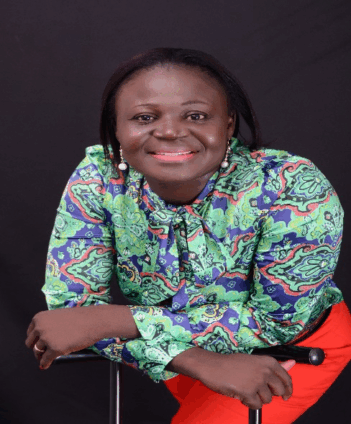
Standing at the centre of this critical but often overlooked space is Princess Osisiadan-Quaye (Mrs.), a respected health insurance expert whose passion, clarity, and people-centred advocacy are reshaping how Ghanaians understand healthcare financing.
Across Ghana’s workplaces, highways, markets, and homes, medical emergencies strike without warning. Accidents, sudden illnesses, and chronic conditions do not announce themselves. They arrive uninvited. And when they do, one question rises above all others: Is there health insurance?
Princess Osisiadan-Quaye (Mrs.) believes this single question has become one of the most powerful predictors of survival in modern Ghana.
“It is no longer enough to hope you will not fall sick,” she says. “Hope is not a health plan. Insurance is.”
Her advocacy is rooted in lived realities.
One afternoon, a daily-wage worker hired through an employment agency collapsed at a manufacturing company. Coworkers rushed to save him. CPR was administered. Water was poured on him. An ambulance was about to be called.
Then, weak but conscious, he waved “no.”
Later, it emerged that the man had no health insurance. He knew that hospital treatment without coverage would push him into crushing debt. He feared financial ruin more than death.
“This is not bravery,” Princess Osisiadan-Quaye (Mrs.) explains. “It is desperation created by a broken understanding of risk and protection.”
In another city, a construction worker was crushed to death while operating a crane. Investigations revealed that his manager had defaulted on paying health insurance premiums for staff. A court later found the company liable and ordered heavy compensation for the bereaved family.
For Princess Osisiadan-Quaye (Mrs.), these tragedies point to one truth, “lack of health insurance is not merely an inconvenience. It is a silent killer.”
With years of experience in health insurance education, enrollment strategies, and client engagement, she has become a trusted voice on why insurance must be positioned as a necessity, not a privilege.
“Medical emergencies are becoming more expensive all over the world,” she explains. “If you face one without insurance, you can sink into a debt that may take a lifetime to escape if you escape at all.”
One of the biggest misconceptions she confronts daily is the belief in “pay as you go” healthcare.
Many people assume they can simply pay cash whenever illness strikes. Princess Osisiadan-Quaye (Mrs.) calls this thinking dangerously flawed.
“You cannot plan when you will collapse, have an accident, or develop a serious condition. But you can plan how you will pay when that day comes,” she says.
Another hidden danger is delay.
Uninsured people often avoid hospitals when symptoms first appear. What could have been treated early becomes severe. Minor pain becomes major disease. Simple treatment becomes complex surgery.
“Insurance removes fear,” she notes. “When people feel protected, they seek help early. Early care saves lives and saves money.”
Her message reverberates strongly with young people who often feel invincible.
“Youthfulness is not immunity,” she warns. “Accidents do not respect age. Illness does not check your birth certificate.”
Beyond individual behavior, Princess Osisiadan-Quaye (Mrs.) also speaks boldly about systemic gaps. Informal sector workers, contract staff, and daily wage earners remain largely uninsured. Some employers deduct premiums but fail to remit them. Weak enforcement enables exploitation.
She believes insurance companies that truly want to expand coverage must go beyond selling policies.
They must educate.
They must build trust.
They must speak the language of ordinary people.
This is where Princess Osisiadan-Quaye (Mrs.) stands out.
Her strength lies not only in technical knowledge, but in her rare ability to translate complex insurance concepts into simple, relatable messages that connect with market women, artisans, drivers, students, and corporate executives alike.
Industry observers note that any insurance company that engages her expertise is likely to gain more than an employee it gains a powerful ambassador capable of winning hearts, building confidence, and converting skepticism into enrollment.
In a country where mistrust and misinformation still surround insurance, such a skill set is invaluable. Health insurance, as Princess Osisiadan-Quaye (Mrs.) often reminds audiences, does more than pay hospital bills.
It restores dignity.
It removes shame.
It allows a mother to walk into a hospital without fear.
It allows a father to say yes to an ambulance.
It allows a worker to choose life over wages.
For Ghana, expanding health insurance coverage is not merely a social intervention.
It is an economic strategy.
It is a public health shield.
It is national survival.
As Princess Osisiadan-Quaye (Mrs.) continues to champion this cause, her voice grows louder, her impact wider, and her relevance undeniable.
In a nation searching for practical solutions to healthcare access, she represents something rare, a professional who combines expertise with empathy, and policy knowledge with human understanding.
And in the quiet battle between life and death that plays out daily in hospitals and workplaces, Princess Osisiadan-Quaye (Mrs.) is firmly on the side of life.
…End…
Latest Stories
-
JoyNews-Republic Bank Habitat Fair: Day 2 opens today with bigger homeownership opportunities
1 hour -
‘Africa’s prosperity is not a threat to anybody’ — Mahama
1 hour -
‘The Big Push is pushing’ – Upper West MPs hail contractors delivering in the region
2 hours -
Government sets up team to negotiate VALCO strategic partnership
2 hours -
Ghana clears upstream disputes as $3.5bn investment pipeline takes shape
3 hours -
Land dispute turns deadly as man is allegedly stabbed with scissors at Achiase
3 hours -
Muntaka orders police to crush vigilantism, unauthorised ‘self-defence’ groups
4 hours -
Kingsley Agyemang donates medical equipment, pays patients’ bills at Kyebi Hospital
4 hours -
‘Partnerships must be on our terms’ — Mahama
5 hours -
Mahama urges Africa to break dependency cycle and take control of its resources
5 hours -
Dorimon E-Block project nears completion after decade-long stall
6 hours -
GTA 6 leaks – a nightmare or a blip for the biggest video game of the year?
6 hours -
Two injured in stabbing attack at Canada Sikh temple
6 hours -
Modi spent years building his strong image – why is he making Gen Z reels now?
7 hours -
Canada ‘should fight’ as US trade deadline looms, Manitoba premier says
7 hours