

Audio By Carbonatix
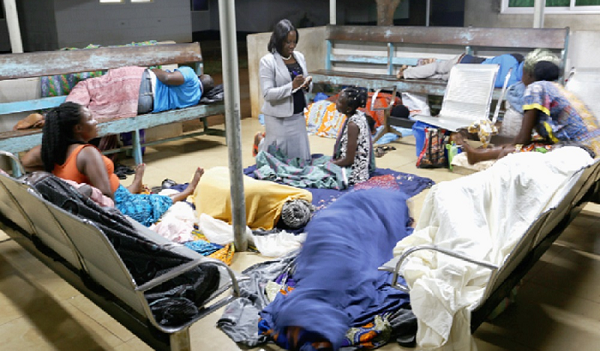
The General Secretary of the Ghana Medical Association (GMA), Dr Richard Selormey, has warned that there is a stark gap between Ghana’s emergency healthcare policies and what occurs in practice, describing the system as dangerously fragmented and in urgent need of reform.
Speaking on Joy FM’s Super Morning Show on Tuesday, 24 February 2026, Dr Selormey said that although policy documents outline clear standards for accident and emergency services, the reality in many hospitals falls far short.
“It is good that you are referencing the policy and the guidelines document,” he said in response to a question about emergency unit requirements. “But there is always a translation from policy into reality.”
According to him, Ghana has “many beautiful policies and guidelines”, yet implementation remains a major challenge.
“If you ask me directly, what happens on the ground is totally different from what exists,” he stressed.
The discussion followed a review of official guidelines requiring hospitals to have functional triage areas, resuscitation units for patient stabilisation, observation areas for up to 24 hours, procedure rooms for minor cases, and ambulance bays.
Dr Selormey challenged Ghanaians to assess the system for themselves.
“You can conduct a survey and visit the facilities to find out how many have these in place, how many even have standby oxygen and the necessary professionals to operate the equipment,” he said.
He identified multiple structural weaknesses, including logistical constraints, poor coordination between ambulances and hospitals, and a disjointed referral system.
Although the National Ambulance Service operates nationwide, he noted that it faces operational challenges, including limited ambulances and coordination gaps between facilities.
“There is no centralised point where we can know how many beds are available and where, in real time,” he explained, describing the system as lacking a proper capacity-tracking mechanism.
Dr Selormey also criticised the referral cycle, stating that patients are often transferred between facilities without proper communication or preparation at the receiving end.
Beyond infrastructure and logistics, he cited demotivated staff and poor health-seeking behaviour among sections of the public as contributing factors. Many patients, he noted, delay seeking care until emergencies arise.
“All these matters combine to give us a system that is very dangerous, which we must treat as a matter of urgency and cure,” he warned.
He called for a concerted effort involving government, the health sector, the public and the media to focus on solutions rather than repeatedly highlighting the problems.
Latest Stories
-
Unchecked imports and the Middle East crisis threaten Ghana’s fragile food inflation anchor
6 minutes -
Ecobank Junior Saver Big Pitch to reward 10 winners with GH¢2,000 each
10 minutes -
AMA demolishes unauthorised pigsty obstructing Agbogbloshie waste evacuation exercise
10 minutes -
I was filled with disbelief – Akosua Achia Sarpong Esq. shares her first reaction
11 minutes -
Snake Village: A look at Volta Region’s hidden snake village and its tourism potential (Video)
18 minutes -
Election Watch Ghana calls for constitutional reforms to strengthen Electoral Commission independence
21 minutes -
NACOC, Postal and Courier Services Regulatory Commission intensify efforts to curb drug trafficking
22 minutes -
Ga Mantse chairs committee to drive Accra Green and Clean City Initiative
24 minutes -
Drivers threaten to remove traders from lorry stations over TrafficTech concerns
27 minutes -
AI could create 10 to 20 times more jobs despite current recruitment slowdown – Hubtel CEO
29 minutes -
Sexual abuse in schools persists because perpetrators are not held accountable – Dr Nyarkoa
37 minutes -
Chief Justice has designated Achimota Court to handle petroleum diversion cases – NPA CEO
40 minutes -
Philip Nai and friends gear up for bigger seventh Christmas outreach
41 minutes -
GSA strengthens electricity meter testing to protect consumers and improve energy reliability
42 minutes -
‘Dismissed or suspended? Ghanaians deserve clarity’ – NPP demands clarity on Ampofo Ankrah’s fate
46 minutes