

Audio By Carbonatix
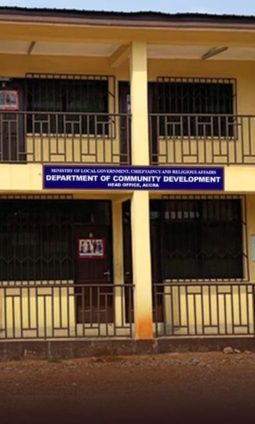
How many of you have ever heard of the Department of Community Development?
Be honest. Even politicians, senior civil servants, and the so-called enlightened elite would struggle to explain what it does. That ignorance is not accidental. It is a symptom of something deeply wrong with Ghana’s development priorities.
The Department of Community Development was created to mobilise communities, build local capacity, improve livelihoods, promote self-help projects, and strengthen grassroots participation in national development. In simple terms, it was meant to be the engine of bottom-up transformation. If any institution should be visible in every district, energising housing, sanitation, skills training, cooperative enterprise and local infrastructure, it is this one.
Instead, it is invisible.
Successive governments have treated it as an afterthought. While flashy new agencies are created with impressive titles, air-conditioned offices and generous budgets, the one department designed to organise people and unlock local productivity is starved of resources, authority and relevance. It has no glamour, no political patronage value, and therefore no attention.
This is not incompetence. It is structural neglect.
Ghana has chosen rent-seeking over real development. Politicians prefer institutions that control contracts, licences, funds and board appointments. Those agencies create opportunities for patronage and influence. Community development, on the other hand, requires patient mobilisation, transparency, accountability and empowerment of ordinary people. It does not produce quick headlines or ribbon-cutting ceremonies.
So we marginalise it.
The result is visible everywhere. Rural poverty persists. Urban slums expand. Youth unemployment festers. Infrastructure projects are imposed from above with little community ownership. We spend billions on programmes, yet communities remain dependent rather than empowered.
Imagine if the Department of Community Development were properly funded, professionally staffed, digitised, performance-driven and politically backed. It could coordinate self-help housing schemes, organise vocational training linked to local resources, structure cooperative production, and mobilise citizens to maintain their own infrastructure. It could be the nerve centre of inclusive growth.
Instead, it survives as a bureaucratic ghost.
Every government claims to care about development. Yet none has elevated this institution into a national powerhouse. That failure is bipartisan and generational.
If Ghana is serious about transformation, we must stop multiplying agencies that milk the system and start strengthening the ones that build communities. Until then, development will remain a slogan, not a lived reality.
Latest Stories
-
K9 dog sniffs out 72lbs of prohibited Ghanaian food items at JFK
2 minutes -
If family planning is our choice, why isn’t it in our budget?
9 minutes -
Mahama, Lordina to attend World Assemblies of God Congress opening in Accra
12 minutes -
‘The power play is disgusting’ – Atta Akyea questions Baffour Awuah’s detention by EOCO
20 minutes -
Ghana to review all public-sector AI acquisitions under new directive
26 minutes -
NPP ready for national elections; 7,121 delegates to vote
32 minutes -
‘I didn’t expect this under Mahama’ – Annoh-Dompreh on Baffour Awuah’s detention at EOCO
33 minutes -
GRA welcomes Tribunal decision upholding US$393 million tax assessment
36 minutes -
COMAC says Uniform Fuel Pricing Fund should not be confused with fuel subsidy
45 minutes -
Mercy Ships targets over 2,000 surgeries, 3,500 dental treatments during Ghana mission
47 minutes -
NITA appoints ShaQ Express founder Anthony Owusu-Ansah as Acting Deputy DG
53 minutes -
Government moves to compel public institutions to buy food from Ghanaian farmers
59 minutes -
‘Baffour Awuah won’t die in EOCO’s detention, even if he dies there, that’s okay for us’ – John Boadu
1 hour -
OccupyGhana calls for parliamentary scrutiny of EOCO, BNI powers
1 hour -
Mahama calls for continued care for Mercy Ships patients after surgeries
1 hour