

Audio By Carbonatix
Oil prices slipped more than $2 a barrel on Monday as investors took profits after recent gains and shrugged off new U.S. sanctions on Iran.
Brent crude futures settled down $2.22, or 2.35%, to $92.17, while U.S. West Texas Intermediate crude fell $2.05 a barrel, down 2.35% at $85.01.
Treasury Secretary Scott Bessent on Monday announced an expansion of secondary sanctions it can impose on entities and countries that maintain business ties with Iran around the world as Washington significantly ratchets up economic pressure on Tehran with the war nearing its 6-month mark.
This followed Trump's threats of "economic warfare and isolation on an unprecedented scale" against Tehran last week.
"There is not much new that came out of Bessent's commentary, beyond what was telegraphed in advance," said Raymond James Investment Strategy Analyst Pavel Molchanov. The oil market having rallied quite a bit last week, saw profit taking today, he added.
Both contracts posted a second consecutive weekly gain last week, rising more than 5%.
"Can the White House come up with something that has never been tried before and will have a much more powerful effect on the Iranian economy? We'll believe it when we see it," Molchanov said.
“The real question now is how aggressively Washington is prepared to enforce secondary sanctions against Iran’s remaining trading partners," Jorge Leon, head of geopolitical analysis at Rystad Energy.
"Unless China materially reduces purchases further, the additional impact on Iranian oil revenues could be relatively limited," he added.
Iran had condemned U.S. plans to announce new sanctions and President Masoud Pezeshkian had called for a diplomatic solution. Pakistan's army chief was visiting Tehran on Monday for mediation talks, ahead of the U.S. announcement.
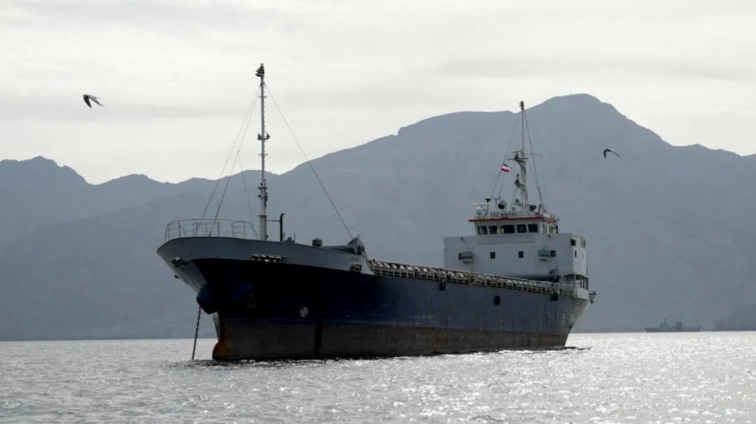
Oil shipments through the Strait of Hormuz, a route that once carried a fifth of global supplies, remained constrained.
Fewer than 20 commodity vessels transited the Strait of Hormuz at the weekend, shipping data showed on Monday, as Iranian and U.S. blockades restrict traffic through the chokepoint for energy shipments.
TotalEnergies Chief Executive Patrick Pouyanne said the oil company was profitably moving oil through the Strait of Hormuz, with higher transport costs more than offset by steep discounts from crude producers.
Iraq's SOMO and QatarEnergy both offered crude for loading inside the strait in tenders, traders said.
"$93 per barrel Brent, rather than $120-150, is telling us that enough oil is flowing through the Strait of Hormuz and from the Persian Gulf in general," SEB analyst Bjarne Schieldrop told Reuters, adding that a turning point could be if Iran decided to actually close Hormuz with rockets and drones.
Morgan Stanley analysts have increased their Brent forecasts, projecting a peak of $100 per barrel in the fourth quarter.
The International Energy Agency is not currently discussing a second release of oil from its strategic reserves, its chief, Fatih Birol, said on Monday.
Latest Stories
-
Trump administration moves to impose more than $100,000 fee for H-1B worker visas
57 minutes -
Oil prices steady as investors weigh impact of expanded US sanctions against Iran
3 hours -
Trump administration plans to revoke visas of foreigners seeking asylum
3 hours -
US appeals court considers reassigning case from judge over AI use
3 hours -
Trump bought shares in Elon Musk’s SpaceX in June, financial disclosure shows
3 hours -
MTN approves $375 million share buyback after profit rise
3 hours -
Ghana gold buyers went weeks without funds, sources say
4 hours -
Nevada sues to block Trump administration’s Colorado River plan
4 hours -
Tunisian hospital receives 19 bodies after migrant boat sinks
4 hours -
Oil drops more than $2 despite new US sanctions on Iran
4 hours -
Dangote refinery drives seven-fold rise in Nigeria petroleum product exports, EIA says
4 hours -
Zambia closes courts on last day to file election challenge
4 hours -
Nearly three million Teslas recalled in China over hidden door handles
5 hours -
China probes use of formaldehyde to keep cabbages fresh
5 hours -
Veteran Nollywood actor Taiwo Hassan ‘Ogogo’ dies at 65
5 hours